
Learning how to paint a metal building can dramatically improve its appearance while helping protect the exterior from weather, moisture, corrosion, and everyday wear. Whether you’re refreshing a metal garage, workshop, storage building, agricultural structure, or commercial building, the right preparation and coating system can make a major difference in the final result.
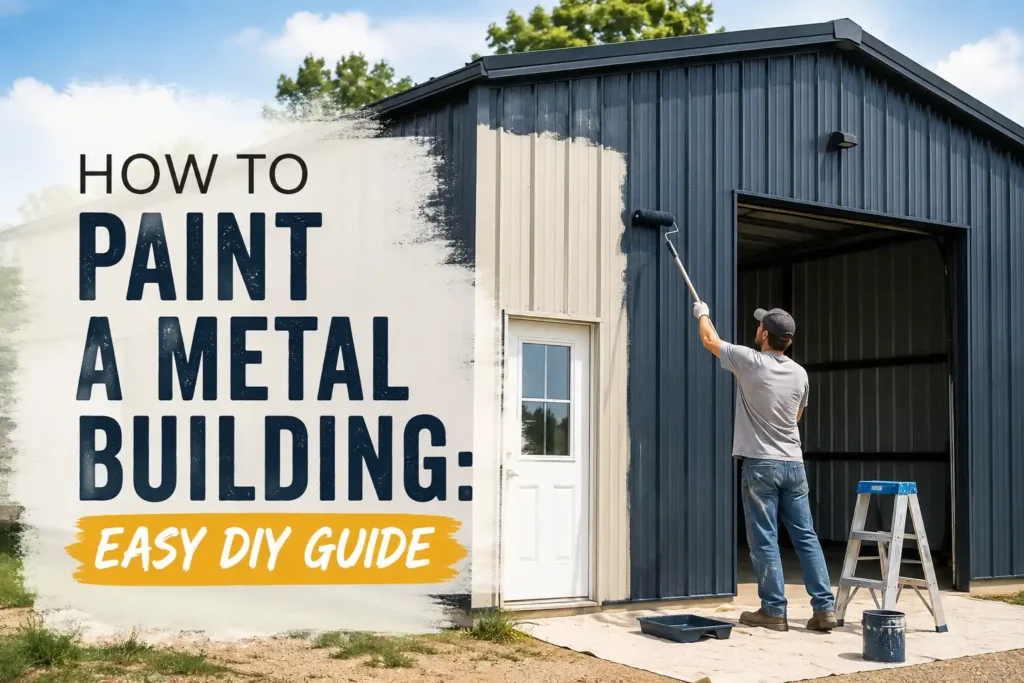
Painting metal is different from painting wood or drywall because the surface can be smooth, glossy, rusty, and highly exposed to changing weather conditions. A successful project starts with thorough cleaning, rust removal, proper preparation, and a primer and paint specifically designed for exterior metal. With patience and the right materials, you can give an aging metal building a clean, durable finish.
Items to Buy
- Exterior metal cleaner
- Degreaser
- Bucket
- Garden hose
- Pressure washer
- Scrub brush
- Wire brush
- Paint scraper
- Rust remover
- Sandpaper
- Sanding block
- Metal primer
- Rust-inhibiting primer
- Exterior metal paint
- Acrylic paint
- Direct-to-metal paint
- Paint brushes
- Paint rollers
- Roller covers
- Paint tray
- Paint sprayer
- Extension pole
- Painter’s tape
- Drop cloths
- Plastic sheeting
- Ladder
- Extension ladder
- Safety goggles
- Work gloves
- Dust mask or respirator
Why Paint a Metal Building?
A fresh coat of paint can provide both cosmetic and protective benefits.
Painting can help:
- Refresh an outdated appearance
- Protect exposed metal
- Reduce moisture exposure
- Cover discoloration
- Improve curb appeal
- Create a more uniform appearance
- Coordinate the building with surrounding structures
- Extend the useful appearance of older siding
A properly painted metal building can look dramatically different without requiring replacement siding.
Can You Paint a Metal Building?
Yes, metal buildings can be painted successfully.
The key is choosing a coating system appropriate for the type and condition of the metal. Galvanized steel, previously painted steel, bare steel, and heavily rusted metal may require different preparation methods.
Before starting, identify the existing coating and inspect the metal carefully.
What Type of Paint Is Best for a Metal Building?
For exterior metal buildings, choose a high-quality coating specifically designed for metal and outdoor exposure.
Depending on the surface, suitable options may include:
- Exterior acrylic coatings
- Direct-to-metal paint
- Rust-inhibiting metal paint
- Industrial metal coatings
- Metal-specific elastomeric coatings
The product label should indicate that it is suitable for the particular metal surface and exterior conditions.
Why Primer Matters
Primer creates a foundation between the metal and the finish coat.
A suitable metal primer can:
- Improve adhesion
- Help prevent corrosion
- Create a uniform surface
- Improve coverage
- Reduce the appearance of stains
- Protect exposed metal
If you’re painting bare or rust-prone steel, a corrosion-resistant primer is especially important.
When Is the Best Time to Paint a Metal Building?
Weather conditions can have a major impact on the project.
Ideally, paint when the weather is:
- Dry
- Mild
- Relatively low in humidity
- Not excessively windy
- Free from rain in the immediate forecast
Avoid painting extremely hot surfaces in direct sunlight because the coating may dry too quickly.
Always follow the temperature and weather requirements specified by the paint manufacturer.
Preparing the Metal Building
Preparation is arguably the most important part of the entire project.
Metal siding can accumulate:
- Dirt
- Dust
- Grease
- Mold
- Mildew
- Oxidation
- Rust
- Chalky residue
- Old loose paint
Painting over these contaminants can lead to peeling, bubbling, uneven coverage, or premature coating failure.
How to Paint a Metal Building Step by Step
Step 1: Inspect the Building
Walk around the entire structure and inspect the metal carefully.
Look for:
- Rust
- Corrosion
- Peeling paint
- Loose coating
- Dents
- Cracks
- Loose fasteners
- Damaged seams
- Water stains
Address structural or severe corrosion issues before painting.
Step 2: Remove Obstacles
Move vehicles, equipment, furniture, tools, plants, and other items away from the building.
Create enough workspace to safely move ladders and painting equipment.
Step 3: Protect Nearby Surfaces
Cover:
- Concrete
- Landscaping
- Windows
- Doors
- Exterior lights
- Equipment
- Nearby structures
Use drop cloths and plastic sheeting to protect areas from paint and cleaning products.
Step 4: Clean the Metal
Wash the building thoroughly using an appropriate exterior cleaner.
For larger buildings, a pressure washer can make cleaning considerably easier.
Work systematically from the top downward.
Remove dirt, dust, algae, mildew, and other contaminants.
Step 5: Rinse Thoroughly
Rinse away all cleaning solution.
Any residue left behind can interfere with primer and paint adhesion.
Allow the building to dry completely.
Step 6: Scrape Loose Paint
Use a paint scraper to remove peeling or flaking paint.
Do not leave unstable coating underneath the new finish.
The goal is to create a stable surface rather than necessarily removing every existing layer.
Step 7: Remove Rust
Inspect areas where the metal has begun to corrode.
Use a wire brush, abrasive pad, or suitable rust-removal method to eliminate loose rust.
For severe corrosion, repair or replace the affected metal before continuing.
Step 8: Sand Problem Areas
Sand rough areas, exposed metal, peeling edges, and glossy sections where appropriate.
The purpose is to create a more uniform surface and improve adhesion.
Remove sanding dust afterward.
Step 9: Treat Remaining Rust
If recommended for your coating system, apply an appropriate rust-treatment product to remaining corrosion.
Follow the manufacturer’s instructions carefully.
Allow the treated area to dry before priming.
Step 10: Clean Again
After scraping and sanding, remove remaining dust and debris.
A clean, dry surface is essential for good adhesion.
Step 11: Mask Windows and Doors
Use painter’s tape and plastic sheeting to protect:
- Windows
- Door frames
- Handles
- Locks
- Vents
- Lights
- Trim
Good masking makes the final result much cleaner.
Step 12: Apply Metal Primer
Apply a compatible metal primer to bare metal and other areas requiring priming.
Pay particular attention to:
- Exposed steel
- Rust-repaired areas
- Bare edges
- Fasteners
- Areas with previous coating failure
Use a brush, roller, or sprayer depending on the size and design of the building.
Step 13: Allow Primer to Dry
Follow the manufacturer’s recommended drying and recoat times.
Do not apply the finish coat while the primer is still too soft or tacky.
Step 14: Inspect the Primed Surface
Look for missed areas, uneven coverage, and remaining surface imperfections.
Touch up the primer where necessary.
Step 15: Apply the First Paint Coat
Begin at the top of the building and work downward.
Apply the paint in thin, consistent layers.
Avoid creating thick ridges or heavy buildup around seams and fasteners.
Step 16: Paint the Large Panels
Use a roller or sprayer for broad sections.
Maintain a consistent application pattern and avoid stopping in the middle of large sections whenever possible.
Keeping a wet edge can help minimize visible lap marks.
Step 17: Brush Edges and Details
Use a brush around:
- Corners
- Seams
- Trim
- Fasteners
- Window frames
- Door frames
Brush work can provide better control in areas where a roller or sprayer cannot reach effectively.
Step 18: Apply the Second Coat
After the first coat reaches the manufacturer’s recommended recoat stage, apply the second coat.
A second coat can improve:
- Color consistency
- Coverage
- Protection
- Durability
- Overall appearance
Step 19: Inspect the Building
Walk around the building and examine it from different angles.
Look for:
- Thin areas
- Missed sections
- Runs
- Uneven color
- Overspray
- Paint buildup
Touch up imperfections before the coating fully cures.
Step 20: Remove Painter’s Tape
Carefully remove masking materials.
Pull tape away slowly to help maintain clean edges.
Step 21: Allow the Finish to Cure
The building may feel dry before the coating has fully cured.
Allow the paint to cure according to the manufacturer’s recommendations before exposing it to unnecessary moisture, abrasion, or cleaning.
Painting a Metal Building With a Roller
A roller is a practical choice for many smaller buildings.
It works well on broad, relatively flat panels and can provide good coverage without requiring specialized spraying equipment.
Choose a roller cover recommended for the coating you’re using.
Use a brush afterward to reach seams, corners, edges, and other detailed areas.
Painting a Metal Building With a Sprayer
A sprayer can be extremely efficient for large metal buildings.
Advantages include:
- Faster coverage
- Smooth finish
- Efficient application
- Easy access to large panels
However, spraying requires extensive masking and careful attention to wind.
Overspray can travel surprisingly far, so protect surrounding property before beginning.
Brush Painting a Metal Building
Brushes are useful for:
- Small buildings
- Touch-ups
- Edges
- Corners
- Trim
- Detailed areas
Brush painting takes longer on large structures but provides excellent control.
How to Paint a Rusty Metal Building
If the building has rust, don’t simply cover it with ordinary paint.
First:
- Remove loose rust.
- Scrape peeling coating.
- Sand affected areas.
- Clean the surface.
- Treat corrosion if appropriate.
- Apply corrosion-resistant primer.
- Apply compatible exterior metal paint.
Severe rust may indicate that the metal itself needs repair before painting.
How to Paint a Previously Painted Metal Building
If the existing paint is firmly attached, you may not need to remove it completely.
Instead:
- Clean the surface
- Remove loose paint
- Sand glossy areas
- Repair damaged spots
- Prime exposed metal
- Apply compatible finish coats
If the existing coating is extensively peeling or incompatible with the new coating, more extensive preparation may be necessary.
Painting Galvanized Metal
Galvanized metal requires special consideration because its zinc coating can make paint adhesion challenging.
Use a preparation and primer system specifically recommended for galvanized metal.
Do not assume that ordinary metal primer will automatically provide good adhesion to every galvanized surface.
Choosing a Color for Your Metal Building
The right color can dramatically change the appearance of an outdoor structure.
Popular options include:
White
White creates a clean, bright appearance and can complement traditional homes.
Gray
Gray provides a modern, neutral appearance and works well with contemporary landscaping.
Black
Black gives the building a dramatic, sophisticated look.
Green
Green can help agricultural or garden buildings blend with surrounding vegetation.
Brown
Brown works well in natural settings and can create a warmer appearance.
Navy adds personality while maintaining a sophisticated exterior.
Light vs. Dark Metal Building Colors
Color also affects how the building visually interacts with its surroundings.
Lighter colors tend to create an airy appearance, while darker colors can make a structure feel more substantial.
In sunny environments, also consider how much heat the chosen color may absorb and whether the coating manufacturer provides guidance about suitable colors for the substrate.
Common Mistakes to Avoid
Painting Over Rust
Loose rust should be removed before painting.
Skipping Cleaning
Dust, grease, and mildew can prevent proper adhesion.
Applying Paint to Wet Metal
Moisture can interfere with coating performance.
Ignoring Existing Paint
Loose or peeling paint should be removed before applying a new coating.
Using Interior Paint
Interior wall paint is not designed for prolonged outdoor metal exposure.
Painting in Strong Wind
Wind can cause overspray, uneven application, and contamination from dust.
Applying One Heavy Coat
Thick paint can sag and dry unevenly.
Multiple properly applied coats are generally more reliable.
Tips for a Professional-Looking Finish
For the best results:
- Clean thoroughly
- Remove rust
- Repair damaged areas
- Sand appropriately
- Use the correct primer
- Choose exterior metal paint
- Apply thin coats
- Maintain a wet edge
- Protect nearby surfaces
- Follow weather requirements
- Allow sufficient curing time
The quality of preparation often determines the quality of the finished building.
How Long Does Paint Last on a Metal Building?
There is no universal lifespan because durability depends on many factors.
Important factors include:
- Paint quality
- Primer quality
- Surface preparation
- Climate
- Sun exposure
- Moisture
- Corrosion
- Application technique
- Maintenance
A properly prepared metal building can maintain an attractive finish for years, but exposed structures may require periodic inspection and touch-ups.
How to Maintain a Painted Metal Building
Regular maintenance can help extend the life of the coating.
Inspect the building periodically for:
- Peeling paint
- Rust
- Scratches
- Chipped areas
- Water damage
- Failed seams
Clean dirt and organic growth before they accumulate.
Touch up damaged areas promptly to prevent moisture from reaching exposed metal.
FAQs
Can you paint a metal building?
Yes. Metal buildings can be painted successfully when the surface is properly cleaned, prepared, primed, and coated with suitable exterior metal paint.
What is the best paint for a metal building?
A high-quality exterior coating specifically designed for metal and outdoor exposure is generally the best choice.
Do you need primer before painting metal?
Primer is especially important for bare metal, rust-repaired areas, and surfaces requiring additional corrosion protection.
Can you paint over old paint on a metal building?
Yes, provided the existing paint is firmly bonded and compatible with the new coating. Loose or peeling paint should be removed first.
How do you paint a rusty metal building?
Remove loose rust, clean the surface, sand affected areas, use an appropriate corrosion-resistant primer, and apply a compatible exterior metal coating.
Can you use a paint sprayer?
Yes. A sprayer can be efficient for large buildings, but extensive masking and overspray control are necessary.
How many coats of paint does a metal building need?
Two finish coats are commonly used, but the exact number depends on the paint, color, surface condition, and manufacturer’s recommendations.
Can you paint galvanized metal?
Yes, but galvanized metal usually requires a preparation and primer system specifically designed to promote adhesion to the zinc-coated surface.
What happens if you paint metal while it is wet?
Moisture can interfere with adhesion and drying, potentially leading to coating failure. The surface should be appropriately dry before painting.
Final Words
Learning how to paint a metal building is a manageable DIY project when you approach it in the right order. Cleaning, rust removal, surface preparation, appropriate priming, and careful application are the most important steps. Choosing an exterior coating designed specifically for metal can also make a major difference in durability.
Whether you’re repainting a workshop, garage, storage building, agricultural structure, or another metal exterior, don’t rush the preparation process. Work in suitable weather, apply thin and even coats, and allow each layer to dry and cure properly. With the right technique, you can give your metal building a fresh, attractive finish while providing valuable protection against the elements.