
Learning how to paint aluminum is an excellent way to refresh outdoor furniture, siding, doors, window frames, gutters, and countless other aluminum surfaces. While aluminum is durable and resistant to rust, its smooth, non-porous surface can make paint adhesion challenging if proper preparation steps are skipped.
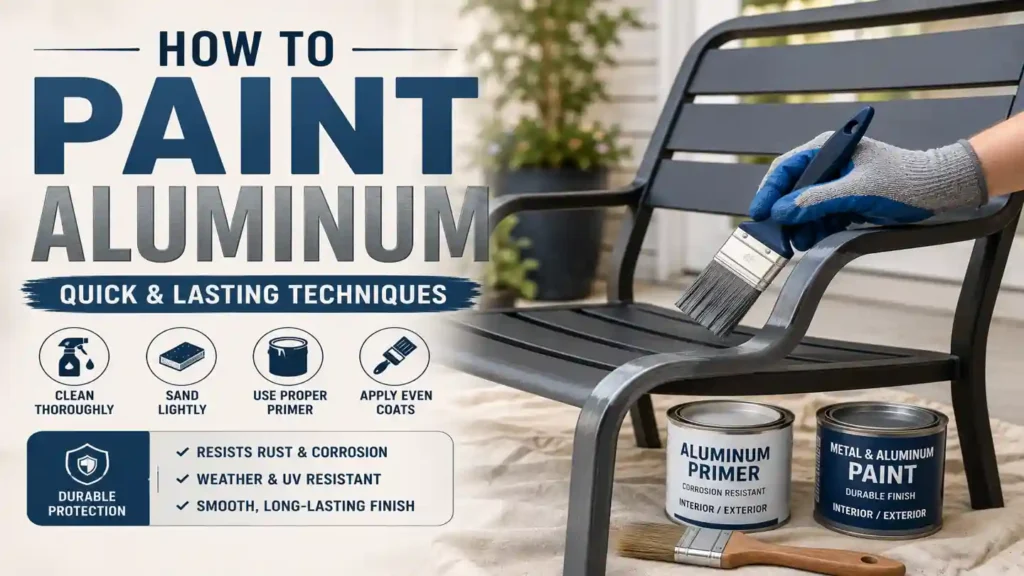
Fortunately, with the right cleaning methods, primer, and paint, aluminum can be painted successfully and maintain its appearance for years. This guide covers everything you need to know, from selecting supplies to applying a long-lasting finish that resists peeling, chipping, and weather damage.
Items to Buy
- Degreaser
- Dish soap
- Bucket
- Sponge
- Microfiber cloths
- Wire brush
- Fine-grit sandpaper
- Sanding block
- Tack cloth
- Painter’s tape
- Drop cloths
- Plastic sheeting
- Self-etching primer
- Metal primer
- Acrylic paint
- Exterior paint
- Spray paint
- Paint brushes
- Paint roller
- Clear coat
- Safety goggles
- Protective gloves
- Dust mask
Can You Paint Aluminum?
Yes, aluminum can be painted successfully.
Although aluminum naturally resists corrosion, its slick surface can prevent paint from bonding properly. Without proper preparation, paint may peel or flake prematurely.
The key to success is cleaning, sanding, and priming the surface before applying paint.
When done correctly, painted aluminum can remain attractive and durable for many years.
Why Paint Aluminum?
Painting aluminum offers several advantages.
Common benefits include:
- Improved appearance
- Added weather protection
- Custom color options
- Extended lifespan
- Increased curb appeal
- Protection from oxidation
- Easier maintenance
- Cost-effective restoration
Painting is often much less expensive than replacing aluminum fixtures or furniture.
Best Paint for Aluminum
Choosing the right paint is essential for durability.
Popular options include:
- Acrylic latex paint
- Exterior metal paint
- Direct-to-metal paint
- Enamel paint
- Spray paint for metal
For outdoor projects, choose paints specifically formulated to withstand weather exposure.
Always verify compatibility with your chosen primer.
Why Primer Is Important for Aluminum
Primer plays a critical role when painting aluminum.
Because aluminum is smooth and non-porous, paint often struggles to adhere directly to the metal. A high-quality primer creates a bonding layer between the aluminum and the paint.
Self-etching primers are especially effective because they chemically bond to the metal surface.
This helps improve paint adhesion and longevity.
Preparing Aluminum for Painting
Preparation is one of the most important parts of the project.
Dirt, oxidation, grease, and loose coatings can interfere with paint adhesion. Thorough cleaning and surface preparation help ensure a professional-looking finish.
Taking extra time during preparation often leads to significantly better results.
How to Paint Aluminum Step by Step Guide
Step 1: Protect the Work Area
Cover nearby surfaces with drop cloths or plastic sheeting.
Use painter’s tape to mask areas that should not be painted.
Proper preparation helps prevent accidental paint damage.
Step 2: Clean the Aluminum
Wash the aluminum thoroughly using warm water, dish soap, or a degreaser.
Remove dirt, grease, and contaminants from the surface.
Rinse thoroughly and allow it to dry completely.
Step 3: Remove Oxidation
Inspect the aluminum for oxidation or chalky residue.
Use a wire brush or abrasive pad to remove oxidation and loose material.
A clean surface promotes better adhesion.
Step 4: Sand the Surface
Lightly sand the aluminum using fine-grit sandpaper.
The goal is to create a slightly rough texture that helps primer and paint bond effectively.
Avoid aggressive sanding that may damage the metal.
Step 5: Remove Dust
Wipe the surface with a tack cloth or microfiber cloth.
Remove all sanding dust before proceeding.
Even small particles can affect the quality of the finish.
Step 6: Apply Self-Etching Primer
Apply a thin, even coat of self-etching primer.
Work methodically to ensure complete coverage.
Primer helps create a durable bond between the aluminum and paint.
Step 7: Allow the Primer to Dry
Follow the manufacturer’s drying recommendations.
Proper drying improves adhesion and prevents future paint problems.
Avoid rushing this step.
Step 8: Apply the First Coat of Paint
Use a brush, roller, or spray paint depending on the project.
Apply a thin, even coat while maintaining consistent coverage.
Multiple light coats generally perform better than one thick coat.
Step 9: Let the Paint Dry
Allow the first coat to dry completely.
Drying times vary depending on the paint type and environmental conditions.
Follow product instructions carefully.
Step 10: Apply Additional Coats
Most aluminum projects require two or more coats for full coverage.
Apply each coat evenly and allow proper drying between applications.
Additional coats improve durability and appearance.
Step 11: Apply a Clear Coat (Optional)
For added protection, apply a clear topcoat.
A clear coat can improve scratch resistance, UV protection, and overall longevity.
This step is especially useful for outdoor applications.
Step 12: Allow the Finish to Cure
Give the paint adequate time to cure before heavy use.
Curing helps maximize durability and allows the finish to reach full hardness.
Follow the paint manufacturer’s recommendations.
Spray Painting vs Brushing Aluminum
Both methods can produce excellent results.
Spray Painting
Advantages include:
- Smooth finish
- Faster application
- Even coverage
- Professional appearance
Brushing
Advantages include:
- Lower cost
- Better control
- Minimal overspray
- Ideal for small projects
Choose the method that best suits your project size and skill level.
Common Aluminum Painting Projects
Painted aluminum is commonly found on:
- Patio furniture
- Aluminum siding
- Gutters
- Downspouts
- Window frames
- Doors
- Railings
- Outdoor décor
The same preparation principles generally apply across these projects.
Common Mistakes to Avoid
One common mistake is skipping primer.
Without primer, paint often struggles to adhere properly. Another issue is painting over oxidation or dirt.
Many people also apply paint too heavily, resulting in drips, uneven drying, and reduced durability.
Careful preparation helps prevent these problems.
Tips for a Professional Finish
For the best results:
- Clean thoroughly
- Sand lightly
- Use self-etching primer
- Apply thin coats
- Allow proper drying time
- Work in moderate temperatures
Small details can make a significant difference in the final appearance.
How Long Does Paint Last on Aluminum?
Several factors influence durability.
These include:
- Surface preparation
- Primer quality
- Paint quality
- Weather exposure
- Maintenance practices
With proper preparation and high-quality materials, painted aluminum can last many years before requiring touch-ups.
Maintaining Painted Aluminum
Routine maintenance helps preserve the finish.
Wash painted aluminum periodically using mild soap and water. Avoid harsh chemicals that may damage the coating.
Inspect for scratches or chips and address them promptly to prevent further deterioration.
Regular care helps maximize the lifespan of the finish.
FAQs
Can aluminum be painted?
Yes, aluminum can be painted successfully with proper preparation and primer.
Do I need to sand aluminum before painting?
Light sanding helps improve adhesion and is generally recommended.
What primer works best on aluminum?
Self-etching primer is one of the most effective options.
Can I use spray paint on aluminum?
Yes, spray paint designed for metal surfaces works well on aluminum.
How many coats of paint are needed?
Most projects require two or more coats for full coverage.
Why is my paint peeling off aluminum?
Poor preparation, lack of primer, or contamination may cause peeling.
Should I apply a clear coat?
A clear coat is optional but can improve durability and weather resistance.
Can painted aluminum be used outdoors?
Yes, provided exterior-grade paint and primer are used.
Final Words
Learning how to paint aluminum is a practical way to restore and customize a wide range of metal surfaces. By cleaning thoroughly, removing oxidation, applying self-etching primer, and using quality paint, you can achieve a durable finish that resists peeling and weather damage.
Whether you’re updating outdoor furniture, refreshing aluminum siding, or giving metal fixtures a new look, proper preparation is the key to success. With the right techniques and materials, painted aluminum can remain attractive and protected for years to come.