
Giving old laminate furniture a fresh new look doesn’t have to involve messy sanding or expensive refinishing tools. If you’re wondering how to paint laminate furniture without sanding, you’ll be happy to know that modern primers and paints make it possible to achieve a durable, attractive finish with much less preparation than traditional methods. Whether you’re updating a dresser, bookshelf, nightstand, desk, or entertainment center, the right approach can completely transform outdated furniture.
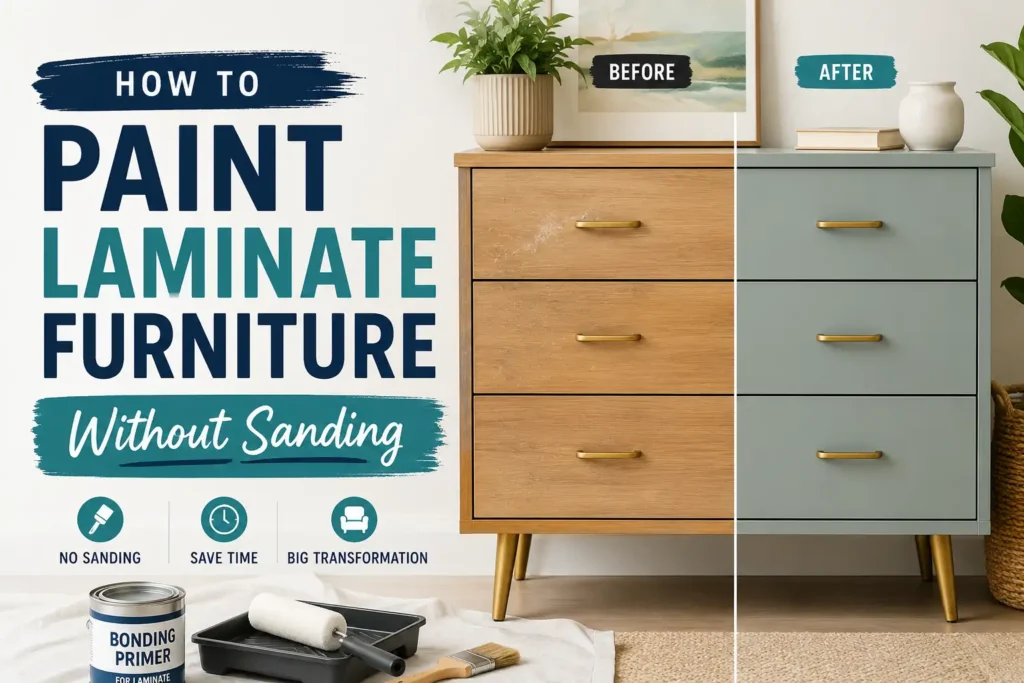
The key to success is using products designed to bond to slick laminate surfaces. With proper cleaning, priming, and painting techniques, you can create a long-lasting finish that looks professionally done without spending hours sanding. This guide covers everything you need to know, from choosing supplies to applying a flawless topcoat.
Items to Buy
- Bonding primer
- Laminate primer
- Chalk paint
- Acrylic furniture paint
- Cabinet paint
- Foam roller
- Paint tray
- Angled paintbrush
- Microfiber cloth
- Degreasing cleaner
- Mild dish soap
- Water bucket
- Painter’s tape
- Drop cloth
- Tack cloth
- Protective gloves
- Paint stir sticks
- Clear furniture topcoat
- Polycrylic sealer
- Screwdriver
- Small paint cups
What Is Laminate Furniture?
Laminate furniture is typically made from particleboard, MDF, or composite wood covered with a thin decorative laminate layer. This surface is designed to be smooth, durable, and easy to clean.
Unlike real wood, laminate does not absorb paint naturally. Its slick finish can make paint adhesion challenging if the proper products are not used.
Fortunately, modern bonding primers are specifically formulated to adhere to glossy surfaces, making sanding optional in many situations.
Understanding the nature of laminate helps explain why preparation is still essential even when sanding is skipped.
Can You Really Paint Laminate Furniture Without Sanding?
Yes, in many cases you can successfully paint laminate furniture without sanding.
The secret is using a high-quality bonding primer that is designed to stick to smooth, non-porous surfaces. These primers create a strong foundation that allows paint to adhere properly.
While sanding may still improve adhesion in certain situations, many modern furniture painters achieve excellent results using primer alone.
Following the correct preparation and application steps is far more important than aggressive sanding.
Benefits of Skipping Sanding
Painting laminate furniture without sanding offers several advantages.
First, it saves a significant amount of time and effort. Sanding large furniture pieces can be physically demanding and messy.
Second, avoiding sanding reduces dust throughout your workspace, making cleanup much easier.
Finally, skipping sanding lowers the risk of accidentally damaging thin laminate surfaces, which can sometimes occur if aggressive sanding techniques are used.
For many DIY enthusiasts, a no-sanding approach makes furniture makeovers much more accessible.
Choosing the Right Paint
Not all paints perform equally well on laminate furniture.
Furniture paint, cabinet paint, chalk paint, and high-quality acrylic paints are among the most popular options. Many painters prefer paints specifically formulated for cabinets and furniture because they offer superior durability.
When paired with a bonding primer and protective topcoat, these paints can provide excellent long-term performance.
Choosing quality products often makes the difference between a finish that lasts for years and one that chips prematurely.
Why Bonding Primer Is Essential
Bonding primer is the most important product in a no-sanding laminate furniture project.
Unlike standard primers, bonding primers are designed to grip slick surfaces such as laminate, tile, glass, and glossy finishes. They create a surface that paint can adhere to more effectively.
Skipping primer is one of the most common reasons laminate paint jobs fail.
Investing in a quality primer helps ensure better durability, smoother coverage, and improved overall results.
How To Paint Laminate Furniture Without Sanding Step by Step Guide
Step 1: Empty and Prepare the Furniture
Remove all items from drawers, shelves, and compartments.
If possible, remove hardware such as knobs, pulls, hinges, and handles using a screwdriver. This allows for easier painting and cleaner results.
Set the hardware aside in a labeled container for later reinstallation.
Step 2: Clean Thoroughly
Clean every surface using a degreasing cleaner or a mixture of mild soap and water.
Laminate furniture often accumulates oils, dust, and residue that can interfere with primer adhesion.
Pay special attention to frequently touched areas such as drawer fronts and handles.
Allow the furniture to dry completely before continuing.
Step 3: Protect Surrounding Areas
Lay down a drop cloth and use painter’s tape to protect any areas that should not be painted.
Cover nearby floors and furniture if working indoors.
Taking time to protect the workspace helps prevent accidental paint splatters and makes cleanup easier.
Step 4: Inspect the Surface
Examine the furniture for damage, peeling laminate, cracks, or loose edges.
Minor repairs should be completed before painting begins. Fill small imperfections if necessary and allow repairs to dry fully.
A smooth, stable surface contributes to a more professional finish.
Step 5: Apply Bonding Primer
Using a brush or foam roller, apply a thin, even coat of bonding primer.
Work systematically and avoid heavy application. Smooth, consistent coverage helps create a better surface for paint.
Allow the primer to dry according to the manufacturer’s instructions.
Step 6: Inspect and Touch Up Primer
After the primer dries, inspect the furniture carefully.
Touch up any areas that may have been missed during the first coat. Consistent primer coverage helps ensure even paint adhesion and appearance.
Allow any touch-up areas to dry fully.
Step 7: Apply the First Coat of Paint
Using a foam roller for large surfaces and a brush for corners and details, apply the first coat of paint.
Work with thin layers rather than heavy coats. Thin coats reduce brush marks and create a smoother finish.
Maintain even coverage throughout the piece.
Step 8: Allow the Paint to Dry
Let the first coat dry completely before applying additional paint.
Drying times vary depending on the paint type, humidity, and temperature. Patience during this stage helps prevent streaking and uneven finishes.
Avoid touching the painted surfaces unnecessarily.
Step 9: Apply Additional Coats
Most laminate furniture projects require two to three coats of paint.
Apply each coat evenly and allow adequate drying time between applications. Additional coats improve coverage and create a richer, more durable finish.
Inspect the surface after each coat and correct any imperfections.
Step 10: Apply a Protective Topcoat
Once the paint has dried, apply a clear furniture topcoat or polycrylic sealer.
A protective finish helps resist scratches, stains, moisture, and everyday wear. This step is especially important for high-use furniture such as desks, dressers, and dining pieces.
Follow the manufacturer’s instructions for application and drying.
Step 11: Allow Full Cure Time
Although the furniture may feel dry, the finish still needs time to cure fully.
Avoid heavy use during this period. Full curing improves durability and helps prevent dents, scratches, and premature wear.
Consult product guidelines for recommended curing times.
Step 12: Reinstall Hardware
Once the finish has cured, reinstall knobs, pulls, hinges, and other hardware.
You may also choose to update the hardware entirely for a more dramatic transformation.
Clean the finished piece gently and enjoy its refreshed appearance.
Best Paint Colors for Laminate Furniture
Color selection can dramatically affect the final look of a furniture makeover.
White remains a popular choice because it brightens spaces and creates a timeless appearance. Soft gray offers a modern, versatile look that works with many decorating styles.
Navy blue adds sophistication, while black creates bold contrast and contemporary appeal. Sage green and muted earth tones have also become increasingly popular for furniture refinishing projects.
Choosing a color that complements your existing décor helps create a cohesive design.
Common Mistakes to Avoid
One of the biggest mistakes is skipping the cleaning step. Dirt, grease, and residue can prevent primer from adhering properly.
Another common issue is using standard wall paint instead of furniture-grade paint. Furniture experiences more wear and requires more durable coatings.
Applying thick paint coats can also lead to drips, brush marks, and uneven finishes.
Finally, many DIYers rush the curing process, which can result in scratches and damage before the finish fully hardens.
Tips for a Professional Finish
Using a high-density foam roller often produces smoother results than a standard brush on large flat surfaces.
Apply multiple thin coats rather than one heavy layer. Thin coats dry more evenly and create a more durable finish.
Maintain a dust-free environment while painting to minimize imperfections.
Allow adequate drying and curing time between each stage for the best long-term results.
How to Care for Painted Laminate Furniture
Proper maintenance helps preserve the beauty of your painted furniture.
Clean surfaces with a soft cloth and mild cleaner rather than abrasive products. Avoid excessive moisture, particularly around seams and edges.
Use coasters, placemats, and protective pads when appropriate to reduce wear.
Inspect the finish periodically and perform touch-ups if necessary to keep the furniture looking its best.
FAQs
Can laminate furniture be painted without sanding?
Yes. Using a quality bonding primer allows many laminate furniture pieces to be painted successfully without sanding.
What primer should I use?
A bonding primer specifically designed for slick or glossy surfaces is usually the best choice.
What type of paint works best?
Furniture paint, cabinet paint, chalk paint, and high-quality acrylic paints are popular options.
How many coats of paint are needed?
Most projects require two to three coats for full coverage and durability.
Do I need a topcoat?
A topcoat is highly recommended, especially for furniture that receives frequent use.
Will the paint peel off laminate?
Proper cleaning, priming, and curing significantly reduce the risk of peeling.
Can I use chalk paint?
Yes. Chalk paint can work well on laminate when paired with an appropriate primer and protective finish.
How long should I wait before using the furniture?
Follow the manufacturer’s curing recommendations, which often range from several days to a few weeks for maximum durability.
Final Words
Learning how to paint laminate furniture without sanding is an excellent way to refresh outdated pieces while saving time and effort. Thanks to modern bonding primers and durable furniture paints, it’s possible to achieve beautiful results without the mess of traditional sanding.
The keys to success are thorough cleaning, proper priming, thin paint coats, and adequate curing time. By following the steps outlined in this guide, you can transform laminate furniture into stylish, updated pieces that complement your home and continue looking great for years to come.