
Vinyl floors are known for their durability and affordability, but outdated colors or worn patterns can make an entire room feel tired. If replacing your flooring isn’t in the budget, painting vinyl floors can be a cost-effective way to give your space a fresh new look.
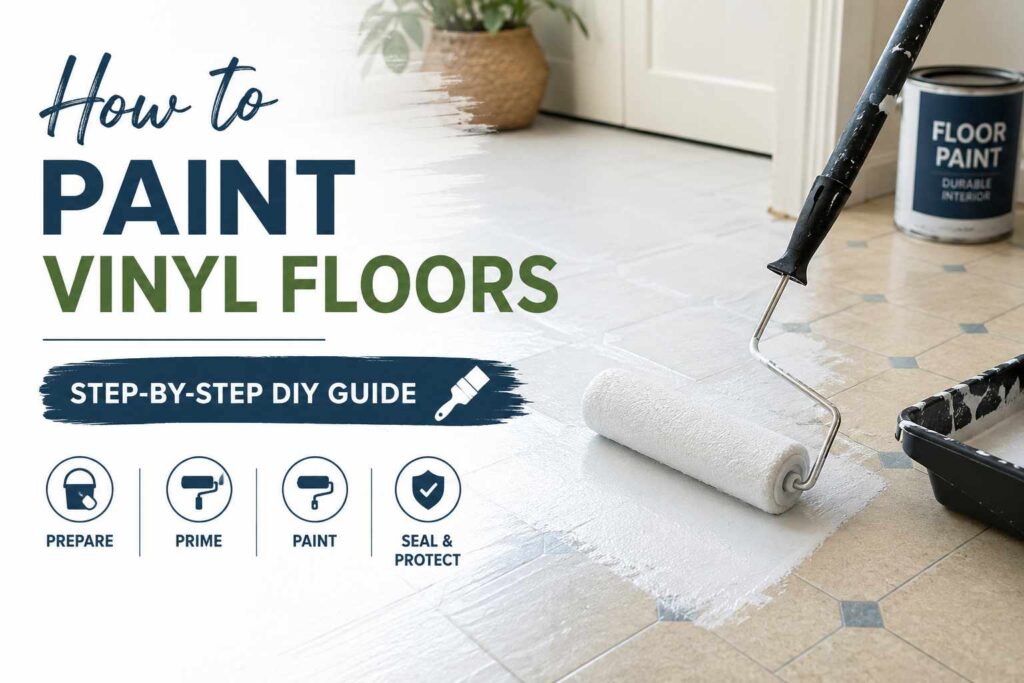
With proper preparation and the right products, painted vinyl floors can provide a stylish update that lasts for years. Whether you’re refreshing a bathroom, laundry room, mudroom, or kitchen, this DIY project can dramatically transform your space without the expense of new flooring.
Things You’ll Need to Paint Vinyl Floors
Before you begin, gather all the necessary supplies.
Essential Supplies
- Mild floor cleaner
- Mop and bucket
- Microfiber cloths
- Fine-grit sandpaper (220-grit)
- Deglosser (optional)
- Painter’s tape
- Drop cloths
- Bonding primer
- Porch and floor paint
- Paint tray
- Paintbrush
- Roller with extension pole
- Polyurethane topcoat
Optional Supplies
- Orbital sander
- Paint sprayer
- Floor stencils
- Measuring tape
- Chalk line
- Decorative painter’s tape
Preparing all supplies beforehand helps ensure a smooth painting process.
Different Ways to Paint Vinyl Floors
One of the biggest advantages of painting vinyl floors is the ability to customize the design.
Solid Color Finish
A single paint color creates a clean, modern appearance and works well in almost any room.
Checkerboard Pattern
Create a classic checkerboard design using two complementary paint colors.
Stenciled Tile Look
Use floor stencils to mimic expensive tile patterns at a fraction of the cost.
Faux Stone Finish
Layer multiple paint tones to create the appearance of natural stone flooring.
Geometric Designs
Modern geometric patterns can add personality and visual interest to small spaces.
Farmhouse-Inspired Floors
Soft white, gray, or greige colors work beautifully in farmhouse-style interiors.
Distressed Vintage Look
Light distressing can create a charming aged appearance that complements cottage and rustic decor.
Can You Paint Vinyl Floors?
Yes, vinyl floors can be painted successfully if they are in good condition and properly prepared.
The key is ensuring that the surface is clean, lightly sanded, primed, and sealed with a durable topcoat. Floors experience constant foot traffic, so using products designed specifically for flooring is essential.
Painting is often a practical solution when vinyl floors are structurally sound but visually outdated.
How to Paint Vinyl Floors Step by Step
Step 1: Inspect the Floor
Before painting, evaluate the condition of your vinyl flooring.
Look for:
- Peeling sections
- Loose edges
- Water damage
- Deep tears
Repair any damage before moving forward.
Painting cannot hide significant flooring problems.
Step 2: Clean the Floor Thoroughly
Proper cleaning is one of the most important steps.
Remove:
- Dirt
- Dust
- Grease
- Wax residue
- Cleaning product buildup
Use a quality floor cleaner and allow the floor to dry completely.
Any residue left behind can interfere with paint adhesion.
Step 3: Sand the Surface
Lightly sand the floor using 220-grit sandpaper.
The goal is not to remove the vinyl finish but to create a slightly rough surface that allows primer to bond more effectively.
Vacuum and wipe away all sanding dust afterward.
Step 4: Tape and Protect Surrounding Areas
Use painter’s tape to protect:
- Baseboards
- Cabinets
- Door trim
- Adjacent flooring
Cover nearby surfaces with drop cloths if needed.
Step 5: Apply a Bonding Primer
Vinyl surfaces require a high-quality bonding primer.
Apply a thin, even coat using a roller.
Use a brush for corners and edges.
Allow the primer to dry completely according to the manufacturer’s instructions.
Step 6: Choose the Right Floor Paint
Not all paints are suitable for floors.
Look for:
- Porch and floor paint
- Interior floor enamel
- High-durability acrylic floor coatings
Choose products designed to withstand foot traffic and regular cleaning.
Step 7: Apply the First Coat of Paint
Begin painting at the farthest corner of the room and work toward the exit.
Use:
- Brush for edges
- Roller for large areas
Apply thin, even coats to avoid drips and uneven coverage.
Allow the paint to dry fully.
Step 8: Add Designs or Patterns (Optional)
If you’re creating:
- Checkerboard floors
- Stenciled designs
- Geometric patterns
Allow the base coat to cure before applying decorative details.
Use painter’s tape and stencils for clean, professional-looking results.
Step 9: Apply Additional Coats
Most floors require:
- Two coats for solid colors
- Additional coats for lighter shades or patterned designs
Continue until coverage appears smooth and uniform.
Step 10: Seal the Floor
A protective topcoat is critical for painted floors.
Apply a clear polyurethane sealer designed for floors.
Benefits include:
- Scratch resistance
- Moisture protection
- Easier cleaning
- Longer-lasting finish
Apply multiple coats if recommended by the manufacturer.
Step 11: Allow Proper Curing Time
Even if the floor feels dry, allow adequate curing before heavy use.
Avoid:
- Moving furniture back immediately
- Heavy foot traffic
- Excess moisture
Following curing guidelines helps maximize durability.
Best Paint Colors for Vinyl Floors
Need inspiration? Consider these popular choices.
White
Brightens small rooms and creates a clean appearance.
Light Gray
Modern, versatile, and easy to coordinate with decor.
Greige
A blend of gray and beige that works in almost any room.
Bold and stylish, especially in bathrooms and laundry rooms.
Sage Green
Adds a soft, natural feel.
Black and White
Perfect for classic checkerboard designs.
Charcoal Gray
Sophisticated and practical for high-traffic spaces.
Common Mistakes to Avoid
Skipping Surface Preparation
Proper cleaning and sanding are essential for long-lasting results.
Using Wall Paint
Standard wall paint is not designed for foot traffic.
Applying Thick Coats
Thin coats produce a smoother, more durable finish.
Forgetting the Topcoat
A protective sealer significantly improves longevity.
Rushing the Curing Process
Premature use can damage the finish before it fully hardens.
Pros and Cons of Painting Vinyl Floors
Pros
- Budget-friendly
- Easy DIY project
- Customizable designs
- Extends the life of existing floors
- Minimal demolition required
Cons
- Requires regular maintenance
- May need touch-ups over time
- Not ideal for heavily damaged flooring
- Proper curing time is essential
How Long Do Painted Vinyl Floors Last?
When properly prepared and sealed, painted vinyl floors can last several years.
Durability depends on:
- Traffic levels
- Paint quality
- Surface preparation
- Maintenance practices
Rooms with lighter use often experience the longest-lasting results.
Final Thoughts
Learning how to paint vinyl floors is an affordable way to update outdated flooring without the expense and hassle of replacement. With proper cleaning, sanding, priming, painting, and sealing, you can create a beautiful custom floor that enhances your home’s style.
Whether you choose a simple solid color, a farmhouse-inspired finish, or a bold stencil pattern, painted vinyl floors can deliver impressive results while staying within budget.
Frequently Asked Questions
Can vinyl flooring be painted?
Yes, vinyl flooring can be painted successfully when properly cleaned, primed, and sealed.
What type of paint should I use on vinyl floors?
Porch and floor paint or specialty floor coatings are typically the best choices.
Do I need to sand vinyl floors before painting?
Yes. Light sanding helps improve paint adhesion.
Is a primer necessary?
Absolutely. A bonding primer helps paint adhere to the vinyl surface.
How many coats of paint are needed?
Most projects require two coats, though some colors and designs may need additional coverage.
Should I seal painted vinyl floors?
Yes. A polyurethane topcoat helps protect the finish from scratches, moisture, and daily wear.