
Vinyl windows are a popular choice because they’re durable, energy-efficient, and low maintenance. However, their original color may not always match your home’s updated style. Fortunately, painting vinyl windows is an affordable way to refresh your home’s appearance without the expense of replacing them.
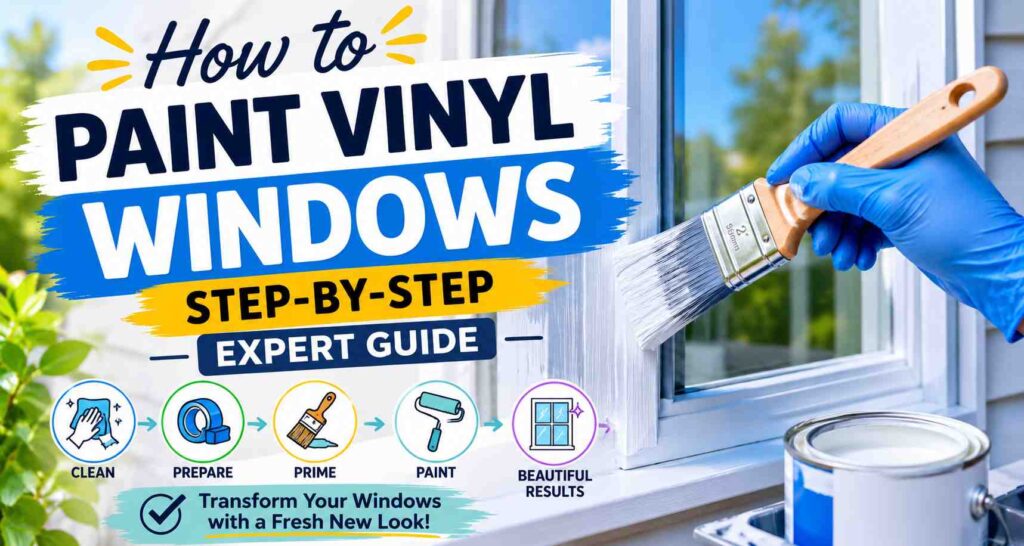
The key to success is using the right products and proper preparation techniques. Since vinyl expands and contracts with temperature changes, choosing the wrong paint can lead to peeling, cracking, or warping. With the right approach, you can achieve a beautiful, long-lasting finish that transforms both your home’s interior and exterior.
Things You’ll Need to Paint Vinyl Windows
Before you begin, gather all the necessary supplies.
Essential Supplies
- Mild soap and water
- Microfiber cloths
- Sponge
- Painter’s tape
- Drop cloths
- Fine-grit sandpaper (220-grit)
- Bonding primer
- Vinyl-safe exterior paint
- Paintbrush
- Small foam roller
- Paint tray
Optional Supplies
- Paint sprayer
- Degreasing cleaner
- Tack cloth
- Protective clear coat
- Replacement hardware
Having everything ready beforehand will make the project smoother and more efficient.
Different Ways to Paint Vinyl Windows
Before choosing a color, consider the style you want to achieve.
Classic White Refresh
A fresh coat of white paint can brighten older windows and create a clean, timeless appearance.
Modern Black Windows
Black vinyl windows have become increasingly popular because they create bold contrast and a contemporary look.
Soft Gray Finish
Gray offers a sophisticated, neutral appearance that works well with many architectural styles.
Farmhouse-Inspired Windows
Warm white or cream tones pair beautifully with farmhouse and cottage-style homes.
Exterior Color Match
Paint your vinyl windows to coordinate with shutters, trim, or siding for a cohesive exterior design.
Interior Accent Windows
Use a complementary color on interior-facing surfaces to enhance room decor and architectural details.
Can You Paint Vinyl Windows?
Yes, vinyl windows can be painted successfully when proper preparation and vinyl-compatible products are used.
However, not all paints are suitable for vinyl. Dark colors can absorb excessive heat, potentially causing warping or reducing the lifespan of the window frame. Always select paints specifically recommended for vinyl surfaces.
Painting vinyl windows is often far less expensive than replacing them and can significantly improve curb appeal.
How to Paint Vinyl Windows Step by Step
Step 1: Check Manufacturer Recommendations
Before painting, review your window manufacturer’s guidelines.
Some manufacturers may void warranties if the windows are painted. Understanding these requirements can help you make an informed decision before starting the project.
Step 2: Clean the Windows Thoroughly
Dirt, dust, pollen, and oils can interfere with paint adhesion.
Wash the window frames using:
- Mild soap
- Warm water
- Soft sponge
Remove all contaminants and allow the windows to dry completely.
Step 3: Protect Surrounding Areas
Use painter’s tape to cover:
- Glass panes
- Weather stripping
- Hardware
- Adjacent trim
Lay drop cloths beneath the work area to catch drips and overspray.
Step 4: Lightly Sand the Surface
Vinyl surfaces are naturally smooth, which can make paint adhesion challenging.
Lightly sand the frames using 220-grit sandpaper.
Avoid aggressive sanding. The goal is simply to create a surface that helps primer bond more effectively.
After sanding, wipe away dust with a clean cloth.
Step 5: Apply a Bonding Primer
A high-quality bonding primer helps paint adhere properly to vinyl.
Apply a thin, even coat using:
- Brush for corners and details
- Foam roller for flat sections
Allow the primer to dry completely according to the manufacturer’s instructions.
Step 6: Choose the Right Paint
Selecting the correct paint is critical for long-term durability.
Look for:
- Vinyl-safe paint
- Exterior-grade acrylic paint
- Paints designed for expansion and contraction
Avoid products not intended for vinyl surfaces.
Step 7: Apply the First Coat of Paint
Use smooth, even strokes to apply the first coat.
Work carefully around:
- Corners
- Edges
- Window tracks
Avoid applying thick coats, which can lead to drips and uneven curing.
Allow the first coat to dry fully.
Step 8: Apply Additional Coats
Most vinyl window projects require:
- Two coats for lighter colors
- Two to three coats for full coverage
Continue applying thin, even layers until the finish appears consistent.
Step 9: Inspect for Touch-Ups
After the final coat dries, inspect the frames from different angles.
Touch up any:
- Thin spots
- Missed corners
- Uneven sections
Careful inspection helps create a professional-looking result.
Step 10: Remove Tape and Allow Curing
Remove painter’s tape while the paint is slightly tacky or according to product recommendations.
Allow the paint to cure completely before cleaning or handling the windows extensively.
Best Paint Colors for Vinyl Windows
Choosing the right color can dramatically impact your home’s appearance.
White
Classic, clean, and suitable for almost any home style.
Soft Gray
Modern and versatile.
Warm Beige
Provides a subtle, welcoming appearance.
Charcoal Gray
Adds sophistication without being overly bold.
Black
Creates dramatic contrast and modern curb appeal.
Greige
A balanced blend of gray and beige that complements many exterior color palettes.
Common Mistakes to Avoid
Skipping Cleaning
Paint adheres poorly to dirty surfaces.
Using the Wrong Paint
Not all paints can withstand vinyl expansion and contraction.
Applying Thick Coats
Heavy coats increase the risk of drips and uneven finishes.
Skipping Primer
Bonding primer greatly improves durability and adhesion.
Choosing Extremely Dark Colors
Very dark colors may absorb excessive heat and stress the vinyl.
Benefits of Painting Vinyl Windows
Painting vinyl windows can provide several advantages.
- Improves curb appeal
- Updates outdated colors
- Matches new exterior renovations
- Costs less than replacement
- Extends the visual life of existing windows
- Allows greater design flexibility
For many homeowners, painting offers an excellent balance between affordability and aesthetic improvement.
How Long Does Painted Vinyl Last?
When properly prepared and painted using high-quality materials, painted vinyl windows can maintain their appearance for many years.
Longevity depends on:
- Climate conditions
- Paint quality
- Surface preparation
- Exposure to sunlight
Routine cleaning and maintenance can help preserve the finish even longer.
Final Thoughts
Learning how to paint vinyl windows is a practical way to update your home’s appearance without replacing perfectly functional windows. By using vinyl-safe products, preparing surfaces correctly, and applying multiple thin coats, you can achieve a durable finish that enhances both curb appeal and interior style.
Whether you choose a classic white refresh, a modern black finish, or a subtle gray update, painted vinyl windows can dramatically transform the look of your home while keeping renovation costs under control.
Frequently Asked Questions
Can vinyl windows be painted?
Yes, vinyl windows can be painted successfully using proper preparation methods and vinyl-compatible paint.
What kind of paint should I use on vinyl windows?
Exterior-grade acrylic paint designed for vinyl surfaces is typically recommended.
Do I need primer before painting vinyl windows?
Yes. A bonding primer helps paint adhere properly and improves durability.
Can I paint vinyl windows black?
In many cases, yes, but it’s important to verify manufacturer recommendations because dark colors absorb more heat.
How many coats of paint are needed?
Most projects require two to three coats for even coverage.
Will painting vinyl windows void the warranty?
Some manufacturers may void warranties if windows are painted. Always check warranty documentation before beginning the project.