
Choosing the best paint brushes for oil painting can make a noticeable difference in how paint moves across your canvas. The right brush helps you control thick oil colors, create expressive strokes, blend transitions, and add fine details without fighting against the bristles. Whether you are a beginner learning basic techniques or an experienced artist developing a personal style, using suitable brushes can make painting more enjoyable and precise.
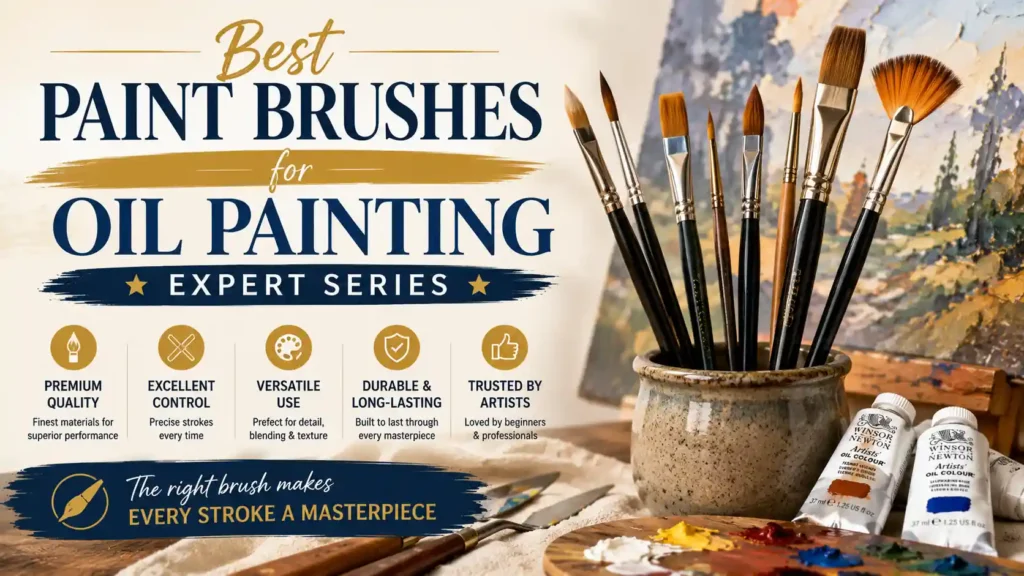
Oil painting brushes come in natural hog bristle, soft natural hair, and modern synthetic materials. Firm brushes are useful for moving thick paint and creating texture, while softer brushes help with blending, glazing, and detail work. Below, we compare seven options from established art brands and explain how to choose brushes for different oil painting techniques.
Top Picks: Best Paint Brushes for Oil Painting
- Best Overall: Rosemary & Co Ultimate Hog Bristle Brushes – Firm natural-bristle brushes for handling thicker oil paint, expressive strokes, and general canvas work.
- Best Traditional Hog Bristle: Winsor & Newton Artists’ Hog Brushes – A traditional choice for artists who want resilient bristles and reliable paint movement.
- Best Synthetic Option: Princeton Catalyst Polytip Brushes – Stiff synthetic brushes for artists who want firm performance without natural animal hair.
- Best for Smooth Blending: Silver Brush Bristlon Brushes – Versatile synthetic brushes for controlled strokes, blending, and detailed oil painting.
- Best European Hog Bristle: Escoda Clasico Brushes – Natural-bristle brushes for expressive brushwork and traditional oil painting techniques.
- Best for Professional Brushwork: da Vinci Maestro Hog Bristle Brushes – Artist brushes worth considering for broad strokes, paint application, and controlled mark-making.
- Best Value Hog Bristle: Robert Simmons Signet Brushes – A practical option for artists who want traditional hog-bristle brushes in useful shapes and sizes.
Affiliate disclosure: As an Amazon Associate I earn from qualifying purchases.
Comparison Table: Best Paint Brushes for Oil Painting
| Product Name | Best For | Check Price |
|---|---|---|
| Rosemary & Co Ultimate Hog Bristle Brushes | Overall oil painting | Check on Amazon |
| Winsor & Newton Artists’ Hog Brushes | Traditional oil painting | Check on Amazon |
| Princeton Catalyst Polytip Brushes | Firm synthetic performance | Check on Amazon |
| Silver Brush Bristlon Brushes | Blending and controlled strokes | Check on Amazon |
| Escoda Clasico Brushes | Expressive hog-bristle work | Check on Amazon |
| da Vinci Maestro Hog Bristle Brushes | Professional brushwork | Check on Amazon |
| Robert Simmons Signet Brushes | Value-oriented hog bristle | Check on Amazon |
The links above are tagged Amazon search links rather than verified individual product listings. Check the exact series, brush shape, size, bristle material, and seller before ordering. Some product lines include multiple brush types, so make sure the listing matches the specific model described.
1. Rosemary & Co Ultimate Hog Bristle Brushes – Best Overall
Rosemary & Co Ultimate Hog Bristle Brushes are a strong option for artists who regularly work with traditional oil paint. Hog bristle is naturally firm, making it useful for moving thick paint across canvas and maintaining control when creating visible brushwork.
The Ultimate range is worth considering for artists who enjoy expressive painting, textured applications, and confident strokes. Its natural bristles provide resistance against the paint, which can help when pushing color into the canvas rather than simply spreading a thin layer across the surface.
These brushes are available in different shapes and sizes, allowing you to build a collection around your preferred techniques. Flats are useful for broad coverage and defined edges, while filberts offer a rounded profile that works well for softer transitions and curved strokes.
Rosemary & Co also offers softer brush ranges, so check that you are selecting the Ultimate hog-bristle line rather than an unrelated series. A balanced collection of medium and large sizes is a useful starting point for landscape painting, still life, and general oil work.
Pros
- Traditional hog-bristle construction
- Firm feel for manipulating thicker oil paint
- Useful for expressive and textured brushwork
- Available in different shapes and sizes
- Suitable for broad strokes and general painting
Cons
- Natural bristles require careful cleaning
- Firmness may not suit delicate blending
- Premium individual brushes can be expensive
- Availability of particular sizes may vary
Best For: Artists who want a versatile natural hog-bristle brush for everyday oil painting and textured strokes.
2. Winsor & Newton Artists’ Hog Brushes – Best Traditional Hog Bristle
Winsor & Newton Artists’ Hog Brushes are a traditional choice for oil painters who prefer natural bristles. Their firm construction makes them useful for applying substantial amounts of paint, creating visible marks, and working with thicker colors.
Hog bristle is popular in oil painting because its stiffness helps the artist move paint without the brush collapsing too easily. The natural split ends, often called flags, also help the bristles carry and distribute paint.
This range is worth considering for artists who paint landscapes, still life, portraits, and other subjects that involve a combination of broad coverage and controlled strokes. Flats can be used for straight edges and larger shapes, while filberts are helpful for rounded forms and softer transitions.
Winsor & Newton offers different brush shapes and sizes, so you can select individual brushes instead of purchasing a large assortment. Start with a few medium-sized brushes and add larger or smaller ones as your painting style develops.
These are not the softest brushes for delicate glazing. If you want to blend very fluid paint or create tiny details, consider adding a softer synthetic or detail brush to your collection.
Pros
- Traditional natural hog bristles
- Firm feel for thicker oil colors
- Useful for broad and confident strokes
- Available in several shapes and sizes
- Established artist-brush range
Cons
- Natural bristles need proper maintenance
- May leave visible texture with heavy pressure
- Not ideal for every fine-detail technique
- Individual sizes may have different availability
Best For: Oil painters who prefer traditional hog-bristle brushes for general painting and strong brushwork.
3. Princeton Catalyst Polytip Brushes – Best Synthetic Option
Princeton Catalyst Polytip Brushes are worth considering if you prefer synthetic bristles but still want a firm brush for oil painting. Their synthetic construction offers an alternative to traditional hog hair, particularly for artists who prefer not to use animal-derived brush materials.
A firm synthetic brush can help move thicker paint, create defined marks, and maintain control over the application. This makes the Catalyst range useful for artists who enjoy bold strokes or want a brush that feels more substantial than a soft watercolor-style brush.
The Polytip design is intended to provide a more natural-looking working edge. This can be helpful when distributing paint across the canvas and creating varied marks.
Catalyst brushes are available in different shapes and sizes. Flats are practical for broad applications, while filberts can help with rounded strokes and blending. Choose a size according to your canvas and the amount of detail in your composition.
Although synthetic brushes are often easier to maintain than some natural-hair options, oil paint still needs to be removed thoroughly. Clean the brush using a method suitable for your paint and follow the manufacturer’s care recommendations.
Pros
- Synthetic alternative to natural hog bristle
- Firm feel for substantial oil paint
- Useful for controlled and expressive strokes
- Available in different shapes and sizes
- Suitable for artists who avoid animal hair
Cons
- May feel different from natural hog bristle
- Not every shape is ideal for delicate blending
- Premium synthetic brushes can be costly
- Requires proper cleaning after oil painting
Best For: Artists who want a firm synthetic brush for oil painting without using natural animal hair.
4. Silver Brush Bristlon Brushes – Best for Smooth Blending
Silver Brush Bristlon Brushes are a versatile synthetic option for painters who want a balance between firmness and flexibility. They can be useful when you need more control than a very soft brush provides but do not want the feel of a particularly stiff hog-bristle brush.
This makes the range worth considering for blending, shaping forms, and applying oil colors with controlled strokes. Depending on the shape and size, you can use these brushes for medium-sized areas, edges, and more refined passages.
Synthetic bristles can also be attractive to artists who want a consistent brush feel and an alternative to natural hair. However, the actual result depends on the selected shape, paint consistency, and technique.
A filbert is useful for softening transitions and working around rounded forms. A flat brush is better for broader marks and straight edges, while a smaller round can help with selected details.
Bristlon brushes can complement a set of firmer hog-bristle brushes. Instead of expecting one brush to perform every task, use different levels of stiffness for different stages of your painting.
Pros
- Synthetic brush option
- Useful balance of firmness and flexibility
- Available in several shapes and sizes
- Helpful for controlled strokes and blending
- Can complement traditional hog-bristle brushes
Cons
- Softer feel may not suit heavy impasto work
- Results depend on the chosen brush shape
- Not a substitute for every traditional bristle brush
- Requires careful cleaning after use
Best For: Artists who want synthetic brushes for controlled oil application, blending, and more refined brushwork.
5. Escoda Clasico Brushes – Best European Hog Bristle
Escoda Clasico Brushes are a natural-bristle option for artists who enjoy traditional oil painting tools. Hog-bristle brushes are especially useful when working with thicker paint because their stiffness helps move color across the canvas and retain a defined working edge.
The Clasico range is worth considering for expressive painting and techniques that involve visible brush marks. It can be useful for blocking in large shapes, developing middle layers, and applying color with a more deliberate stroke.
Brush shape matters when choosing from this range. A flat brush is useful for broad areas and crisp edges, while a filbert offers a softer outline for rounded forms. Larger sizes can help cover canvas efficiently, while smaller brushes are better suited to controlled passages.
Natural bristles may feel firmer and more textured than some synthetic alternatives. That is an advantage for certain oil techniques, but it may not be the best choice for every painter. If you prefer smooth blending or very fine detail, pair a hog-bristle brush with a softer synthetic brush.
Pros
- Traditional hog-bristle option
- Useful for expressive oil painting
- Firm bristles for moving thicker colors
- Available in different shapes and sizes
- Suitable for broad and controlled strokes
Cons
- Natural bristles need careful cleaning
- Firm texture may not suit delicate blending
- Not every size is ideal for detailed work
- Exact series and shape should be checked before ordering
Best For: Artists who enjoy traditional hog-bristle tools for expressive oil painting and strong brush marks.
6. da Vinci Maestro Hog Bristle Brushes – Best for Professional Brushwork
da Vinci Maestro Hog Bristle Brushes are worth considering for artists who want traditional natural-bristle tools from an established brush maker. The Maestro range includes brushes intended for demanding painting applications, and its hog-bristle options are relevant to oil painters who prefer a firm working feel.
A quality hog-bristle brush should have enough resilience to respond to pressure without spreading uncontrollably. This helps when creating broad strokes, shaping edges, and applying thicker paint.
The Maestro range includes different brush styles, so check the specific product description before purchasing. A hog-bristle flat or filbert is more directly suited to traditional oil work than a brush from a different hair category within the brand’s wider catalog.
These brushes can be useful for artists who already understand which shapes they prefer and want to add individual tools to their collection. For beginners, it may be more practical to start with a few basic shapes rather than buying many sizes at once.
As with other natural-bristle brushes, clean them carefully after each session and reshape the bristles before storing them.
Pros
- Artist-oriented brush range
- Hog-bristle options for traditional oil painting
- Useful for broad strokes and paint manipulation
- Available in different brush shapes
- Suitable for artists building a focused brush collection
Cons
- Exact hair type varies by product
- Premium models may be costly
- Natural bristles require maintenance
- Individual brushes may be harder to find in some sizes
Best For: Experienced painters who want selected hog-bristle brushes for controlled, traditional oil painting.
7. Robert Simmons Signet Brushes – Best Value Hog Bristle
Robert Simmons Signet Brushes are a practical option for oil painters who want traditional hog-bristle brushes without immediately investing in a large premium collection. The range includes useful shapes for general painting, including filberts and other styles that can help with broad coverage and controlled marks.
Hog bristle is a dependable choice for thick oil paint because it provides resistance when moving color across a canvas. This can make it easier to apply paint with deliberate strokes and retain some of the texture created by the brush.
Signet brushes are worth considering for beginners who want to experience natural bristles as well as more experienced artists who need additional brushes for everyday work.
A filbert is a useful starting shape because its rounded edge can create both broader marks and softer transitions. A flat brush is helpful for straight edges, while a smaller round can be added for detail work.
The best value comes from selecting the sizes you will actually use. A few well-chosen brushes are often more useful than a large assortment of shapes that remain unused.
Pros
- Traditional hog-bristle brush option
- Useful shapes for oil painting
- Suitable for broad strokes and general work
- Practical for building a starter collection
- Available in individual brush sizes
Cons
- Natural bristles need careful cleaning
- Not designed for every fine-detail technique
- Availability of particular sizes can vary
- May require softer brushes for blending
Best For: Beginners and regular oil painters who want useful hog-bristle brushes at a practical price point.
Buying Guide: How to Choose the Best Paint Brushes for Oil Painting
The best brush for oil painting depends on how you apply paint, the consistency you prefer, and the effects you want to create. Consider the following factors before choosing a brush set or individual brushes.
1. Choose the Right Bristle Material
Bristle material affects how a brush handles paint and responds to pressure.
Hog bristle: Natural hog hair is a traditional choice for oil painting. Its firm texture is useful for moving thick paint, creating visible brush marks, and applying strong strokes.
Synthetic bristles: Modern synthetic brushes can provide different levels of stiffness and flexibility. Firm synthetic options can handle substantial paint, while softer varieties are useful for blending and detail work.
Soft natural hair: Softer natural-hair brushes can be useful for delicate finishing, fine detail, and certain glazing techniques. They are generally less suitable for pushing very thick paint around the canvas.
Many oil painters keep both firm and soft brushes because they serve different purposes.
2. Consider Brush Shapes
Different brush shapes produce different marks. A useful oil painting collection usually includes more than one shape.
- Flat: Creates broad strokes, straight edges, and defined marks. Useful for blocking in large areas.
- Bright: Similar to a flat brush but with shorter bristles, giving it a firmer feel and more control.
- Filbert: Has a rounded edge that combines some qualities of flat and round brushes. Useful for blending and curved forms.
- Round: Suitable for lines, smaller shapes, and detail work.
- Fan: Helps with certain blending effects, soft textures, and foliage.
- Rigger or liner: Designed for long, narrow marks such as branches, wires, and fine lines.
For a beginner, flats, filberts, and rounds provide a useful foundation.
3. Select Suitable Brush Sizes
Brush sizes vary between manufacturers, so a size number from one brand may not match the physical width of another brand’s brush.
As a general starting point:
| Brush Size Range | Common Uses |
|---|---|
| Small sizes | Fine lines, details, and narrow edges |
| Medium sizes | Everyday painting, shapes, and controlled strokes |
| Large sizes | Blocking in, backgrounds, and broad areas |
| Extra-large sizes | Large canvases and expressive marks |
Choose brushes according to your canvas size and the amount of detail in your work. You do not need every available size to get started.
4. Check Bristle Firmness and Spring
A good oil painting brush should respond to pressure and return toward its original shape. This quality is often called spring.
Firm brushes are useful for manipulating thick paint. Softer brushes can be more comfortable for blending and applying thin layers.
A brush that spreads too easily may be difficult to control, while one that is excessively stiff may leave marks you do not want. Look for a balance that suits your technique.
5. Choose the Right Handle Length
Oil painting brushes are commonly available with long handles. A longer handle can help you work at a greater distance from the canvas and use movement from your arm rather than relying entirely on your wrist.
This can be useful when painting on an easel or working on a larger canvas.
Shorter handles may be more comfortable for close-up work, small studies, or painting at a table. Choose the length that fits your working position.
6. Consider the Ferrule and Handle Construction
The ferrule is the metal section that connects the bristles to the handle. It should hold the bristles securely and remain firmly attached during normal use.
Look for:
- A secure connection between the ferrule and handle
- Bristles that do not shed excessively
- A handle that feels balanced in your hand
- A shape that is comfortable for longer painting sessions
- Construction suited to repeated cleaning
A well-maintained brush can last much longer than one that is repeatedly left dirty or stored incorrectly.
7. Match the Brush to Your Painting Technique
Your painting style should guide your selection.
For impasto: Choose firm hog bristle or a stiff synthetic brush that can move thicker paint and leave visible texture.
For landscapes: Flats and filberts are useful for skies, distant shapes, landforms, and foliage. Smaller rounds can add branches and other details.
For portraits: A combination of firmer brushes for blocking in and softer brushes for blending can be useful.
For still life: Flats and filberts help create defined shapes, while smaller rounds can add highlights and details.
For glazing: Softer brushes may be more appropriate when working with thin, carefully controlled layers.
8. Decide Between Individual Brushes and Sets
A brush set can be a convenient starting point because it offers several shapes and sizes in one purchase. However, not every set includes the exact brushes you need.
Individual brushes are useful when you know which shapes and sizes you prefer. You can build a more focused collection over time instead of buying unnecessary extras.
For beginners, a modest selection of flats, filberts, and rounds is usually enough to explore basic oil painting techniques.
9. Consider Your Budget
You do not need to purchase the most expensive brushes to learn oil painting. A few reliable brushes in useful shapes can be more valuable than a large collection of low-quality tools.
Spend more on the brush types you use frequently. If you regularly paint with thick oils, investing in good hog-bristle brushes may make sense. If you mostly work with softer paint and delicate transitions, suitable synthetic brushes may be a better priority.
10. Think About Cleaning and Maintenance
Oil paint should not be allowed to dry inside the bristles. Proper cleaning helps preserve the brush shape and prevent paint buildup near the ferrule.
Wipe away excess paint first, then use a suitable brush cleaner or solvent according to the paint and brush manufacturer’s instructions. Finish with an appropriate soap or brush-cleaning product when recommended.
Reshape the bristles gently and allow the brush to dry flat or with the bristles positioned so they are not resting against a surface. Never leave brushes standing in a jar with their bristles pressed against the bottom.
How to Use Paint Brushes for Oil Painting
Using the right brush is only part of the process. Good technique helps you control the paint, develop different textures, and get more consistent results.
Step 1: Prepare Your Brushes
Before starting, inspect each brush for loose bristles, dust, or residue from previous painting sessions.
If you are using a clean, dry brush, make sure the bristles are properly shaped. If the brush has been used before, clean it thoroughly and remove any dried paint.
Step 2: Organize Brushes by Purpose
Set aside firm brushes for blocking in and thicker paint. Keep softer brushes available for blending and detail work.
This makes it easier to change tools without repeatedly cleaning the same brush during a painting session.
Step 3: Load the Brush with Paint
Pick up a moderate amount of paint with the bristles. Avoid pushing the brush deeply into the paint so that color accumulates unnecessarily near the ferrule.
Use enough paint to make a controlled stroke without creating unwanted buildup.
Step 4: Begin with Larger Shapes
Use a larger flat or filbert to establish the main shapes of your composition.
At this stage, focus on the overall arrangement rather than small details. A larger brush encourages broader marks and can help prevent you from overworking the painting too early.
Step 5: Develop Forms and Edges
Move to medium-sized brushes as you refine the shapes. Flats can create defined edges, while filberts help soften outlines and develop rounded forms.
Change the angle and pressure of the brush to create different marks.
Step 6: Add Texture and Brushwork
Use firm hog-bristle or synthetic brushes to create visible strokes, textured surfaces, and expressive marks.
Experiment with the side, edge, and tip of the brush. Different movements can create a surprising range of effects.
Step 7: Blend Where Needed
Use a suitable softer brush when you want to soften a transition between colors or create a smoother passage.
Work gently and avoid repeatedly brushing an area until the paint becomes muddy. Sometimes a clean, deliberate stroke produces a better result than excessive blending.
Step 8: Add Fine Details
Use smaller rounds or liner brushes for narrow lines, highlights, and selected details.
Keep detail work focused. Too many tiny marks can distract from the overall composition.
Step 9: Clean Brushes Between Colors
Wipe excess paint from the brush before changing colors. When necessary, use a suitable cleaner or solvent and remove the remaining pigment according to the manufacturer’s directions.
Keeping brushes reasonably clean helps prevent unwanted color mixing.
Step 10: Clean and Store Your Brushes
At the end of the session, remove remaining paint and clean each brush thoroughly. Reshape the bristles and let them dry properly before storage.
Store brushes so the bristles are protected from bending or crushing. Good care helps maintain their shape and performance.
Common Mistakes to Avoid When Choosing and Using Oil Painting Brushes
Buying Only Soft Brushes
Soft brushes can be useful for detail and blending, but they may struggle when moving thick oil paint. Include some firm brushes in your collection if you work with heavy-bodied colors.
Using Only Hog Bristle
Hog bristle is versatile, but it is not ideal for every technique. Softer synthetic or natural-hair brushes can be useful for glazing, subtle transitions, and fine details.
Choosing the Wrong Brush Shape
A large flat brush may be inefficient for tiny details, while a small round brush can make painting a large background unnecessarily slow. Match the shape to the task.
Applying Too Much Pressure
Excessive pressure can spread the bristles and create uncontrolled marks. Use a lighter touch when you want a more precise stroke.
Ignoring Brush Spring
A brush that does not return to shape can become difficult to control. Choose brushes with suitable resilience and replace damaged brushes when they no longer perform properly.
Leaving Oil Paint in the Bristles
Oil paint buildup can damage the brush and make future painting less predictable. Wipe away excess paint and clean brushes after every session.
Storing Brushes on Their Bristles
Leaving a brush standing with its bristles pressed against the bottom of a container can permanently bend them. Store brushes flat or with the bristles facing upward.
Buying Too Many Brushes at Once
A large set may look attractive, but you may not use every brush. Start with a small selection and add specialized shapes as your painting skills develop.
Frequently Asked Questions
What are the best paint brushes for oil painting?
Rosemary & Co Ultimate and Winsor & Newton Artists’ Hog are strong options for traditional oil painting. Princeton Catalyst Polytip and Silver Brush Bristlon are alternatives for artists who prefer synthetic bristles. The best choice depends on your technique and preferred paint consistency.
Are hog-bristle brushes better for oil painting?
Hog-bristle brushes are a traditional favorite because their firm bristles can move thick oil paint and create expressive marks. However, synthetic brushes and softer brushes also have important uses, particularly for blending and detail work.
Can I use synthetic brushes for oil painting?
Yes. Suitable synthetic brushes can work very well with oil paint. Firm synthetic brushes are useful for moving thicker colors, while softer synthetic brushes can help with blending and more controlled application.
What size brushes should a beginner buy for oil painting?
A beginner can start with a few small, medium, and large brushes. Include a flat, a filbert, and a round in useful sizes. This provides enough variety for broad coverage, shaping, and basic details without requiring a large collection.
What brush shape is best for oil painting?
Flats, filberts, and rounds are among the most useful shapes. Flats are good for broad strokes and defined edges, filberts are versatile for rounded forms and blending, and rounds are helpful for lines and details.
Are long-handle brushes better for oil painting?
Long handles are popular for oil painting because they allow artists to work farther from the canvas and use more arm movement. Short handles can still be comfortable for close-up work and smaller studies.
What is the difference between a flat and a filbert brush?
A flat brush has a straight, squared-off edge and is useful for broad strokes and sharp lines. A filbert has a rounded edge, making it useful for softer transitions and curved forms.
Can I use watercolor brushes for oil painting?
Some brushes may be technically usable, but many watercolor brushes are too soft for thick oil paint. Oil painting generally benefits from firmer bristles that can handle the paint’s heavier consistency. Use brushes designed for oil or suitable multi-medium applications.
How do I clean oil paint brushes?
Wipe away excess paint with a cloth, then clean the brush with a suitable brush cleaner or solvent according to the product instructions. Wash and reshape the bristles when recommended, then allow the brush to dry properly.
How long do oil painting brushes last?
Brush life depends on quality, frequency of use, paint type, and cleaning habits. Well-made brushes can last for years with proper care, while brushes that are left dirty or stored incorrectly may lose their shape much sooner.
How many brushes do I need for oil painting?
You can begin with approximately five or six useful brushes in different shapes and sizes. A small collection of flats, filberts, and rounds is enough for many beginner projects. Add specialized brushes as your technique develops.
Are expensive oil painting brushes worth buying?
Premium brushes can offer better shape retention, construction, and paint handling. However, beginners do not need to buy an entire expensive collection. Start with reliable brushes and invest in higher-quality versions of the shapes you use most.
What brushes are best for blending oil paint?
Softer synthetic or suitable natural-hair brushes can help blend oil paint. Filberts are also useful because their rounded edges can soften transitions between colors. The best option depends on how thick or thin the paint is.
Final Words
The best paint brushes for oil painting depend on your preferred technique, paint consistency, and the kind of marks you want to create. Rosemary & Co Ultimate and Winsor & Newton Artists’ Hog are excellent options to consider for traditional hog-bristle work, while Princeton Catalyst Polytip and Silver Brush Bristlon offer synthetic alternatives. Escoda Clasico, da Vinci Maestro, and Robert Simmons Signet provide additional choices for artists building a versatile collection.
Rather than buying the largest set available, start with a few reliable flats, filberts, and rounds. Combine firm brushes for thicker paint with softer options for blending and detail work. Clean your brushes carefully after every session, and store them properly to help preserve their shape and performance.
Helpful Resources
- Winsor & Newton: A Guide to Oil Paint Brushes – Learn about brush hair, firmness, paint consistency, and cleaning methods for oil painting.
- Jackson’s Art: A Guide to Artist Paint Brushes – Explore brush shapes, handle styles, and materials used for different painting techniques.