
Finding the best paint brush for furniture can make a big difference in how smoothly your finished project turns out. The right brush helps spread paint evenly, reach corners and decorative details, and reduce visible brush marks on tables, chairs, dressers, cabinets, and other wooden pieces. A poor-quality brush, on the other hand, may shed bristles, leave streaks, or make an otherwise simple refinishing project frustrating.
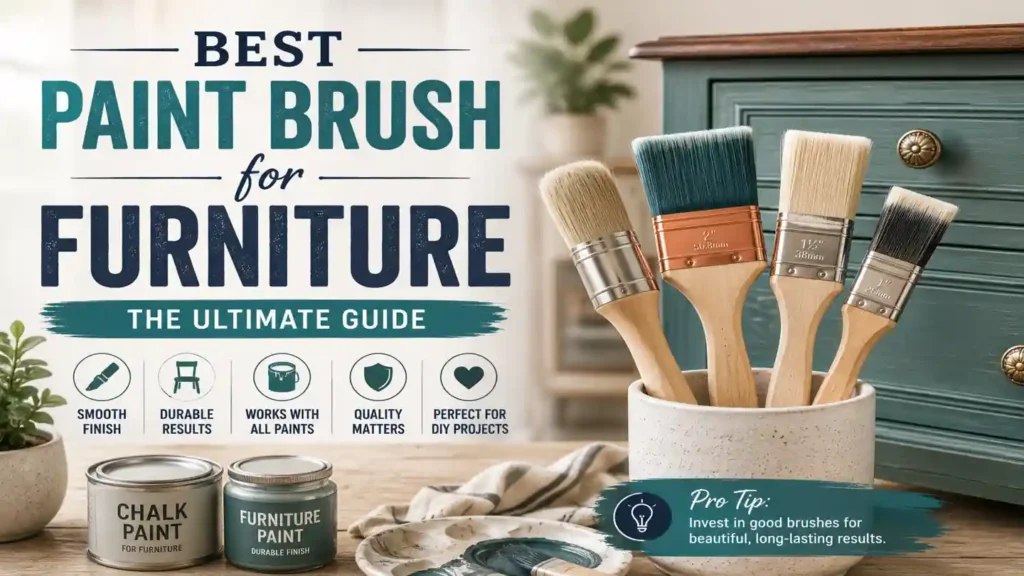
Furniture painting requires more control than painting a large wall. You need a brush that matches your paint type, furniture surface, and desired finish. Some brushes are better for chalk paint and milk paint, while others work particularly well with water-based enamel, latex paint, or protective finishes. Below, we’ll compare seven options and explain how to choose the right brush for your next furniture makeover.
Top Picks: Best Paint Brush for Furniture
- Best Overall: Zibra Grip-n-Glide Paint Brush – An ergonomic brush option for controlled furniture painting, especially when working around edges and shaped surfaces.
- Best for Tight Spaces: Wooster Shortcut Angle Sash Paint Brush – A compact angled brush that offers good control around furniture corners, trim, and smaller sections.
- Best for Smooth Finishes: Purdy Nylox Swan Paint Brush – A soft synthetic brush worth considering for smooth furniture surfaces and water-based finishes.
- Best for Water-Based Enamel: Wooster Silver Tip Paint Brush – A soft-filament brush for applying compatible water-based paints and finishes with a smooth stroke.
- Best Premium Option: Cling On S50 Shorty Paint Brush – A furniture-refinishing brush option for controlled application and detailed work.
- Best for Chalk Paint and Curved Details: Zibra Round Paint Brush – A rounded brush shape that can help cover carved details, spindles, and curved furniture components.
- Best Budget Set: Pro Grade 5-Piece Paint Brush Set – A versatile assortment of brush shapes and sizes for furniture painting, touch-ups, and smaller DIY projects.
Affiliate disclosure: As an Amazon Associate I earn from qualifying purchases.
Comparison Table: Best Paint Brush for Furniture
| Product Name | Best For | Check Price |
|---|---|---|
| Zibra Grip-n-Glide Paint Brush | Overall furniture painting | Check on Amazon |
| Wooster Shortcut Angle Sash Paint Brush | Tight spaces and corners | Check on Amazon |
| Purdy Nylox Swan Paint Brush | Smooth finishes | Check on Amazon |
| Wooster Silver Tip Paint Brush | Water-based enamel | Check on Amazon |
| Cling On S50 Shorty Paint Brush | Premium furniture refinishing | Check on Amazon |
| Zibra Round Paint Brush | Chalk paint and curved details | Check on Amazon |
| Pro Grade 5-Piece Paint Brush Set | Budget-friendly variety | Check on Amazon |
The links above are tagged Amazon product-search links, not verified individual product listings. Check the exact brush model, size, bristle material, and seller before ordering. Brush performance also depends on the paint or finish being applied.
1. Zibra Grip-n-Glide Paint Brush – Best Overall
Zibra Grip-n-Glide is a useful option for furniture painters who want a brush that feels comfortable and offers control during longer painting sessions. Furniture often has a mixture of flat panels, narrow edges, corners, and shaped sections, so a brush that is easy to maneuver can make the work more manageable.
The ergonomic design is intended to provide a comfortable grip and help users guide the brush through different strokes. This can be helpful when painting furniture legs, table edges, drawer fronts, and other areas where maintaining consistent pressure matters.
For the best results, choose a size and shape that matches your project. A medium-width brush is useful for many furniture surfaces, while a smaller brush gives you more control around hardware, narrow trim, and decorative details.
Before purchasing, check the specific Grip-n-Glide model and its recommended paint compatibility. Different furniture coatings have different application requirements, and the brush should match the product you’re using.
As with any furniture brush, avoid loading the bristles with too much paint. A moderate amount helps you spread the coating more evenly and reduces the risk of drips around corners and edges.
Pros
- Ergonomic design for comfortable handling
- Useful for controlled furniture painting
- Suitable for working around edges and shaped surfaces
- Helps with detailed brush movements
- Available in different brush styles and sizes
Cons
- Exact performance depends on the selected model
- May not be the best choice for every large flat surface
- Size selection is important for detailed projects
- Premium brush options can cost more than basic sets
Best For: DIY furniture painters who want a comfortable, easy-to-control brush for general refinishing and detail work.
2. Wooster Shortcut Angle Sash Paint Brush – Best for Tight Spaces
The Wooster Shortcut Angle Sash Paint Brush is a practical choice when furniture has narrow corners, recessed panels, trim, and other areas that are difficult to reach with a standard long-handled brush.
Its short handle is the main advantage. It fits comfortably in the hand and gives you more control over small movements. This can be especially useful when painting the inside edges of drawers, chair components, table legs, and cabinet-style furniture.
The angled brush shape also helps when working along edges and corners. Instead of struggling to keep a straight brush aligned with a narrow section, you can use the angled tip to guide the paint more precisely.
The synthetic bristle blend is suitable for compatible water-based and oil-based coatings. This makes the brush versatile for many furniture projects, although you should always check the specific product instructions.
Because of its compact design, it may take longer to cover a large tabletop or broad dresser side. It works best as a detail and control brush rather than a replacement for every brush in your collection.
Pros
- Short handle provides good control
- Angled shape helps reach corners and edges
- Useful for furniture trim and narrow sections
- Synthetic bristles suit many paint types
- Convenient for smaller DIY projects
Cons
- Short handle may not suit everyone’s grip
- Less efficient for large flat surfaces
- Smaller brush width may require more strokes
- Requires careful cleaning after use
Best For: Painting furniture corners, drawer edges, chair details, narrow trim, and other tight spaces.
3. Purdy Nylox Swan Paint Brush – Best for Smooth Finishes
Purdy Nylox Swan is worth considering when your main goal is achieving a smooth finish on furniture. Soft synthetic bristles can help distribute paint evenly and reduce the appearance of heavy brush marks when used with a compatible coating and proper technique.
This type of brush is particularly useful for smooth surfaces such as dresser fronts, cabinet doors, table legs, and other furniture components that need a neat appearance.
The soft bristles are designed to release paint smoothly. This is helpful when applying water-based enamel and other compatible finishes that benefit from a controlled, light touch.
One important advantage of a soft brush is that it can help you avoid pressing too hard against the surface. Excessive pressure can create visible lines and uneven paint distribution. Instead, load the brush moderately and use long, consistent strokes.
The Swan shape is suitable for broader sections, but the right width depends on the size of your furniture. A wider brush can cover flat surfaces more quickly, while a smaller one gives you better control around edges and details.
Pros
- Soft synthetic bristles
- Useful for smooth furniture surfaces
- Suitable for compatible water-based finishes
- Helps distribute paint with controlled strokes
- Available in different widths
Cons
- Soft bristles may feel less controlled with thick coatings
- Not ideal for every rough or heavily textured surface
- Larger sizes may be awkward for narrow details
- A premium brush may cost more than basic alternatives
Best For: Furniture painters who want a softer brush for smooth surfaces and carefully applied water-based coatings.
4. Wooster Silver Tip Paint Brush – Best for Water-Based Enamel
Wooster Silver Tip is a useful brush to consider when applying water-based enamel or other compatible coatings to furniture. Its soft synthetic filaments are intended for smooth application, making it suitable for projects where a neat, even finish is more important than aggressive paint pickup.
Furniture enamel is often used on tables, dressers, cabinets, shelves, and other pieces that need a durable painted surface. A soft brush can help spread the coating without leaving unnecessarily heavy brush strokes.
The Silver Tip range includes different brush shapes and widths. A flat brush is useful for broad panels and straight surfaces, while an angled style can make it easier to work around furniture edges and narrow sections.
For a smooth finish, avoid repeatedly brushing over paint that has started to dry. This can disturb the coating and create visible marks. Apply the paint in controlled passes, maintain a wet edge where practical, and follow the paint manufacturer’s recoat instructions.
Although it is particularly useful for compatible water-based finishes, check the exact brush model before using it with an unfamiliar coating.
Pros
- Soft synthetic filaments
- Suitable for compatible water-based finishes
- Useful for furniture panels and smooth surfaces
- Available in different shapes and widths
- Helps with controlled paint application
Cons
- Not every model suits every furniture detail
- Soft filaments may not be ideal for very thick coatings
- Requires proper paint loading to avoid streaks
- Brush marks can still occur with poor technique
Best For: Applying compatible water-based enamel and smooth furniture coatings to flat panels, doors, and other visible surfaces.
5. Cling On S50 Shorty Paint Brush – Best Premium Option
Cling On S50 Shorty is a furniture-refinishing brush option for painters who want a dedicated tool for controlled application. It is particularly worth considering when working on projects that involve multiple furniture shapes and repeated brush strokes.
The Shorty style is designed for maneuverability. A compact brush can be useful when painting chair spindles, table legs, drawer fronts, and other components where a long handle may get in the way.
Its synthetic bristles make it a candidate for compatible water-based paints and finishes. This is useful for furniture painters who work with modern water-based coatings and want a brush that can be cleaned and reused.
A dedicated furniture brush can be a worthwhile investment if you refinish pieces regularly. However, the brush should still be matched to the coating. Check the manufacturer’s guidance for the exact S50 model, especially if you plan to use chalk paint, milk paint, or a thicker specialty product.
For large flat surfaces, consider pairing it with a wider brush or suitable roller. Using the right tool for each section can save time and help maintain a consistent finish.
Pros
- Compact design for controlled application
- Useful for furniture details and shaped sections
- Synthetic bristles
- Worth considering for repeated refinishing work
- Convenient for areas where a long handle is awkward
Cons
- Premium pricing may not suit occasional users
- Short format may not be ideal for every hand size
- A separate wider brush may be needed
- Check compatibility with the exact coating before use
Best For: Frequent furniture refinishers who want a premium, maneuverable brush for detailed work.
6. Zibra Round Paint Brush – Best for Chalk Paint and Curved Details
The Zibra Round Paint Brush is a useful option for furniture with rounded, carved, or decorative sections. Its rounded shape can help distribute paint around chair spindles, turned legs, curved trim, and other areas that are difficult to cover with a wide flat brush.
It is particularly worth considering for chalk-paint projects. Chalk paint is commonly used for decorative furniture makeovers, distressed finishes, and vintage-inspired pieces. A round brush can help you work the paint into detailed shapes and corners.
The shape also provides a different painting experience from a traditional flat brush. You can use the rounded tip to reach around curved components and adjust your stroke direction as the furniture shape changes.
However, a round brush is not necessarily the most efficient tool for painting a large tabletop or broad dresser panel. For those surfaces, a flat brush or suitable roller may help you achieve more consistent coverage.
If you want a distressed or textured appearance, brush technique can also influence the result. For a smoother finish, use controlled strokes and avoid applying too much paint at once.
Pros
- Rounded shape for curved furniture components
- Useful for carved and decorative details
- Convenient for chair spindles and turned legs
- Worth considering for chalk-paint projects
- Offers a different grip and stroke style from flat brushes
Cons
- Less efficient for broad flat surfaces
- May require more time on large projects
- Final finish depends on paint and technique
- Not every round brush size suits every detail
Best For: Painting furniture with curved legs, carved trim, decorative details, and chalk-painted surfaces.
7. Pro Grade 5-Piece Paint Brush Set – Best Budget Set
The Pro Grade 5-Piece Paint Brush Set is a practical option for beginners and occasional furniture painters who want several brush sizes without buying each one separately.
A set can be helpful because furniture projects often involve different types of surfaces. You may need a wider brush for a tabletop, a smaller angled brush for edges, and a narrow brush for corners or decorative details.
Having several brush shapes available makes it easier to choose the right tool as you move from one part of the furniture to another. It can also be useful for small touch-ups and other home painting projects.
The synthetic bristles are intended for common household painting applications. Check the exact set specifications and paint compatibility before using it with specialty coatings or solvent-based finishes.
A budget set may not offer the same durability or paint-release characteristics as a premium professional brush. For an occasional dresser makeover or a small furniture refresh, however, the convenience of having several sizes can make it a reasonable starting point.
Clean each brush carefully after use and store it properly to help preserve the bristles.
Pros
- Multiple brush sizes in one set
- Convenient for beginners
- Useful for furniture edges and flat sections
- Suitable for many general DIY painting tasks
- Budget-friendly way to build a basic brush collection
Cons
- Performance may vary between individual brushes
- May not provide the smoothest finish for fine furniture work
- Bristle durability can differ from premium brushes
- Exact paint compatibility should be checked
Best For: Beginners and budget-conscious DIYers who want a variety of brush sizes for furniture and general home projects.
Buying Guide: How to Choose the Best Paint Brush for Furniture
Choosing a furniture paint brush is easier when you consider the paint type, surface shape, bristle material, and finish you want. These factors can help you avoid unnecessary brush marks and make the painting process more comfortable.
1. Match the Brush to Your Paint Type
The paint you plan to use should influence your brush selection.
- Chalk paint: A round or flat brush can work well, depending on the furniture shape and whether you want a smooth or textured appearance.
- Water-based enamel: A quality synthetic brush with soft or medium-soft filaments is often a good choice.
- Latex paint: Synthetic nylon or polyester brushes are generally suitable.
- Milk paint: Choose a brush compatible with the manufacturer’s recommended application method.
- Oil-based paint: Check the brush manufacturer’s guidance. Natural-bristle brushes are traditionally used with many oil-based coatings, although suitable synthetic brushes are also available.
- Polyurethane and clear finishes: Use a brush specifically recommended for the product, especially when applying thin protective coatings.
Do not assume that one brush is ideal for every type of furniture paint.
2. Choose the Right Bristle Material
Bristle material affects how a brush holds, releases, and spreads paint.
Synthetic bristles: Nylon, polyester, and blended filaments are commonly used with water-based paints. They retain their shape when exposed to water and are versatile for many furniture coatings.
Natural bristles: Natural-bristle brushes are traditionally used with certain oil-based paints, stains, and finishes. They may absorb water and become less suitable for many water-based products.
Foam brushes: Foam applicators can be useful for certain small projects and thin finishes, but they are not a universal replacement for a quality bristle brush.
Always check the paint and brush manufacturer’s recommendations before choosing.
3. Select the Correct Brush Shape
Furniture has more varied shapes than a flat wall, so brush shape matters.
- Flat brush: Useful for tabletops, drawer fronts, cabinet doors, and broad flat panels.
- Angled brush: Helpful for corners, edges, narrow trim, and recessed sections.
- Round brush: Useful for curved legs, spindles, carved details, and decorative furniture.
- Short-handled brush: Offers control in tight spaces and around furniture components.
- Detail brush: Helps with small decorative areas and touch-ups.
For many furniture projects, having one medium flat brush and one smaller angled brush is a useful starting combination.
4. Consider Brush Width
Brush width determines how much surface you can cover with each stroke.
| Brush Width | Suitable Uses |
|---|---|
| 1 inch | Small details, narrow trim, and touch-ups |
| 1.5 inches | Chair components, edges, and smaller furniture sections |
| 2 inches | General furniture painting and medium-sized surfaces |
| 2.5 inches | Drawer fronts, cabinet panels, and wider sections |
| 3–4 inches | Large flat furniture surfaces and broad coverage |
These are general guidelines rather than strict rules. The shape of the furniture and the paint’s working characteristics also matter.
5. Look for Softness and Flexibility
Brush stiffness affects how paint is applied.
Soft bristles can be useful when you want a smooth finish on a flat furniture surface. They help you lay off the paint with a lighter touch.
Medium-stiff bristles can provide more control with thicker coatings and help work paint into shaped details.
Very stiff brushes may leave more visible marks if you use them on a smooth surface with a thin finish. Choose a brush that matches the coating and the finish you want.
6. Check for Bristle Shedding
Loose bristles can become trapped in wet paint and leave unwanted marks on furniture.
Before starting, inspect the brush and gently flex the bristles. Remove any loose strands, and test the brush on scrap material.
A well-made brush with securely attached filaments can save time during painting and reduce the need to remove stray bristles from the finished surface.
7. Consider Handle Comfort
Furniture refinishing can involve many short, repeated strokes. A comfortable handle helps you maintain control and reduces hand fatigue.
A short handle may be easier to maneuver around drawer interiors and chair components. A conventional handle may feel more natural when painting large panels or longer surfaces.
Choose a design that feels comfortable in your hand rather than assuming that one handle style suits everyone.
8. Think About Brush Marks
Brush marks are a common concern when painting furniture. The right brush helps, but the paint and application method are equally important.
For a smoother finish:
- Choose a suitable soft or medium-soft brush.
- Avoid overloading the bristles.
- Apply thin, even coats.
- Follow the paint’s recommended working time.
- Avoid repeatedly brushing over paint that has started to set.
- Sand between coats only when the product instructions recommend it.
Some paints are designed to level more smoothly than others. A quality brush cannot completely eliminate marks if the paint is too thick or applied incorrectly.
9. Check Cleaning and Reuse Requirements
A reusable brush can provide better value over time, especially if you refinish furniture regularly.
Water-based paints generally require prompt cleaning with water and the recommended cleaner. Oil-based coatings may require a different cleaning method.
Never leave paint to dry in the bristles. Clean the brush thoroughly, reshape it, and allow it to dry before storing it.
10. Consider Your Project Size
A small chair makeover does not require the same brush collection as a full dining-room furniture project.
For a single small piece, one medium brush and one detail brush may be enough. For several pieces, a wider selection can make the work easier and reduce interruptions.
Think about the number of surfaces, the amount of detail, and whether you plan to apply a protective finish after painting.
How to Paint Furniture With a Brush
Using a good brush is only part of getting a professional-looking result. Proper preparation and controlled application are equally important.
Step 1: Remove Hardware and Accessories
Take off handles, knobs, hinges, and removable hardware when practical. This gives you better access to the furniture surface and reduces the chance of getting paint on parts that should remain unpainted.
Place small pieces in a container so they are easy to find when the project is complete.
Step 2: Clean the Furniture
Remove dust, grease, fingerprints, polish, and other contaminants. Use a cleaner suitable for the furniture material and allow the surface to dry completely.
Paint applied over dirt or oily residue may not adhere properly.
Step 3: Prepare the Surface
Inspect the existing finish. Remove loose paint and repair damaged areas as needed.
Sand glossy surfaces when required by the paint manufacturer’s instructions. If the furniture has deep scratches, dents, or damaged veneer, address those problems before painting.
For older painted furniture, consider the possibility of lead-based paint before sanding or disturbing the coating. Follow applicable lead-safe procedures.
Step 4: Apply Primer if Needed
Some furniture paints are designed for direct application, while others need a compatible primer.
Use a suitable primer when the surface is glossy, stained, difficult to bond to, or otherwise requires additional preparation. Follow the coating manufacturer’s guidance.
Step 5: Load the Brush Properly
Dip only part of the bristles into the paint. Gently remove excess paint against the inside of the container.
Avoid filling the entire brush with paint. Too much paint can cause drips, uneven coverage, and buildup around furniture edges.
Step 6: Paint Large Flat Areas First
Use a suitable flat brush for broad surfaces such as tabletops, drawer fronts, and cabinet-style panels.
Apply the paint in smooth, consistent strokes. Work in manageable sections and maintain a wet edge where possible.
Step 7: Paint Corners and Decorative Details
Switch to a smaller angled or round brush for narrow edges, corners, chair spindles, and carved details.
Use controlled strokes and check for paint buildup in recessed areas. Remove excess paint before it forms drips.
Step 8: Allow the First Coat to Dry
Follow the paint manufacturer’s recommended drying and recoat times. Do not apply another coat simply because the surface feels dry to the touch.
Different paints have different drying and curing requirements.
Step 9: Apply Additional Coats
Apply another thin coat when recommended to improve coverage and create a more even appearance.
If the instructions call for sanding between coats, use the specified abrasive and remove all sanding dust before repainting.
Step 10: Apply a Protective Finish if Needed
Some furniture paints need a compatible protective topcoat, while others are designed to be used without one.
Choose a clear finish that works with the paint and intended use of the furniture. Test the combination on a small area before coating the entire piece.
Allow the final finish to cure fully before placing objects on the furniture or using it heavily.
Common Mistakes to Avoid When Painting Furniture
Using the Wrong Brush for the Paint
A natural-bristle brush may not be the best choice for a water-based coating, while a very soft brush may struggle with a thick product. Match the brush material and stiffness to the paint.
Choosing Only One Brush Size
A wide brush can cover a tabletop quickly but may be awkward around chair spindles and narrow trim. Keep a smaller brush available for detail work.
Loading Too Much Paint
Excess paint can cause drips and heavy buildup around edges. Load the brush moderately and remove excess before applying it to furniture.
Pressing Too Hard
Heavy pressure can spread the bristles and create uneven strokes. Use a light, controlled touch and allow the brush to do the work.
Brushing Over Paint That Has Started to Dry
Repeatedly working over partially dried paint can create streaks and rough patches. Apply the paint in manageable sections and respect its working time.
Skipping Surface Preparation
Dust, grease, loose paint, and glossy finishes can interfere with adhesion. Clean and prepare the furniture before painting.
Ignoring Bristle Shedding
Loose bristles can become embedded in the wet coating. Inspect your brush before use and remove stray strands promptly.
Applying Thick Coats
Thick paint layers may dry unevenly and leave visible marks. Follow the product’s application instructions and build coverage with suitable coats.
Forgetting to Clean the Brush
Dried paint can damage bristles and make a reusable brush difficult to use again. Clean it promptly using the method recommended for the coating.
Frequently Asked Questions
What is the best paint brush for furniture?
Zibra Grip-n-Glide is a useful overall option for controlled furniture painting. Wooster Shortcut is worth considering for tight spaces, while Purdy Nylox Swan and Wooster Silver Tip are options for smooth finishes with compatible coatings. The best choice depends on your paint and furniture shape.
What type of brush is best for painting wooden furniture?
A quality synthetic brush is a versatile starting point for many water-based furniture paints. A medium-width flat brush works well for larger panels, while an angled or round brush helps with corners, legs, and decorative details.
Is a synthetic or natural-bristle brush better for furniture painting?
Synthetic brushes are generally more versatile for water-based paints because their bristles retain their shape when wet. Natural-bristle brushes are traditionally used with many oil-based coatings. Check the paint manufacturer’s instructions before choosing.
What size paint brush should I use for furniture?
A 2-inch brush is a useful general-purpose size for many furniture projects. A 1-inch or 1.5-inch brush is helpful for details, while a 2.5-inch or wider brush can cover larger panels more quickly.
What is the best brush for chalk paint on furniture?
A round brush is useful for chalk painting furniture with carved details, curved legs, and decorative trim. A flat brush is often more efficient for tabletops and broad panels. Choose the shape according to the furniture design and desired finish.
How do I get a smooth finish when painting furniture?
Prepare the surface, use a suitable brush, apply thin coats, and avoid repeatedly brushing over paint that has started to dry. Follow the manufacturer’s instructions for drying and sanding between coats when required.
Can I use a regular paint brush for furniture?
Yes, provided the brush is suitable for the paint and surface. A quality brush with appropriate bristles and a comfortable handle will generally provide better control than a worn or poorly made brush.
Is an angled brush better for furniture?
An angled brush is useful for corners, edges, narrow trim, and detailed furniture components. However, a flat brush may be more efficient for broad surfaces. Many furniture painters benefit from having both shapes available.
Should I use a foam brush to paint furniture?
A foam brush can be useful for small projects and certain thin finishes, but it may not be ideal for every furniture paint. A quality bristle brush usually offers more versatility for larger surfaces and detailed areas.
How can I prevent brush strokes on furniture?
Use a brush suited to the coating, avoid applying too much paint, and work with smooth, consistent strokes. Some furniture paints level better than others, so choose a product designed for the finish you want.
How many coats of paint should furniture have?
The number of coats depends on the paint, surface, color change, and desired coverage. Many projects need more than one coat, but you should follow the product’s instructions rather than applying a fixed number automatically.
Do I need to sand furniture before painting?
Not always. Some furniture paints allow application with minimal sanding, while glossy or damaged surfaces may need more preparation. Follow the paint manufacturer’s instructions and make sure the surface is clean and stable.
How do I clean a furniture paint brush?
For water-based paint, clean the brush promptly with water and the recommended cleaner. For oil-based products, use the cleaning method specified on the label. Remove paint from the base of the bristles, reshape the brush, and let it dry before storage.
Can I use the same brush for paint and polyurethane?
It depends on the brush and products. A brush suitable for the paint may also work with a compatible clear finish, but separate clean brushes can help prevent contamination and improve finish quality. Always check the coating manufacturer’s recommendations.
Final Words
The best paint brush for furniture depends on the type of paint, the shape of your furniture, and the finish you want. Zibra Grip-n-Glide is a useful overall option, Wooster Shortcut offers control in tight spaces, and Purdy Nylox Swan is worth considering for smooth surfaces. Wooster Silver Tip and Cling On S50 are additional options for furniture refinishing, while Zibra Round is helpful for curved details and chalk-paint projects.
Before buying, consider bristle material, brush shape, width, and paint compatibility. Prepare the furniture properly, apply thin coats, and clean your brush after each session. The right combination of tools and technique can help you achieve a more even, attractive finish.
Helpful Resources
- Purdy: How to Choose a Paint Brush – Learn how bristle softness, brush shape, and width affect paint application and finish quality.
- Bob Vila: The Best Paint Brushes for Cabinets – Explore brush characteristics and selection considerations for smooth painted surfaces and detailed woodwork.