
A best paint for boat trailer choice can help protect the frame from rust, moisture, road salt, and repeated exposure to water at boat ramps. Boat trailers face tougher conditions than ordinary utility trailers because their frames regularly get wet, collect road grime, and experience scratches from loading and launching. A standard outdoor paint may not provide enough protection for this environment.
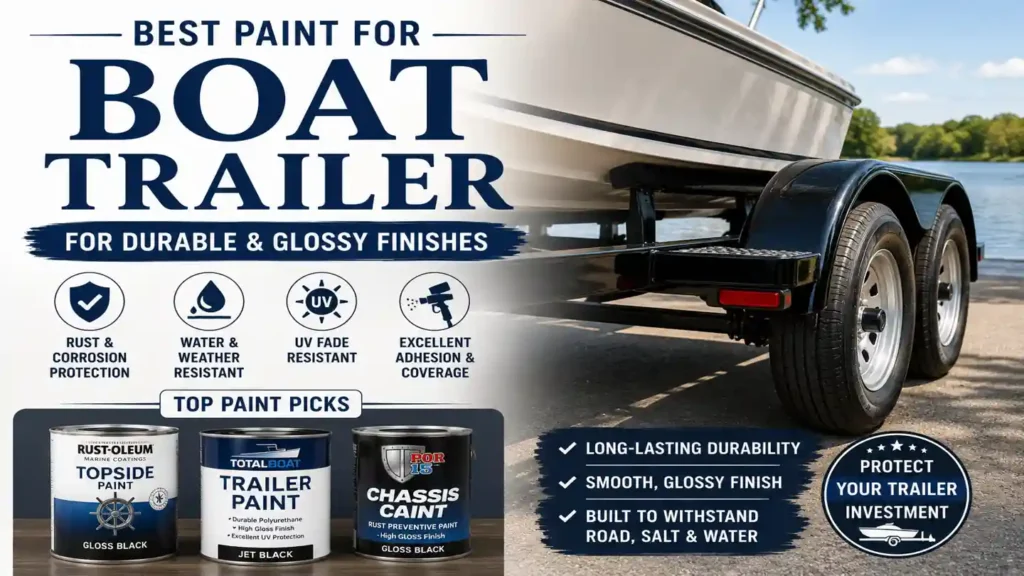
The right coating depends on whether your trailer is made from painted steel, galvanized steel, or aluminum. Rust-preventive coatings and durable chassis paints are useful for steel frames, while damaged galvanized areas need compatible zinc-rich repair products. Below, we’ll compare seven options and explain how to prepare, paint, and maintain your boat trailer.
Top Picks: Best Paint for Boat Trailer
- Best Overall: KBS RustSeal Rust Preventive Coating – A moisture-cured coating designed for rust prevention on properly prepared steel and other compatible surfaces, including boat trailers.
- Best for Heavy Rust Protection: POR-15 Rust Preventive Coating – A tough coating that can be applied over properly prepared, tightly adhered rust to protect compatible metal.
- Best for Rusty Frames: Eastwood Rust Encapsulator – A rust-control coating to consider when restoring a steel trailer frame with surface corrosion.
- Best UV-Resistant Chassis Finish: KBS BlackTop Chassis Paint – A durable urethane topcoat for a finished frame, especially when used over a compatible rust-preventive base coat.
- Best Traditional Enamel: Rust-Oleum Professional High Performance Enamel – A practical metal-finish option for properly prepared trailer surfaces in suitable freshwater and general outdoor conditions.
- Best for Galvanized Trailer Repairs: Rust-Oleum Cold Galvanizing Compound – A zinc-rich coating for localized repairs to exposed steel, damaged galvanizing, welds, and cut edges.
- Best for General Metal Repainting: Hammerite Rust Cap Paint – A protective metal-paint option to evaluate for compatible, properly prepared trailer surfaces.
Affiliate disclosure: As an Amazon Associate I earn from qualifying purchases.
Comparison Table: Best Paint for Boat Trailer
| Product Name | Best For | Check Price |
|---|---|---|
| KBS RustSeal Rust Preventive Coating | Overall steel trailer protection | Check on Amazon |
| POR-15 Rust Preventive Coating | Heavy rust protection | Check on Amazon |
| Eastwood Rust Encapsulator | Rusty steel frame restoration | Check on Amazon |
| KBS BlackTop Chassis Paint | UV-resistant chassis finish | Check on Amazon |
| Rust-Oleum Professional High Performance Enamel | General metal repainting | Check on Amazon |
| Rust-Oleum Cold Galvanizing Compound | Localized galvanized-steel repairs | Check on Amazon |
| Hammerite Rust Cap Paint | Compatible outdoor metal surfaces | Check on Amazon |
The links are tagged Amazon product-search links, not verified individual listings. Confirm the exact product, formulation, container size, and seller before ordering. These products are not interchangeable: some are rust-preventive base coatings, some are topcoats, and one is intended primarily for localized galvanized-steel repairs.
1. KBS RustSeal Rust Preventive Coating – Best Overall
KBS RustSeal Rust Preventive Coating is a strong option for protecting a steel boat trailer frame against corrosion. It is a single-component, moisture-cured coating designed to seal compatible metal surfaces against moisture and oxygen. The manufacturer specifically lists boat trailers among its marine applications.
One of its main advantages is that it can bond to properly prepared bare metal, galvanized steel, and tightly adhered surface rust. You do not necessarily have to remove every trace of firmly attached rust, although loose flakes, scale, grease, and contaminants must be removed before application.
RustSeal forms a hard protective film after curing. KBS also describes it as resistant to road salts and many chemicals, which makes it worth considering for trailers that travel on wet roads or are regularly used around saltwater.
For a complete restoration, the manufacturer recommends its KBS Klean, RustBlast, and RustSeal preparation system. If the painted frame will receive direct sunlight, a compatible UV-resistant topcoat such as KBS BlackTop can help preserve the finish.
For marine applications or surfaces that remain exposed to water, KBS recommends at least three coats. Follow the current product instructions for application thickness, recoat timing, and curing.
Pros
- Specifically listed for boat trailer applications
- Suitable for properly prepared steel and galvanized metal
- Can be applied over tightly adhered surface rust
- Creates a moisture-resistant protective coating
- Available in multiple colors and container sizes
- Can be applied by brush, roller, or spray equipment
Cons
- Requires careful cleaning and surface preparation
- Multiple coats may be needed for marine exposure
- Application and curing conditions matter
- A UV-resistant topcoat may be desirable for exposed areas
Best For: Steel boat trailer frames that need a dedicated rust-preventive coating.
2. POR-15 Rust Preventive Coating – Best for Heavy Rust Protection
POR-15 Rust Preventive Coating is another option for restoring a steel boat trailer with existing corrosion. It is designed to bond to properly prepared rusted or seasoned metal and form a dense protective film.
This coating is especially useful when you are dealing with an older trailer that has developed surface rust on its frame rails, crossmembers, brackets, or other steel components. Instead of relying on ordinary enamel to cover the affected area, POR-15 is formulated specifically for rust prevention.
The coating can help seal metal against water, road salt, and other corrosive contaminants. Its tough finish is useful for equipment and chassis applications where ordinary decorative paint may not provide enough protection.
Surface preparation is still essential. Remove loose rust, flaky paint, grease, and dirt. POR-15 recommends using its compatible cleaner and metal-preparation products to help achieve proper adhesion.
One important consideration is sunlight exposure. POR-15’s rust-preventive coating may change appearance when exposed to UV light, so a compatible topcoat is worth considering on visible trailer surfaces.
Do not apply it over structural damage or badly deteriorated steel. If a trailer frame has deep corrosion, cracks, or weakened welds, have it inspected and repaired before painting.
Pros
- Designed for rust prevention
- Suitable for properly prepared rusted metal
- Helps seal surfaces against moisture and corrosive contaminants
- Useful for trailer frames and marine equipment
- Tough protective finish
- Available in different container sizes
Cons
- Requires thorough surface preparation
- UV exposure can affect the appearance
- Topcoat may be needed for visible outdoor areas
- Not a substitute for repairing structurally damaged metal
Best For: Older steel boat trailers with surface rust that need a dedicated rust-preventive coating.
3. Eastwood Rust Encapsulator – Best for Rusty Frames
Eastwood Rust Encapsulator is worth considering when your boat trailer has areas of surface rust that need treatment before refinishing. Rust can develop around welds, brackets, crossmembers, spring hangers, and other locations where water and road debris collect.
Rather than treating the project as a simple color change, a rust-control coating helps address the condition of the steel before you apply a final finish.
Eastwood’s Rust Encapsulator range is designed for prepared metal with corrosion concerns. It is useful for restoration work where removing every trace of tightly attached rust may be difficult. However, loose scale and unstable material still need to be removed.
After treating the frame, check the manufacturer’s instructions to determine whether the selected formulation needs a separate topcoat. Trailer frames are exposed to sunlight, water, road debris, and abrasion, so a compatible finish may improve the appearance and provide additional protection.
Pay particular attention to the underside and inside edges of the frame. These areas can collect moisture and may be missed when applying paint from only one side.
Pros
- Designed for rust-control applications
- Useful for steel frame restoration
- Helps prepare corroded surfaces for refinishing
- Suitable for hard-to-reach frame areas with the appropriate application method
- Available in different formulations and finishes
Cons
- Loose rust must still be removed
- Exact preparation depends on the formulation
- A separate topcoat may be necessary
- Not intended to repair weakened or perforated steel
Best For: Steel boat trailers with surface rust that need treatment before applying a durable finish.
4. KBS BlackTop Chassis Paint – Best UV-Resistant Chassis Finish
KBS BlackTop Chassis Paint is a useful choice when you want a finished black appearance on a restored boat trailer frame. It is a single-stage moisture-cured urethane coating designed for chassis, trailers, and suspension components.
Unlike a rust-treatment product that focuses mainly on sealing the metal, BlackTop is intended to provide a durable exterior finish. It is available in gloss, OEM satin, and flat black, making it easier to choose an appearance that suits your trailer.
The product can be applied over compatible RustSeal coatings, properly prepared bare metal, primed surfaces, or previously painted surfaces. For a full restoration, KBS recommends using a rust-preventive base coating before applying BlackTop where additional corrosion protection is needed.
Its UV stability is particularly relevant for a boat trailer stored outdoors. Sun exposure can gradually affect the appearance of some rust-preventive coatings, so a suitable UV-resistant topcoat can help maintain the finish.
This is not the same as a rust converter or a substitute for surface preparation. Remove loose rust and contaminants, then verify that the underlying surface is compatible before application.
Pros
- Designed for chassis and trailer applications
- UV-stable finish
- Available in gloss, satin, and flat black
- Can be brushed, rolled, or sprayed
- Suitable as a topcoat over compatible rust-preventive coatings
- Provides a finished appearance for restored frames
Cons
- Best results depend on proper surface preparation
- May need a separate rust-preventive base coat
- Requires attention to recoat and curing windows
- Not a replacement for structural repairs
Best For: Boat trailer owners who want a durable, UV-resistant finish over a properly prepared or treated steel frame.
5. Rust-Oleum Professional High Performance Enamel – Best Traditional Enamel
Rust-Oleum Professional High Performance Enamel is a practical option for repainting compatible metal surfaces when you want a traditional enamel finish. It is worth considering for a trailer that is structurally sound and has been properly cleaned and prepared.
An enamel coating can provide a protective finish and refresh the appearance of an older trailer. It is available in different colors and application formats, which can make it convenient for repainting frame rails, brackets, and other exposed metal parts.
However, this is a general-purpose protective enamel rather than a complete marine trailer corrosion-control system. It should not be treated as a replacement for rust treatment, a compatible metal primer, or a dedicated coating system in demanding saltwater conditions.
For a painted steel trailer used mainly in freshwater, a suitable enamel over properly prepared and primed metal may be a reasonable maintenance approach. If the trailer regularly encounters saltwater or road salt, consider a more specialized corrosion-resistant coating system.
Check the exact product label for approved surfaces, primer requirements, drying time, and exposure limitations. Different Rust-Oleum enamel products can have different specifications.
Pros
- Practical option for general metal repainting
- Available in multiple colors
- Suitable for compatible outdoor metal surfaces
- Useful for maintenance and appearance restoration
- Available in spray and other application formats
Cons
- Not a dedicated boat-trailer coating system
- Rust treatment and primer may be required
- Less specialized than marine-oriented corrosion systems
- Saltwater exposure requires additional consideration
Best For: Repainting a sound steel trailer used mainly in general outdoor and freshwater conditions.
6. Rust-Oleum Cold Galvanizing Compound – Best for Galvanized Trailer Repairs
Rust-Oleum Cold Galvanizing Compound is different from a conventional trailer-frame paint. It is a zinc-rich coating intended for localized repairs to galvanized metal and exposed steel.
This makes it particularly useful if your boat trailer is galvanized and the protective zinc layer has been damaged around welds, drilled holes, scratches, or cut edges.
Galvanized steel is protected by its zinc coating. When that layer is damaged, the exposed steel can begin to corrode. A suitable cold-galvanizing compound can provide zinc-rich protection to those localized areas.
It is not necessarily the right choice for repainting an entire trailer frame as a decorative finish. Instead, use it for appropriate repair areas and follow the manufacturer’s surface-preparation and application instructions.
If you want to apply a separate topcoat over the repaired areas, verify compatibility and the required curing time first. Do not assume that every ordinary enamel will bond properly to every zinc-rich coating.
Pros
- Zinc-rich formulation for galvanized-steel repairs
- Useful for welds, scratches, and cut edges
- Helps protect exposed steel
- Convenient for localized maintenance
- Suitable for repairing damaged galvanizing when used as directed
Cons
- Primarily a repair coating, not a complete decorative trailer paint
- Requires proper surface preparation
- Topcoat compatibility must be checked
- Not intended to repair structural corrosion
Best For: Localized corrosion protection on galvanized boat trailers where the original zinc coating has been damaged.
7. Hammerite Rust Cap Paint – Best for General Metal Repainting
Hammerite Rust Cap Paint is an option to evaluate when repainting compatible outdoor metal surfaces. It is designed for protective metal-paint applications and can be useful for refreshing a trailer frame that has been properly prepared.
The main advantage of a general metal paint is convenience. You can choose a suitable color and finish to improve the appearance of the frame while adding a protective coating.
However, boat trailers experience repeated wetting and occasional immersion at launch ramps. That makes product compatibility especially important. Do not assume that a general outdoor metal paint is automatically suitable for a frame that regularly enters saltwater.
For best results, remove loose rust, clean the metal, and use the primer recommended for the exact Hammerite product and substrate. If your trailer is galvanized, check that the selected system is approved for galvanized steel.
This paint is better viewed as an option for compatible general metal repainting rather than a specialist marine corrosion system. For frequent saltwater use, a dedicated trailer or marine-compatible coating system is generally a better starting point.
Pros
- Designed for protective metal-paint applications
- Useful for refreshing compatible outdoor metal
- Available in different finishes and colors
- Can improve the appearance of an older trailer
- Practical for general maintenance projects
Cons
- Exact compatibility with boat trailer exposure must be confirmed
- May require a suitable primer
- Not a dedicated marine immersion coating
- Saltwater use requires particular caution
Best For: General repainting of compatible steel trailer surfaces where exposure conditions match the product specifications.
Buying Guide: How to Choose the Best Paint for Boat Trailer
Choosing a coating for your boat trailer requires attention to the frame material, water exposure, existing corrosion, and the type of finish you want. These factors can help you select a suitable product.
1. Identify the Trailer Frame Material
Before buying paint, determine whether your trailer is made from painted steel, galvanized steel, or aluminum.
- Painted steel: Needs a protective coating system that prevents moisture from reaching exposed metal. Rust treatment and a suitable primer may be necessary.
- Galvanized steel: Already has a zinc protective layer. Repair damaged areas with a compatible zinc-rich product rather than automatically painting over the entire frame.
- Aluminum: Does not develop iron rust, but it can corrode. Use a coating and primer specifically approved for aluminum.
Never assume that a rust-preventive coating for steel is suitable for aluminum. Check the product label and technical data sheet before application.
2. Consider Freshwater or Saltwater Use
The type of water your trailer encounters makes a significant difference.
Freshwater use: A properly prepared steel frame with a suitable corrosion-resistant primer and durable topcoat may provide adequate protection. Regular washing and inspection are still important.
Saltwater use: Salt accelerates corrosion, especially around welds, scratches, fasteners, and areas where water remains trapped. A more robust coating system is worth considering, and the trailer should be rinsed thoroughly with fresh water after use.
For frequent saltwater launching, prioritize products with documented corrosion resistance and follow the manufacturer’s recommendations for marine exposure.
3. Choose a Rust-Preventive Coating or a Topcoat
Not all trailer paints perform the same job.
Rust-preventive coatings: Products such as KBS RustSeal and POR-15 are designed to protect compatible metal against corrosion.
Chassis topcoats: Products such as KBS BlackTop provide a finished exterior coating over suitable prepared or treated surfaces.
Traditional metal enamels: These can be useful for general repainting but may need a separate primer and may be less suitable for demanding marine exposure.
For an older rusty steel trailer, a coordinated rust-treatment and topcoat system is often a better approach than applying ordinary paint directly over corrosion.
4. Check Water and Salt Resistance
Boat trailers are exposed to more moisture than many other outdoor metal structures. A coating should be suitable for the expected exposure.
Look for manufacturer information about:
- Water resistance
- Salt-spray or corrosion testing
- Adhesion to prepared steel
- Resistance to road chemicals
- Compatibility with the existing finish
- Recommended use around marine equipment
A product described as waterproof is not automatically suitable for repeated immersion, saltwater exposure, or abrasion.
5. Evaluate UV Resistance
A boat trailer often sits outside between trips. Sunlight can gradually change the color or appearance of some coatings.
If the trailer is stored outdoors, a UV-resistant topcoat may be useful. Check whether the rust-preventive base coating needs a separate finish to protect its appearance.
6. Check Primer Requirements
Primer selection depends on the frame material and coating system.
- Bare steel may need a compatible corrosion-resistant primer.
- Rust-treated steel may need a coating designed to bond to the treated surface.
- Galvanized steel may require a specialized galvanized-metal primer or zinc-rich repair coating.
- Aluminum generally needs a suitable aluminum-compatible primer.
Do not mix products from different systems without checking compatibility. A primer that works with one topcoat may cause adhesion problems with another.
7. Consider Brush, Roller, or Spray Application
Each application method has advantages.
Brush application: Useful for welds, corners, brackets, and detailed areas. It can also help place coating into difficult-to-reach joints.
Roller application: Convenient for accessible frame rails and larger flat sections.
Spray application: Useful for complex frame shapes, brackets, and hard-to-reach areas. It requires careful masking and suitable ventilation.
A combination of methods can provide better coverage than relying on one tool for the entire trailer.
8. Check Coverage and Container Size
Boat trailer frames have many surfaces that are easy to overlook. Measure the frame and estimate the amount of coating needed before ordering.
Consider:
- Frame length and width
- Crossmembers and support brackets
- Tongue and winch-post area
- Axle and suspension components
- Number of recommended coats
- Primer and topcoat coverage
- Additional treatment for enclosed frame sections
Follow the manufacturer’s stated coverage rather than assuming one container will cover the entire trailer.
9. Consider the Inside of the Frame Rails
Moisture can collect inside hollow trailer frame sections, where ordinary exterior painting cannot reach.
Inspect drain openings and accessible cavities. A suitable cavity-protection product may be useful for internal surfaces, but it should be compatible with the trailer material and should not block drainage openings.
Keep drain holes clear so trapped water can escape.
10. Think About Maintenance and Repair
Even a high-quality coating can be damaged by stones, loading equipment, straps, and repeated launching.
Choose a product that you can inspect and touch up when necessary. Regular maintenance is especially important around welds, fasteners, and areas that contact the ground or launching equipment.
How to Paint a Boat Trailer
Painting a boat trailer is a preparation-heavy project. A durable finish depends on cleaning, rust removal, correct product selection, and sufficient curing time.
Step 1: Identify the Frame Material
Determine whether the trailer is painted steel, galvanized steel, or aluminum. Check the existing coating and identify any areas where the metal is exposed.
Select a product system that is approved for that material.
Step 2: Remove the Boat and Protect Accessories
Whenever possible, remove the boat from the trailer before painting. This provides better access to the frame and reduces the risk of getting paint on the hull.
Remove or protect lights, wiring, carpeted bunks, rollers, straps, and other accessories. Avoid coating moving parts, bearing seals, electrical connections, brake components, and surfaces that need to remain free of paint.
Step 3: Clean the Trailer Thoroughly
Wash away mud, road grime, salt, grease, and other contaminants.
Pay particular attention to the underside, crossmembers, welds, and areas around the axle. If the trailer has been used in saltwater, rinse it thoroughly with fresh water.
Allow the frame to dry completely before applying any coating.
Step 4: Remove Loose Rust and Peeling Paint
Use a wire brush, suitable abrasive tool, or sandblasting method to remove loose rust and unstable paint.
Focus on areas where corrosion has started around welds, joints, brackets, and fasteners.
Do not cover heavy rust scale or flaking paint. If the metal has holes, deep pitting, cracked welds, or significant structural deterioration, have it repaired or replaced before painting.
Step 5: Treat the Prepared Metal
Apply a rust treatment or metal-preparation product when required by the selected coating system.
Follow the manufacturer’s instructions for cleaning, etching, drying, and application. Some coatings accept tightly adhered rust, while others require a cleaner or a more thoroughly prepared surface.
Do not assume that every rust converter works with every primer and topcoat.
Step 6: Apply the Correct Primer or Base Coat
Use the primer or rust-preventive base coat specified for the frame material.
For a steel trailer, a compatible corrosion-resistant coating can provide the foundation for the finish. For damaged galvanized areas, use a suitable zinc-rich repair product.
Allow the coating to cure or reach the specified recoat stage before continuing.
Step 7: Paint the Frame
Apply the selected topcoat using a brush, roller, or spray equipment.
Work in manageable sections and pay attention to the underside of the frame, crossmembers, welds, brackets, and corners. Use thin, even coats according to the manufacturer’s application instructions.
Avoid excessive paint buildup around moving parts, fasteners, drainage openings, and mechanical components.
Step 8: Coat Hard-to-Reach Areas
Inspect the inside edges, joints, and accessible cavities. Apply a suitable cavity-protection product where appropriate.
Do not seal water inside hollow frame sections. Keep drainage openings clear.
Step 9: Allow the Coating to Cure
Follow the specified drying and curing times before moving, loading, or launching the trailer.
Touch-dry does not necessarily mean fully cured. Water exposure or mechanical contact before full curing can damage the new finish.
Step 10: Inspect the Finished Trailer
After curing, check the frame for missed areas, thin coverage, and visible defects.
Inspect welds, brackets, and other high-risk locations carefully. Recoat or touch up areas as directed by the coating manufacturer.
Common Mistakes to Avoid When Painting a Boat Trailer
Painting Over Loose Rust
Loose rust can separate from the metal and take the new coating with it. Remove flaky corrosion before applying a rust-preventive product.
Using the Same Paint on Every Trailer Material
Steel, galvanized steel, and aluminum require different preparation and coating choices. Confirm the frame material before purchasing paint.
Ignoring Welds and Cut Edges
Welds, scratches, and cut edges are common places for corrosion to begin. Inspect these areas carefully and use a compatible repair coating where needed.
Applying Ordinary Paint to a Saltwater Trailer
A general-purpose outdoor enamel may not provide enough protection for frequent saltwater exposure. Select a coating system appropriate for the actual environment.
Skipping Surface Cleaning
Grease, salt, mud, and road film can prevent proper adhesion. Clean the frame thoroughly before applying primer or paint.
Painting Over Damaged Galvanizing Without Repair
If a galvanized trailer has exposed steel around a weld or scratch, treat the damaged area with an appropriate zinc-rich repair product. Do not assume that ordinary black paint restores the original galvanizing protection.
Forgetting the Underside of the Frame
The underside often receives the most water, road debris, and abrasion. Make sure it receives appropriate preparation and coating coverage.
Blocking Drainage Openings
Water trapped inside a hollow frame can accelerate corrosion. Keep drain holes open and inspect the interior where accessible.
Launching Before the Paint Cures
A coating that has not fully cured may soften, scratch, or lose adhesion when exposed to water or physical contact. Follow the product’s full curing instructions.
Frequently Asked Questions
What is the best paint for a boat trailer?
KBS RustSeal is a strong option for a steel boat trailer because the manufacturer specifically lists boat trailers among its applications. POR-15 is another choice for properly prepared rusty metal. The best option depends on the frame material, corrosion level, and freshwater or saltwater exposure.
What kind of paint should I use on a steel boat trailer?
Choose a corrosion-resistant coating system designed for steel. A rust-preventive base coating followed by a compatible durable topcoat is a practical approach for many steel trailers. Prepare the surface properly before painting.
Can I use regular Rust-Oleum paint on a boat trailer?
Some Rust-Oleum metal paints may be suitable for general trailer repainting when the surface is properly prepared. However, not every general-purpose paint is designed for repeated saltwater exposure or immersion. Check the exact product’s specifications.
Can I paint a galvanized boat trailer?
Yes, if the coating system is compatible with galvanized steel and the surface is properly prepared. Intact galvanizing already provides corrosion protection, so a full repaint is not always necessary. Use a suitable zinc-rich repair product on localized areas where the galvanizing has been damaged.
Is POR-15 good for boat trailers?
POR-15 Rust Preventive Coating is worth considering for properly prepared steel boat trailer frames. It is designed to protect rusted or seasoned metal against corrosion. Follow its preparation instructions and consider a compatible UV-resistant topcoat for exposed surfaces.
Is KBS RustSeal good for boat trailers?
Yes. KBS specifically lists boat trailers among its marine applications. It is designed to seal compatible metal against moisture and oxygen. For marine exposure, follow the manufacturer’s recommendation for the number of coats and curing process.
Should I use a primer before painting a boat trailer?
It depends on the coating system and frame material. Some rust-preventive products are designed to be applied directly to properly prepared metal, while other systems require a specific primer. Galvanized steel and aluminum often need specialized preparation.
Can I paint an aluminum boat trailer?
Yes, but you need a coating system specifically approved for aluminum. Aluminum does not develop iron rust, so steel rust-prevention products are not automatically suitable. Clean the surface, prepare it according to the coating instructions, and use an aluminum-compatible primer when required.
How do I stop rust on a boat trailer?
Remove loose rust, clean the frame, treat remaining corrosion with a compatible product, and apply a suitable protective coating. Inspect the trailer regularly, repair scratches promptly, and rinse away saltwater after use.
How often should I repaint a boat trailer?
There is no universal repainting schedule. Inspect the frame regularly and touch up damaged areas before corrosion spreads. Saltwater trailers generally need more frequent maintenance than trailers used only in freshwater.
Can I use marine paint on a boat trailer?
Some marine coatings may be suitable for certain trailer surfaces, but not every marine paint is designed for trailer-frame use. Antifouling bottom paint, for example, is not a general-purpose frame coating. Check the manufacturer’s approved substrates and exposure conditions.
Should I paint the inside of a boat trailer frame?
Accessible internal surfaces may benefit from a suitable cavity-protection coating. Use a product designed for enclosed metal sections, and make sure drainage holes remain open so water does not become trapped.
How do I protect a boat trailer from saltwater?
Rinse the trailer with fresh water after saltwater use, allow it to drain and dry, and inspect welds, fasteners, and damaged coating areas. Maintain the protective finish and repair exposed metal promptly.
Final Words
The best paint for boat trailer protection depends on the frame material and the conditions in which you use it. KBS RustSeal is a strong overall choice for compatible steel frames, while POR-15 and Eastwood Rust Encapsulator are worth considering for rust restoration. KBS BlackTop can provide a durable finished appearance, and Rust-Oleum Cold Galvanizing Compound is useful for localized repairs to damaged galvanized steel.
Before buying, identify your trailer material and consider how often it encounters saltwater. Prepare the surface carefully, use compatible coatings, and allow the finish to cure fully before launching. Regular rinsing and prompt touch-ups can help extend the life of the trailer’s protective finish.
Helpful Resources
- Jamestown Distributors: What Type of Paint Should I Use to Paint My Boat Trailer? – Practical advice about trailer paint choices, rust treatment, and application.
- KBS Coatings: How to Stop and Prevent Rust on Your Boat Trailer – Explains surface preparation, rust protection, topcoats, and treatment for enclosed frame sections.