
Choosing the best paint for wood stove restoration is essential when you want to refresh a worn finish, protect exposed metal, and give an older stove a cleaner appearance. Ordinary spray paint or standard metal enamel cannot withstand the intense temperatures a wood-burning stove experiences. You need a specially formulated high-temperature coating designed for stove surfaces.
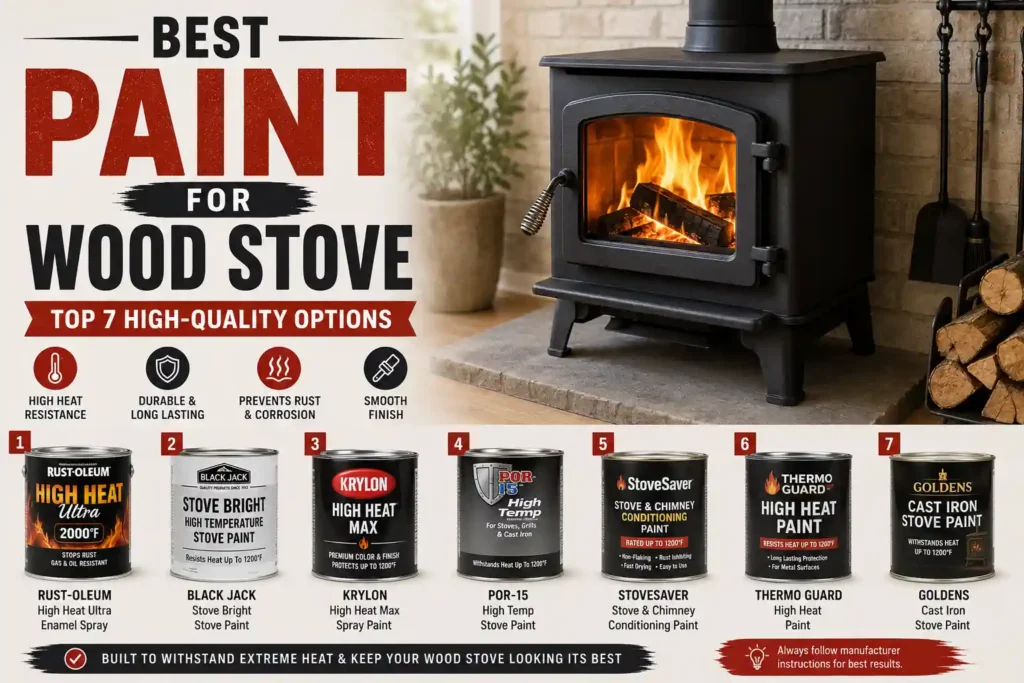
Wood stove paints are available in brush-on and aerosol formulas, with some products rated for temperatures up to 1,200°F or even 1,400°F. The right option depends on your stove’s material, the areas you plan to repaint, your preferred application method, and the finish you want. Below, we’ll compare seven high-heat options and explain how to choose and apply them.
Top Picks: Best Paint for Wood Stove
- Best Overall: Rutland 1200°F Hi-Temp Brush-On Paint – A stove-focused flat-black coating for refreshing cast iron, steel, and other compatible high-temperature surfaces.
- Best for Extreme Heat: Rutland Premium 1400°F Hi-Temp Brush-On Paint – A higher-temperature brush-on option for projects where additional heat-rating headroom is desired.
- Best Spray Option: Rutland 1200°F Hi-Temp Spray Paint – A convenient aerosol coating for evenly refinishing compatible stove surfaces and hard-to-reach areas.
- Best Color Selection: Stove Bright High Temperature Paint – A stove-specific aerosol range available in multiple colors and finishes.
- Best Brush-On Professional Option: Stove Bright Brush-On Restoration Coating – A liquid high-temperature coating for restoration work where aerosol application is impractical.
- Best Rust-Resistant Spray: Rust-Oleum Specialty High Heat Spray Paint – A 1,200°F-rated spray coating designed for exterior wood stoves and other hot metal surfaces.
- Best Brush-On Alternative: Rust-Oleum High Heat Brush Paint – A flat-black brush-on enamel for compatible stove exteriors when you want to avoid spray overspray.
Affiliate disclosure: As an Amazon Associate I earn from qualifying purchases.
Comparison Table: Best Paint for Wood Stove
| Product Name | Best For | Check Price |
|---|---|---|
| Rutland 1200°F Hi-Temp Brush-On Paint | Overall stove restoration | Check on Amazon |
| Rutland Premium 1400°F Hi-Temp Brush-On Paint | Higher heat-rating headroom | Check on Amazon |
| Rutland 1200°F Hi-Temp Spray Paint | Convenient aerosol application | Check on Amazon |
| Stove Bright High Temperature Paint | Multiple colors and finishes | Check on Amazon |
| Stove Bright Brush-On Restoration Coating | Detailed brush application | Check on Amazon |
| Rust-Oleum Specialty High Heat Spray Paint | Rust-resistant spray finish | Check on Amazon |
| Rust-Oleum High Heat Brush Paint | Brush-on stove refinishing | Check on Amazon |
The links above are tagged Amazon search links rather than verified individual product listings. Check the exact product number, container size, color, seller, and current availability before ordering. Temperature ratings and application instructions refer to specific product formulations, not every product from a brand.
1. Rutland 1200°F Hi-Temp Brush-On Paint – Best Overall
Rutland 1200°F Hi-Temp Brush-On Paint is a strong choice for restoring a wood stove with a traditional flat-black finish. It is specifically formulated for high-temperature applications and is suitable for compatible surfaces such as natural cast iron, grills, stoves, smokers, and stove pipes.
Its 1,200°F temperature rating makes it a practical option for many stove refinishing projects. The flat-black appearance can help restore the original look of a cast-iron stove without creating an overly shiny finish.
One advantage is its brush-on format. You can apply the paint to specific areas without covering nearby walls, flooring, or other objects with aerosol mist. This is particularly useful when the stove is already installed and cannot easily be moved outdoors.
Rutland states that this product does not require a primer and recommends applying it to a cold, properly prepared surface. The manufacturer recommends one layer and suggests allowing it to air-dry for 24 hours before heat curing for best results.
Remove loose rust and flaky material before application. The paint should not be used to cover badly deteriorated metal or repair structural damage.
Pros
- Rated for temperatures up to 1,200°F
- Designed for stoves and other high-heat surfaces
- Convenient brush-on application
- Traditional flat-black finish
- No primer required according to the manufacturer
- Suitable for compatible cast-iron surfaces
Cons
- Available primarily in a limited color selection
- Brush marks may be visible if applied unevenly
- Requires careful surface preparation
- First heat-up may produce smoke and odors
Best For: Homeowners who want a dependable brush-on coating for refreshing a compatible wood stove.
2. Rutland Premium 1400°F Hi-Temp Brush-On Paint – Best for Extreme Heat
Rutland Premium 1400°F Hi-Temp Brush-On Paint is worth considering when you want a higher temperature rating for a demanding stove refinishing project. Its stated resistance of up to 1,400°F provides additional temperature headroom compared with many standard stove paints.
The formula is designed for high-temperature surfaces, including stoves, natural cast iron, grills, fireplace inserts, furnaces, and other compatible metal components. Its flat-black finish is suitable for traditional stove designs and restoration projects.
Like the 1,200°F Rutland option, this product comes in a brush-on format. That makes it useful for controlled application around stove handles, door frames, decorative details, and other areas where spray mist would be inconvenient.
The manufacturer states that primer is not required and recommends removing loose, flaky material and sanding rusty spots before painting. The surface must be completely cold, and the fire must be fully extinguished.
The higher temperature rating does not automatically mean that every stove needs this product. For many ordinary stove exteriors, a properly selected 1,200°F stove paint may be sufficient. Choose the higher-rated formula when its additional temperature capacity is relevant to the application.
Pros
- Rated for temperatures up to 1,400°F
- Designed for high-temperature applications
- Flat-black finish
- Brush-on format offers application control
- No primer required according to the manufacturer
- Suitable for compatible stove and cast-iron surfaces
Cons
- May cost more than a 1,200°F alternative
- Limited finish and color choices
- Requires thorough preparation
- Not necessary for every standard stove exterior
Best For: Stove owners who want a higher-rated brush-on coating for compatible high-temperature surfaces.
3. Rutland 1200°F Hi-Temp Spray Paint – Best Spray Option
Rutland 1200°F Hi-Temp Spray Paint is a convenient alternative if you prefer aerosol application. It is designed for high-temperature surfaces and can be used on compatible steel, cast iron, aluminum, and other listed materials.
The spray format makes it easier to cover curved surfaces, decorative details, and areas that are difficult to reach with a brush. It can also create a more consistent-looking finish when applied using controlled, overlapping passes.
This product has a flat-black finish and a stated temperature resistance of up to 1,200°F. The manufacturer also identifies stoves, stove pipes, fireplace inserts, grills, and other high-temperature metal items as suitable applications.
Surface preparation remains important. Remove loose paint, flaky rust, grease, and other contaminants before spraying. Protect the glass, handles, surrounding walls, flooring, and other nearby surfaces from overspray.
Rutland recommends spraying from approximately 10 to 12 inches away and applying short, controlled strokes. Allow the coating to air-dry for 24 hours before the recommended heat-curing process, and provide adequate ventilation during the first firing.
Pros
- Rated for temperatures up to 1,200°F
- Convenient aerosol application
- Flat-black appearance
- Suitable for compatible steel and cast iron
- Useful for curved and detailed surfaces
- No primer required according to the manufacturer
Cons
- Overspray requires careful masking
- Aerosol cans may not cover large stoves economically
- Requires suitable ventilation and respiratory protection
- Application can be affected by wind and humidity
Best For: Repainting stove exteriors with curves, corners, and detailed areas where aerosol coverage is convenient.
4. Stove Bright High Temperature Paint – Best Color Selection
Stove Bright High Temperature Paint is a dedicated coating range developed for wood stoves, pellet stoves, gas stoves, and stove pipes. It is a useful option if you want something beyond a basic black finish.
The aerosol range offers multiple colors, including traditional black shades, brown, metallic finishes, and other decorative options. This makes it easier to refresh an older stove while matching its existing appearance or creating a different look.
Stove Bright is designed for metal surfaces exposed to elevated temperatures. The manufacturer lists a peak heat resistance of up to 1,200°F, while its stated operating heat resistance varies from approximately 600°F to 900°F depending on the color.
That distinction is important. Do not assume every color has identical heat performance. Check the technical information for your chosen shade before purchasing, particularly if you are painting a hotter stove component.
The manufacturer also provides application guidance covering surface preparation, drying, and the initial heat-up. Following those instructions is important for achieving the intended finish and durability.
Pros
- Designed specifically for heating appliances
- Up to 1,200°F peak heat resistance
- Multiple color and finish choices
- Convenient aerosol format
- Suitable for compatible stove and stove-pipe surfaces
- Useful for matching existing stove finishes
Cons
- Heat performance varies by color
- Overspray requires masking
- Requires careful surface preparation
- Not intended for every metal or ceramic surface
Best For: Owners who want a stove-specific spray paint with more color choices than traditional flat black.
5. Stove Bright Brush-On Restoration Coating – Best Brush-On Professional Option
Stove Bright Brush-On Restoration Coating is worth considering when you want a liquid high-temperature finish but would rather avoid aerosol application. It is designed for restoration projects where controlled brush application is more practical.
This product line uses a high-temperature coating formulation intended for compatible ferrous and non-ferrous metal surfaces. Its brush-on format can be particularly useful for spot repairs, detailed stove components, and areas where overspray could affect nearby surfaces.
The manufacturer lists a peak temperature rating of up to 1,200°F for its brush-on restoration coating. It is available in selected colors and larger container formats, making it worth investigating for projects that need more material than a small aerosol can provides.
One important consideration is the exact product formulation. Stove Bright has several coating products, including gas-vent and other specialty finishes with different temperature ratings. Make sure you select the high-temperature brush-on restoration coating rather than a lower-temperature product from the same brand.
Prepare the metal according to the technical data sheet, and follow the specified application thickness and curing instructions.
Pros
- Brush-on application for controlled coverage
- High-temperature formulation
- Manufacturer-stated peak rating up to 1,200°F
- Suitable for compatible metal surfaces
- Useful for restoration and larger projects
- Avoids aerosol overspray
Cons
- Limited color selection compared with some aerosol ranges
- Exact product identification is important
- Brush application requires an even technique
- May be harder to find through general retailers
Best For: Restoration projects where a stove-specific brush-on coating is preferred over aerosol spray.
6. Rust-Oleum Specialty High Heat Spray Paint – Best Rust-Resistant Spray
Rust-Oleum Specialty High Heat Spray Paint is another option for refreshing compatible wood stove exteriors. It is formulated to renew and protect metal surfaces exposed to elevated temperatures, including wood-burning stoves, grills, fire pits, and other hot metal items.
The manufacturer rates the coating for temperatures up to 1,200°F. It is designed to retain its color and finish through repeated heating, while providing a protective finish for suitable metal surfaces.
Its aerosol format is convenient for applying paint around curved stove bodies, legs, and other details. Rust-Oleum also states that a separate primer is not recommended for this particular high-heat product, so follow its surface-preparation instructions rather than adding an incompatible primer.
Before application, remove loose rust and old peeling paint. Clean the surface thoroughly and allow it to dry. Cover glass, gaskets, handles, and nearby areas that should remain unpainted.
An important limitation is that this product is intended for exterior hot surfaces, not areas directly exposed to open flames. Do not use it inside the firebox, on a cooking surface, or anywhere the label specifically excludes.
Pros
- Rated for temperatures up to 1,200°F
- Designed for exterior wood stoves and other hot metal surfaces
- Provides a protective metal finish
- Convenient spray application
- Suitable for compatible indoor and outdoor applications
- Available in different high-heat finishes
Cons
- Aerosol overspray requires protection
- Not suitable for direct flame exposure
- Surface preparation is essential
- Exact finish and color availability vary
Best For: Repainting compatible stove exteriors with a readily recognizable high-heat spray coating.
7. Rust-Oleum High Heat Brush Paint – Best Brush-On Alternative
Rust-Oleum High Heat Brush Paint is a practical option when you want the brand’s high-temperature coating in a brush-on format. It is designed for metal surfaces exposed to heat, including compatible wood-burning stoves and other hot metal items.
The product is rated for temperatures up to 1,200°F and provides a flat-black finish after heat curing. Its brush-on application gives you more control than an aerosol can, which can be helpful when repainting a stove that is already installed.
You can use a suitable brush to work around edges, legs, handles, and other areas without producing airborne paint mist. This can make the application process easier in situations where moving the stove outside is not practical.
Rust-Oleum advises that a separate primer is not recommended for this high-heat product. Instead, focus on removing contaminants, loose rust, and peeling paint before application.
Follow the label for drying and curing instructions. As with its spray counterpart, this product is not intended for areas directly exposed to flames.
Pros
- Rated for temperatures up to 1,200°F
- Brush-on format offers controlled application
- Flat-black finish after heat curing
- Designed for compatible hot metal surfaces
- Avoids aerosol overspray
- Useful for touch-ups and smaller restoration projects
Cons
- Limited color selection
- Brush marks may appear if applied unevenly
- Requires proper drying and heat curing
- Not suitable for direct flame exposure
Best For: Homeowners who prefer brush application when refinishing a compatible wood stove exterior.
Buying Guide: How to Choose the Best Paint for Wood Stove
Choosing the right stove paint involves more than selecting a color or the highest temperature rating. Consider the stove’s construction, operating conditions, surface condition, and the manufacturer’s recommendations before buying.
1. Check the Temperature Rating
Temperature resistance is one of the most important factors when selecting wood stove paint. Ordinary household paint and standard metal enamel cannot handle the repeated heating experienced by a stove.
Many dedicated stove paints offer ratings around 1,200°F, while certain brush-on products are rated up to 1,400°F.
However, a higher peak rating does not automatically mean a product is better for every stove. Check the manufacturer’s operating-temperature information and make sure it is appropriate for the specific surface you are painting.
2. Identify the Stove Material
Wood stoves commonly have cast-iron or steel bodies. Some models also contain stainless steel, decorative metal components, or other materials.
- Cast iron: Choose a stove coating specifically approved for compatible cast-iron surfaces.
- Steel: Use a high-temperature paint that lists steel among its approved substrates.
- Stove pipe: Select a coating designed for high-temperature pipe applications.
- Other materials: Check the product label rather than assuming that a metal stove paint will adhere to every surface.
The coating should match the material and operating conditions of the component.
3. Choose Between Brush-On and Spray Paint
Both application methods can produce a good finish, but they serve different needs.
Brush-on paint is useful when you want precise control, are working on small sections, or need to avoid aerosol overspray. It can be especially practical for an installed stove.
Spray paint is convenient for curved surfaces, decorative details, and larger areas where an even finish is important. However, you need to mask nearby surfaces and use suitable ventilation and respiratory protection.
Choose the format that best fits your workspace and the condition of your stove.
4. Consider the Finish and Color
Flat black is a common choice because it gives a traditional appearance to cast-iron and steel stoves. It can also help conceal minor visual differences in an older finish.
Other options include satin black, brown, metallic finishes, and specialty colors.
If you want to match the original stove appearance, check the manufacturer’s color chart. Different brands may use slightly different shades even when the names are similar.
Remember that some high-temperature paint colors have different operating-temperature limits. Always check the technical information for the exact shade.
5. Look for Rust Protection
Wood stove exteriors can develop surface rust when exposed to moisture, condensation, or long periods without use.
A suitable high-temperature coating can help protect properly prepared metal, but it cannot repair deep corrosion.
Before painting, remove loose rust and inspect the stove carefully. If the metal is badly pitted, cracked, or weakened, consult a qualified stove technician rather than simply covering the damage.
6. Check Primer Requirements
Not every high-temperature paint needs a separate primer. Some stove paints are designed to be applied directly to prepared metal, while other coating systems may have specific primer requirements.
Using an ordinary metal primer under a high-temperature finish can cause problems if the products are incompatible.
Follow the exact manufacturer’s instructions. Do not add a primer simply because you would normally use one for an outdoor metal project.
7. Evaluate Coverage and Container Size
The amount of paint you need depends on the stove’s size, shape, condition, and the product’s coverage rate.
Aerosol cans are convenient for small stoves and touch-ups, while brush-on containers may be more practical for larger restoration projects.
Consider the following before ordering:
- Total surface area
- Number of coats recommended
- Product coverage per container
- Amount of rust or old paint to remove
- Whether you are also painting compatible stove-pipe sections
- Whether additional materials are needed for preparation
Always use the manufacturer’s stated coverage rather than assuming every can will cover the same area.
8. Consider the Curing Process
Many high-temperature coatings need a specific curing process to develop their intended performance. Some products air-dry first and then require a controlled heat-up.
The instructions differ by product. For example, Rutland provides a recommended heat-curing process, while Stove Bright specifies its own drying and initial-burn guidance.
Do not assume that every stove paint cures in the same way. Follow the exact label and technical data sheet.
9. Choose a Suitable Product for Your Workspace
If you are repainting a stove inside a room, consider whether aerosol application is practical. Spray mist can travel beyond the immediate work area and settle on floors, walls, furniture, and other objects.
Brush-on paint can reduce this problem, although you still need suitable ventilation and protection from paint vapors.
Whenever possible, move the stove or removable components to an appropriate outdoor work area. Never spray near flames, pilot lights, sparks, or other ignition sources.
How to Paint a Wood Stove
A good finish depends heavily on preparation. Even a high-quality stove paint can peel or deteriorate if applied over loose rust, grease, or an unstable old coating.
Step 1: Let the Stove Cool Completely
Make sure the stove is completely cold before starting. The fire must be fully extinguished, and no hot embers should remain.
Never apply stove paint to a hot surface. Check the manufacturer’s instructions for any additional temperature requirements.
Step 2: Protect the Surrounding Area
Move removable items away from the stove and protect the floor and nearby surfaces.
If you are using aerosol paint, mask the glass, door gaskets, handles, trim, and other areas that should not receive paint.
Wear suitable gloves, eye protection, and respiratory protection as directed by the product label.
Step 3: Clean the Stove Surface
Remove dust, soot, grease, oil, polish, and other contaminants using a suitable cleaning method.
Allow the surface to dry completely. Paint applied over dirt or oily residue may not adhere properly.
Step 4: Remove Loose Rust and Old Paint
Use a wire brush, sandpaper, or another suitable preparation tool to remove loose rust and peeling paint.
Pay particular attention to corners, seams, legs, and areas where moisture may have collected.
Do not paint over loose, flaky material. If you discover severe corrosion or structural damage, arrange for a professional inspection.
Step 5: Prepare the Surface as Directed
Follow the selected paint manufacturer’s instructions for preparing cast iron or steel.
Some products recommend removing polish or wax with a specified solvent. Others have different cleaning requirements.
Avoid using an unapproved chemical or leaving solvent residue on the stove.
Step 6: Apply the First Coat
For brush-on paint, stir the product thoroughly and apply it evenly with a suitable brush.
For aerosol paint, shake the can as directed and maintain the recommended spraying distance. Use smooth, overlapping passes instead of concentrating the spray in one spot.
Apply only the amount and number of coats specified by the manufacturer.
Step 7: Allow the Paint to Dry
Give the coating the required air-drying time before handling or curing it.
Do not rush this stage. Applying heat before the paint is ready can affect the final finish and produce unwanted results.
Step 8: Follow the Heat-Curing Instructions
If the selected paint requires heat curing, follow the manufacturer’s exact procedure. This may involve an initial low-temperature firing followed by gradual increases in heat.
Keep the area well ventilated during the first firing. High-temperature coatings can release smoke and odors as they cure.
Do not use a generic curing schedule if the product provides different instructions.
Step 9: Inspect the Finished Surface
After the coating has cured and cooled, inspect the stove for missed areas, uneven coverage, and other visible defects.
If touch-ups are needed, follow the manufacturer’s recommendations for recoating and curing.
Common Mistakes to Avoid When Painting a Wood Stove
Using Ordinary Spray Paint
Regular spray paint is not designed for the repeated heat exposure of a wood stove. It may discolor, blister, peel, or release unwanted odors. Use a coating specifically intended for stove applications.
Choosing Paint Only by Its Maximum Temperature
A high peak rating does not tell you everything about a coating’s normal operating performance. Check both peak and operating-temperature information, especially when selecting a color other than black.
Painting Over Rust
Loose rust prevents reliable adhesion. Remove unstable corrosion before applying the coating. Deeply damaged metal may need professional repair or replacement.
Skipping Surface Cleaning
Grease, polish, dust, and soot can interfere with the paint. Clean the stove thoroughly and allow it to dry before painting.
Applying Excessively Thick Coats
Heavy coats may dry unevenly and can cause runs or other finish defects. Follow the recommended application thickness and number of coats.
Ignoring Ventilation
Spray paint and high-temperature coatings can release fumes during application and curing. Work in an appropriate ventilated area and use the protection specified by the manufacturer.
Painting the Glass or Door Gasket
Stove glass and rope gaskets have different functions from the metal body. Keep paint off the glass, seals, and other components unless the product is specifically approved for them.
Painting Directly Inside the Firebox
Many stove paints are intended for exterior metal surfaces and must not be used where they are directly exposed to flames. Do not paint the inside of a metal firebox unless the exact product label explicitly permits that application.
Frequently Asked Questions
What is the best paint for a wood stove?
Rutland 1200°F Hi-Temp Brush-On Paint is a strong overall option because it is specifically designed for high-temperature applications and offers a convenient brush-on format. Stove Bright and Rust-Oleum also offer dedicated high-heat coatings worth considering.
What temperature should wood stove paint withstand?
Many dedicated stove paints are rated for temperatures up to 1,200°F. Some brush-on products offer ratings up to 1,400°F. Choose a product based on the operating conditions of the specific stove surface and the manufacturer’s instructions.
Can I use regular high-heat spray paint on a wood stove?
Only if the exact product is approved for wood stove applications. Some high-heat paints are intended for automotive parts or other surfaces and may not be suitable for a stove. Check the label before buying.
Is brush-on or spray paint better for a wood stove?
Brush-on paint is useful for controlled application and reducing overspray. Spray paint is convenient for curved surfaces and more uniform coverage. Both can work well when the selected formula is approved for the stove and applied correctly.
Can I paint a cast-iron wood stove?
Yes. Use a high-temperature coating that specifically lists compatible cast iron as an approved surface. Clean the stove, remove loose rust, and follow the manufacturer’s application and curing instructions.
Do I need primer before painting a wood stove?
Not always. Some stove paints are designed for direct application to properly prepared metal and specifically advise against using a separate primer. Follow the instructions for your exact product rather than using a general-purpose metal primer.
How many coats of stove paint should I apply?
The number of coats depends on the product. Some brush-on stove paints recommend one layer, while aerosol products may have different application directions. Follow the specified coverage, film thickness, and recoating instructions.
How long does stove paint take to cure?
Drying and curing times vary by formula. Some products require around 24 hours of air drying before heat curing, while others specify a different waiting period and initial-burn process. Always follow the product label.
Why does my wood stove smoke after painting?
Some smoke and odor can occur during the first heating as the coating cures. Provide good ventilation and follow the manufacturer’s initial-burn instructions. If heavy smoke or unusual odors continue beyond the expected curing period, stop using the stove until you have checked the product instructions and coating condition.
Can I paint the inside of a wood stove?
Do not assume that ordinary stove paint is suitable for the inside of a metal firebox. Many products specifically prohibit direct flame exposure. Only use a product inside a firebox when its exact label expressly permits that application.
Can I paint a wood stove pipe?
Yes, if you use a high-temperature coating specifically approved for stove pipes. Check the pipe material and operating-temperature requirements. A dedicated stove-pipe paint such as a suitable Stove Bright product may be an option.
What color is best for a wood stove?
Flat black is a popular choice because it provides a traditional appearance and can help match many original stove finishes. Brown, metallic, and other specialty colors are also available. Check the temperature rating for the specific color before purchasing.
How do I prevent stove paint from peeling?
Prepare the metal properly, remove loose rust, clean away grease and polish, and apply the correct coating at the recommended thickness. Allow it to dry and cure according to the manufacturer’s directions.
Final Words
The best paint for wood stove restoration should be specifically designed for high temperatures and compatible with the stove’s material. Rutland 1200°F Brush-On Paint is a practical overall choice, while its 1400°F version offers a higher temperature rating. Rutland’s spray formula and Stove Bright provide convenient alternatives, and Rust-Oleum offers both spray and brush-on options for compatible stove exteriors.
Before buying, compare the temperature rating, application method, color, and curing requirements. Prepare the surface carefully, protect the surrounding area, and provide adequate ventilation during the first firing. Choosing the right high-temperature coating and following its instructions can help restore your stove’s appearance and protect its exterior finish.
Helpful Resources
- Rutland: High-Temperature Paints and Application Instructions – Review the manufacturer’s stove paint options, surface preparation guidance, and heat-curing recommendations.
- Forrest Technical Coatings: How to Use Stove Bright High Temperature Paint – Learn about suitable applications, surface preparation, and the correct process for applying and curing Stove Bright coatings.