
The best paint for bathroom vanity cabinets should create a smooth, durable finish that can handle everyday use, occasional water splashes, humidity, and frequent cleaning. Unlike ordinary wall paint, a cabinet-grade enamel is designed for doors, drawers, and other frequently touched surfaces. Choosing the right primer and allowing the finish to cure properly are just as important as selecting the paint itself.
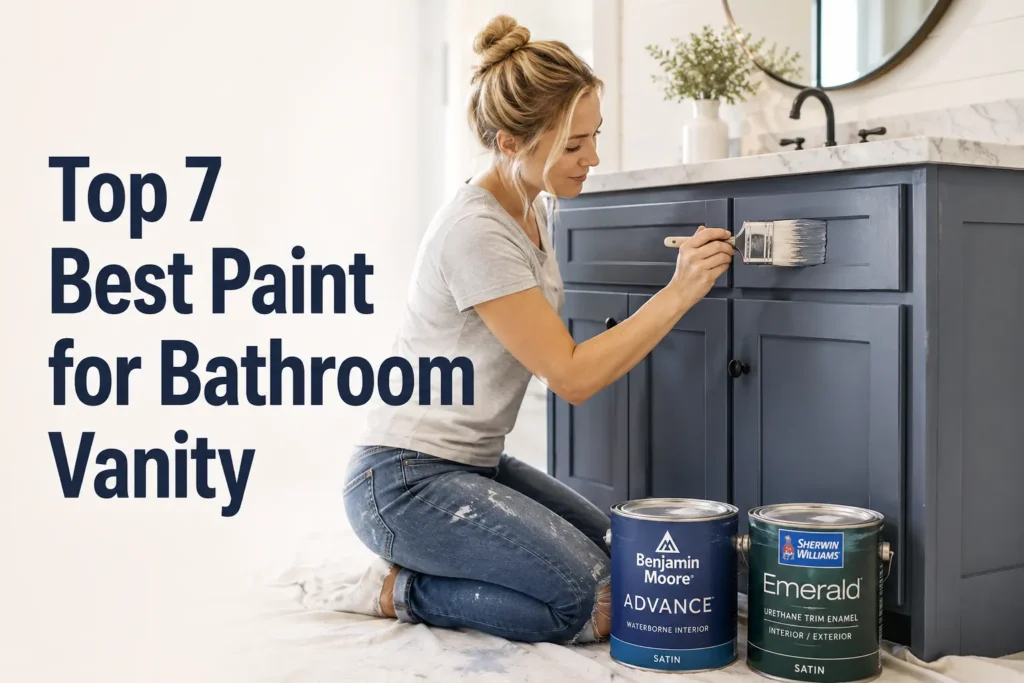
In this guide, we’ll compare seven bathroom vanity paint options, including waterborne alkyd paints, urethane-modified enamels, and cabinet coatings. You’ll also learn how to choose a suitable Primer for Bathroom vanity projects, explore attractive Bathroom Paint Colors, and understand which type of Paint for Bathroom Cabinets works best for different surfaces.
Our Top Picks
- Best Overall: Sherwin-Williams Emerald Urethane Trim Enamel – A durable enamel designed for cabinets, doors, and frequently cleaned trim.
- Best Smooth Finish: Benjamin Moore ADVANCE Interior Paint – A waterborne alkyd option known for its smooth flow and leveling.
- Best for DIY Projects: BEHR PREMIUM Cabinet, Door & Trim Enamel – A dedicated enamel for compatible cabinets and household woodwork.
- Best for Difficult Surfaces: INSL-X Cabinet Coat Enamel – A urethane acrylic coating for suitable cabinets and previously finished surfaces.
- Best for Cabinet Refinishing: Rust-Oleum Cabinet Transformations – A cabinet refinishing system worth considering when following its complete preparation and application instructions.
- Best for Interior Woodwork: Sherwin-Williams ProClassic Interior Waterbased Acrylic-Alkyd – An interior enamel option for compatible cabinets, doors, and trim.
- Best Alternative Cabinet Enamel: Valspar Cabinet, Door & Trim Enamel – A dedicated coating option for compatible cabinet and trim surfaces.
Bathroom Vanity Paint Comparison Table
| Product Name | Best For | Check Price |
|---|---|---|
| Sherwin-Williams Emerald Urethane Trim Enamel | Overall durability and frequently used vanities | Check on Amazon |
| Benjamin Moore ADVANCE Interior Paint | Smooth, furniture-like finish | Check on Amazon |
| BEHR PREMIUM Cabinet, Door & Trim Enamel | Everyday DIY vanity projects | Check on Amazon |
| INSL-X Cabinet Coat Enamel | Suitable previously finished cabinets | Check on Amazon |
| Rust-Oleum Cabinet Transformations | Cabinet refinishing projects | Check on Amazon |
| Sherwin-Williams ProClassic Interior Acrylic-Alkyd | Interior vanity and woodwork | Check on Amazon |
| Valspar Cabinet, Door & Trim Enamel | Compatible cabinet and trim surfaces | Check on Amazon |
Affiliate disclosure: As an Amazon Associate I earn from qualifying purchases.
Product note: The Amazon links above lead to product searches using the affiliate tracking tag. Some professional paint lines may be sold primarily through authorized paint dealers. Confirm the exact formula, finish, intended surface, container size, and seller before purchasing. Product availability and specifications can vary.
Top 7 Best Paint for Bathroom Vanity Reviews
1. Sherwin-Williams Emerald Urethane Trim Enamel – Best Overall
Sherwin-Williams Emerald Urethane Trim Enamel
Sherwin-Williams Emerald Urethane Trim Enamel is a strong option for homeowners who want a durable, attractive finish on bathroom vanity doors, drawer fronts, and cabinet frames. Its urethane-modified formula is designed for trim, doors, and cabinetry, making it a useful alternative to ordinary interior wall paint.
One reason to consider this product is its ability to create a smooth finish on properly prepared surfaces. Bathroom vanities receive regular handling, and their doors and drawer fronts may need frequent wiping. A dedicated enamel can provide a more suitable finish for these everyday demands.
It is available in different sheen options, including satin, semi-gloss, and gloss, depending on the selected product version. Satin creates a softer appearance, while semi-gloss offers more reflection and is a practical choice for many cabinet projects.
Preparation is essential. Remove grease, soap residue, and other contaminants before applying a compatible bonding or stain-blocking primer where needed. Follow the manufacturer’s instructions for the number of coats and curing time.
Pros:
- Designed for cabinets, doors, and trim.
- Durable finish for frequently handled surfaces.
- Available in several sheen options.
- Water-based cleanup.
- Suitable for many vanity refinishing projects when properly prepared.
Cons:
- Premium pricing compared with standard paints.
- Requires careful surface preparation.
- Needs adequate curing time before regular use.
- Availability may vary by retailer.
Best For: Homeowners looking for a premium enamel for bathroom vanity doors, drawers, and cabinet frames.
2. Benjamin Moore ADVANCE Interior Paint – Best Smooth Finish
Benjamin Moore ADVANCE Interior Paint
Benjamin Moore ADVANCE is a waterborne alkyd paint designed for interior doors, trim, and cabinetry. It is particularly appealing when a smooth, furniture-like appearance is the main goal.
Bathroom vanity cabinets often have flat drawer fronts, decorative panels, and narrow edges. A paint with good flow and leveling characteristics can help create an even finish across these details. When applied correctly, ADVANCE can produce an attractive surface without the appearance of heavy brush marks.
The product is available in multiple finishes, including satin, semi-gloss, and high gloss, depending on the selected version. Semi-gloss is worth considering for a vanity because it offers a noticeable sheen without the strong reflection of a high-gloss coating.
One consideration is that waterborne alkyd paints can have longer recoat and curing schedules than some fast-drying acrylic products. Do not rush the process or reinstall doors and drawers before the coating is ready.
For laminate or glossy factory-finished cabinets, use a suitable bonding primer and follow the manufacturer’s preparation recommendations.
Pros:
- Designed for interior cabinetry and woodwork.
- Smooth flow and leveling characteristics.
- Furniture-like finish when applied correctly.
- Multiple sheen options.
- Water-based cleanup.
Cons:
- Longer drying and curing schedules than some alternatives.
- Requires patience between coats.
- Premium price point.
- Proper primer selection is important for difficult surfaces.
Best For: Homeowners who prioritize a smooth, refined finish on bathroom vanity cabinets.
3. BEHR PREMIUM Cabinet, Door & Trim Enamel – Best for DIY Projects
BEHR PREMIUM Cabinet, Door & Trim Enamel
BEHR PREMIUM Cabinet, Door & Trim Enamel is a practical choice for homeowners who want a dedicated coating for household cabinetry and woodwork. It is intended for compatible cabinets, doors, and trim rather than being a standard wall paint.
A bathroom vanity needs a finish that can tolerate routine handling and careful cleaning. This type of cabinet enamel is designed for surfaces that experience more contact than ordinary walls. Its flow and leveling characteristics can also help create a consistent appearance across drawer fronts and cabinet doors.
The product is available in different finishes, depending on the version and color selection. A satin finish can complement a modern bathroom, while semi-gloss may be more suitable if you prefer a brighter, more reflective cabinet surface.
Before applying it, check the approved substrate list. Bare wood, glossy factory coatings, laminate, and previously painted surfaces may require different preparation or primer. Do not assume that a single preparation method works for every vanity material.
Pros:
- Dedicated cabinet, door, and trim enamel.
- Useful for household DIY refinishing.
- Available in different finish options.
- Suitable for compatible prepared surfaces.
- Designed for frequently handled woodwork.
Cons:
- Not every vanity material can be coated without primer.
- Full curing takes longer than initial drying.
- Product versions and availability may vary.
- Careful application is necessary for a smooth result.
Best For: DIY homeowners repainting compatible bathroom vanity cabinets and doors.
4. INSL-X Cabinet Coat Enamel – Best for Difficult Surfaces
INSL-X Cabinet Coat is a urethane acrylic enamel designed for cabinets, doors, furniture, and other suitable interior surfaces. It is worth considering when you want to refresh an existing vanity rather than replace it.
Bathroom cabinets sometimes have a glossy factory finish or an older coating that makes repainting challenging. Cabinet Coat is formulated for adhesion to certain hard-to-coat surfaces, but that does not mean preparation can be skipped. Cleaning, scuff sanding where recommended, and testing adhesion are still important.
Its smooth finish makes it suitable for cabinet doors and drawer fronts where visible brush marks can detract from the appearance. The manufacturer also provides guidance on surface preparation and drying, which should be followed carefully in a humid bathroom environment.
If the vanity has laminate or another slick surface, use a compatible bonding primer when the product system requires it. Test the complete primer-and-paint system in an inconspicuous area before coating the entire cabinet.
Pros:
- Urethane acrylic cabinet enamel.
- Designed for cabinets and suitable woodwork.
- Useful for certain previously finished surfaces.
- Smooth finish for doors and drawers.
- Available in different finish options.
Cons:
- Not every old finish is automatically compatible.
- Glossy surfaces still need proper preparation.
- Humidity can extend drying and service times.
- Confirm the exact product version before purchase.
Best For: Homeowners repainting compatible existing vanity cabinets with a dedicated cabinet enamel.
5. Rust-Oleum Cabinet Transformations – Best for Cabinet Refinishing
Rust-Oleum Cabinet Transformations
Rust-Oleum Cabinet Transformations is a cabinet refinishing system worth considering when you want to update the appearance of an older vanity. Unlike purchasing a single can of ordinary paint, a refinishing kit or system may include multiple components intended to work together.
This can be convenient for homeowners who prefer following a coordinated process instead of selecting every preparation and finishing product separately. However, the exact contents, application steps, and available versions should be checked before purchasing.
Bathroom vanity cabinets require particular attention to moisture exposure. The painted exterior may encounter splashes and humidity, while water leaking around the sink or plumbing can damage the cabinet substrate. No cabinet coating can repair swollen particleboard, leaking plumbing, or deteriorated wood.
Before using this product, confirm that the specific kit is approved for your cabinet material and intended bathroom application. Follow its cleaning, preparation, coating, and curing instructions rather than mixing components from unrelated systems.
Pros:
- Designed for cabinet refinishing projects.
- Coordinated system may simplify product selection.
- Useful for updating older cabinet appearances.
- Available in different kit options and finishes.
- Suitable for projects that follow the complete system instructions.
Cons:
- Kit contents and versions can vary.
- Must confirm suitability for the vanity material.
- Requires careful preparation and application.
- Not a solution for water-damaged cabinets.
Best For: Homeowners who prefer a coordinated cabinet refinishing system for a suitable bathroom vanity.
6. Sherwin-Williams ProClassic Interior Waterbased Acrylic-Alkyd – Best for Interior Woodwork
Sherwin-Williams ProClassic Interior Waterbased Acrylic-Alkyd
Sherwin-Williams ProClassic Interior Waterbased Acrylic-Alkyd is an interior enamel designed for suitable doors, trim, and woodwork. It can be considered for vanity projects when the exact formula and substrate recommendations support the intended application.
Its flow and leveling characteristics are useful for surfaces where a consistent appearance matters. Vanity doors, drawer fronts, and cabinet frames can show brush marks or uneven coverage if the paint is applied too heavily or with unsuitable tools.
This product is an interior coating, not a universal waterproof finish. It should not be used to cover damaged cabinet edges or surfaces that remain wet. Fix leaks, allow the substrate to dry, and prepare the vanity properly before painting.
Check the current product specifications and approved uses before selecting it for a bathroom cabinet. A dedicated cabinet enamel may be a more straightforward choice if the exact ProClassic version does not list your vanity material.
Pros:
- Interior enamel for compatible woodwork.
- Good flow and leveling characteristics.
- Useful for doors and trim.
- Water-based formulation.
- Can provide a refined painted appearance.
Cons:
- Exact product version and availability matter.
- Not intended to repair water-damaged cabinetry.
- Requires appropriate surface preparation.
- Confirm cabinet suitability before purchase.
Best For: Interior woodwork and suitable vanity surfaces where the selected formula is approved.
7. Valspar Cabinet, Door & Trim Enamel – Best Alternative Cabinet Enamel
Valspar Cabinet, Door & Trim Enamel
Valspar Cabinet, Door & Trim Enamel is another option to consider when refreshing compatible bathroom vanity cabinets. It is designed for cabinetry and woodwork, making it more appropriate for these projects than a standard interior wall coating.
Cabinet doors and drawer fronts need a finish that looks attractive while handling regular contact. A dedicated enamel can help create a more suitable surface for these uses when applied over a properly prepared substrate.
The exact product version should be checked for its approved materials, available sheen, application instructions, and curing requirements. This is particularly important if your vanity is made from laminate, MDF, or previously finished wood.
For a coordinated bathroom design, select a color that works with the countertop, flooring, wall finish, and hardware. Apply thin, even coats and allow the recommended drying time between applications.
Pros:
- Designed for cabinet, door, and trim projects.
- Useful for compatible vanity surfaces.
- Offers an alternative to premium cabinet enamels.
- Suitable for household refinishing projects.
- Different color and finish options may be available.
Cons:
- Availability and formulas may vary.
- Check substrate compatibility carefully.
- Primer may be necessary.
- Requires full curing before regular use.
Best For: Homeowners looking for an alternative cabinet enamel for compatible bathroom vanity projects.
How to Choose the Best Paint for Bathroom Vanity
Choosing a vanity paint involves more than picking an attractive color. The cabinet material, existing finish, bathroom ventilation, and desired appearance all affect the result.
1. Choose a Cabinet-Grade Paint
A bathroom vanity is exposed to fingerprints, water splashes, toothpaste, soap, cosmetics, and routine cleaning. A cabinet-grade enamel is generally a better choice than ordinary wall paint for these frequently handled surfaces.
Consider these paint types:
- Waterborne alkyd enamel: Often selected for its smooth flow and furniture-like finish.
- Urethane-modified enamel: Designed for suitable doors, cabinets, and trim that need a durable coating.
- Urethane acrylic enamel: A useful option for compatible cabinetry and previously finished surfaces.
- Acrylic cabinet enamel: Can provide convenient water-based application and cleanup.
Choose a product that specifically lists cabinets or the material of your vanity as an approved use.
2. Match the Paint to the Vanity Material
Bathroom vanities can be made from solid wood, plywood, MDF, particleboard, laminate, or thermofoil. These materials do not all accept paint in the same way.
| Vanity Material | Preparation Considerations | Paint System to Consider |
|---|---|---|
| Solid wood | Clean, sand, and address knots or stains | Compatible cabinet enamel |
| Plywood | Repair rough areas and prime exposed edges | Cabinet-grade enamel |
| MDF | Seal exposed edges and prime appropriately | Compatible cabinet enamel |
| Particleboard | Repair or replace swollen or damaged sections | Only paint sound, dry surfaces |
| Laminate | Degrease, scuff as directed, and test adhesion | Bonding primer and compatible enamel |
| Thermofoil | Check for peeling or lifting before refinishing | Follow material-specific coating guidance |
If particleboard has swollen from water exposure, painting over it will not restore its original strength or shape. Repair or replace damaged components before considering a new finish.
3. Select a Suitable Sheen
The sheen affects the appearance and cleanability of the vanity.
| Sheen | Appearance | Considerations |
|---|---|---|
| Satin | Soft, subtle reflection | A balanced choice for many modern bathrooms |
| Semi-gloss | Noticeable shine | Popular for cabinets that need regular wiping |
| Gloss | Highly reflective | Makes surface imperfections more visible |
Satin and semi-gloss are common choices for bathroom vanity cabinets. Semi-gloss can be practical for cleaning, while satin provides a softer, less reflective appearance. Always follow the selected product’s available finish options.
4. Consider Bathroom Humidity
Bathrooms experience changing humidity levels, especially after showers and baths. Choose a coating intended for cabinetry and use a functioning exhaust fan or suitable ventilation system.
Keep water from sitting on cabinet edges, joints, and exposed surfaces. Check plumbing connections and repair leaks promptly. Even a durable paint film cannot protect a cabinet indefinitely when water enters through damaged seams or unsealed edges.
5. Check Drying and Curing Times
Drying and curing are not the same thing. Paint may feel dry after a short period but still need additional time to develop its intended hardness and resistance.
Read the technical instructions before reinstalling doors, adjusting hinges, or using the vanity heavily. Avoid placing wet toiletries against the fresh coating or cleaning the surface before the recommended cure period.
What Primer for Bathroom Vanity Cabinets Should You Use?
Choosing the right Primer for Bathroom vanity projects is essential, particularly when the existing cabinet has a glossy finish or is made from laminate. Primer helps prepare the surface for the topcoat, but the correct type depends on the material and condition of the vanity.
Here are some primer options worth considering:
INSL-X STIX Waterborne Bonding Primer
STIX is a bonding primer designed for difficult-to-coat surfaces. It is worth considering for suitable glossy, laminate, and previously finished surfaces when the manufacturer approves the substrate.
It can provide a suitable base for a compatible cabinet enamel. Follow the product’s cleaning, preparation, and drying instructions.
Sherwin-Williams Extreme Bond Primer
Extreme Bond Primer is another option for surfaces where adhesion is a concern. Sherwin-Williams recommends it as part of its bathroom vanity painting process, followed by Emerald Urethane Trim Enamel.
It is especially useful to consider when working with clean, sound, paintable surfaces that need a suitable bonding primer.
Zinsser B-I-N Shellac-Based Primer
A shellac-based primer can be useful when dealing with certain stains, odors, or difficult surfaces. It dries quickly, but it has a strong odor and requires appropriate ventilation and cleanup precautions.
Check compatibility with the existing coating and planned topcoat before using it.
Which Primer Should You Choose?
| Vanity Condition | Primer Type to Consider |
|---|---|
| Glossy previously painted cabinet | Compatible bonding primer |
| Laminate surface | Bonding primer approved for laminate |
| Bare wood | Suitable wood or stain-blocking primer |
| Stained wood | Stain-blocking primer when needed |
| MDF | Primer suitable for MDF and exposed edges |
| Dark cabinet changing to a light color | Compatible primer; additional coverage may be needed |
Do not automatically apply the same primer to every vanity. Read the paint and primer labels together, and test adhesion in an inconspicuous area when working with an unfamiliar surface.
Best Bathroom Paint Colors for Vanity Cabinets
Choosing the right shade can completely change the appearance of a bathroom. The best Bathroom Paint Colors for a vanity depend on the wall color, countertop, flooring, lighting, and overall design.
Here are some attractive color directions to consider.
1. Classic White
White vanity cabinets create a clean, bright appearance. They work particularly well in smaller bathrooms where you want the space to feel open.
Warm white can complement beige tiles and natural wood, while cooler white can pair nicely with gray flooring and chrome hardware.
Navy blue adds depth and contrast without feeling overly bright. It looks especially attractive with white countertops, brushed brass handles, and light-colored walls.
Choose a shade with enough depth to create a strong focal point while keeping the rest of the bathroom balanced.
3. Sage Green
Sage green creates a calm, natural appearance. It pairs beautifully with cream walls, light wood accents, white sinks, and natural stone-inspired surfaces.
This color is a good choice if you want something more distinctive than white without choosing a very dark shade.
4. Charcoal Gray
Charcoal gray can give a bathroom a modern, sophisticated appearance. It works well with white countertops, black fixtures, and simple hardware.
Because dark colors can make a small bathroom feel heavier, balance the vanity with adequate lighting and lighter surrounding finishes.
5. Soft Greige
Greige combines gray and beige, creating a versatile neutral shade. It works with both warm and cool design elements, making it a practical option when your bathroom already has mixed finishes.
6. Deep Forest Green
Forest green creates a rich, dramatic vanity color. Pair it with warm brass hardware, cream walls, and natural wood accents for a classic look.
7. Dusty Blue
Dusty blue is softer than navy and can bring a relaxed feeling to the room. It works well with white tile, pale gray walls, and brushed nickel fixtures.
8. Warm Taupe
Warm taupe is a subtle neutral that can coordinate with beige flooring, stone countertops, and cream-colored walls. It is a good option if you want a timeless appearance without using pure white.
How to Paint a Bathroom Vanity
A good painting process helps prevent peeling, uneven coverage, and premature wear. Follow these steps to prepare and paint your vanity correctly.
Step 1: Remove Doors, Drawers, and Hardware
Empty the vanity and remove the cabinet doors, drawers, handles, and hinges where possible. Label each piece so you can reinstall everything in the correct position.
Painting detached doors and drawer fronts separately can make it easier to reach edges and corners.
Step 2: Clean and Degrease the Surface
Bathroom cabinets collect residue from soap, lotion, toothpaste, hairspray, and cleaning products. Wash the surfaces with a suitable degreasing cleaner.
Rinse away any cleaning residue and allow everything to dry completely before continuing.
Step 3: Repair Damaged Areas
Inspect the vanity for dents, scratches, loose veneer, damaged edges, and water-related swelling.
Use a suitable filler for minor surface imperfections. Replace seriously damaged or swollen material rather than attempting to hide it with paint.
Step 4: Sand or Scuff the Existing Finish
Lightly sand suitable painted or glossy surfaces according to the coating and primer instructions. Remove loose or peeling paint and smooth rough edges.
For laminate or other slick materials, follow the bonding primer manufacturer’s preparation recommendations. Avoid sanding through thin decorative surfaces.
Step 5: Remove Dust
Vacuum the cabinet and wipe away remaining sanding dust with a clean microfiber cloth. A dusty surface can interfere with primer adhesion and create an uneven finish.
Step 6: Apply the Primer
Apply the selected primer evenly using a quality brush or small roller. Cover exposed edges and surfaces according to the manufacturer’s instructions.
Allow the primer to dry for the specified time. If you are unsure whether it bonds well to the old finish, test a small area before coating the entire vanity.
Step 7: Apply the First Coat of Paint
Use a cabinet-grade enamel that is approved for the vanity material. Apply a thin, even coat with a suitable brush or roller.
For a smoother appearance, work in manageable sections and avoid repeatedly brushing over paint that has started to set.
Step 8: Apply Additional Coats
Allow the first coat to dry for the recommended time. Apply another thin coat when the product instructions call for it.
Two coats are common for many projects, but coverage depends on the product, color change, primer, and original surface.
Step 9: Allow the Paint to Cure
Do not confuse touch-dry paint with a fully cured finish. Follow the manufacturer’s curing schedule before reinstalling doors, adjusting hardware, or exposing the vanity to regular cleaning.
Keep the bathroom ventilated and avoid direct water contact during the curing period.
Step 10: Reinstall the Hardware
Once the coating is ready for normal handling, reinstall the doors, drawers, and hardware. Adjust the hinges carefully so freshly painted surfaces do not rub against one another.
Common Mistakes to Avoid When Painting a Bathroom Vanity
- Using ordinary wall paint: A standard wall coating may not be suitable for frequently handled cabinet surfaces.
- Skipping cleaning: Soap, grease, and personal-care product residue can interfere with adhesion.
- Ignoring the existing finish: Glossy, laminate, and stained surfaces may require specific preparation.
- Choosing the wrong primer: A primer must be compatible with both the vanity material and the topcoat.
- Painting swollen particleboard: Paint cannot repair water-damaged or structurally weakened material.
- Applying thick coats: Heavy applications can cause drips, uneven coverage, and a rough finish.
- Reinstalling doors too early: Fresh paint can stick where doors and frames touch.
- Ignoring bathroom ventilation: Persistent humidity can affect drying and contribute to moisture problems.
- Cleaning before full cure: Early cleaning can damage a finish that has not developed its intended hardness.
Frequently Asked Questions
1. What is the best paint for a bathroom vanity?
Sherwin-Williams Emerald Urethane Trim Enamel is a strong overall option for suitable vanity cabinets. Benjamin Moore ADVANCE is worth considering when a smooth, furniture-like finish is the priority. The right choice depends on the cabinet material, preparation, and desired sheen.
2. Can I use regular wall paint on a bathroom vanity?
It is generally better to choose a cabinet-grade enamel designed for doors and cabinetry. Ordinary wall paint may not provide the finish characteristics needed for frequently handled cabinet doors and drawers.
3. Do I need primer before painting a bathroom vanity?
Often, yes. Bare wood, laminate, glossy finishes, stained surfaces, and MDF may need a suitable primer. The exact requirement depends on the existing surface and selected paint.
4. What is the best primer for bathroom vanity cabinets?
INSL-X STIX Waterborne Bonding Primer and Sherwin-Williams Extreme Bond Primer are options to consider for suitable difficult-to-coat surfaces. Bare wood or stained cabinets may require a different primer, so always check the approved substrate and topcoat instructions.
5. Is satin or semi-gloss better for bathroom vanity cabinets?
Both can work well. Satin provides a softer appearance, while semi-gloss has more shine and is often selected for surfaces that need regular wiping. Choose a finish offered by the selected cabinet paint.
6. Can I paint a laminate bathroom vanity?
Yes, if the laminate is sound and the paint system is approved for it. Clean and prepare the surface carefully, use a suitable bonding primer, and test adhesion before painting the entire cabinet.
7. Can I paint over an already painted vanity?
Yes, if the existing coating is in good condition and compatible with the new paint. Clean the cabinet, remove loose paint, prepare glossy areas as directed, and apply primer where necessary.
8. How many coats of paint does a bathroom vanity need?
Many vanity projects require two finish coats, but the exact number depends on the product, color change, and surface condition. Follow the manufacturer’s coverage and application instructions.
9. How long should bathroom vanity paint cure?
Curing times vary by product and environmental conditions. Some coatings need several days or longer before they can tolerate regular handling and cleaning. Read the technical data sheet rather than relying only on the touch-dry time.
10. Can I paint a bathroom vanity without sanding?
Some bonding primers are designed to adhere to certain clean, sound surfaces without extensive sanding. However, cleaning and proper preparation are still necessary. Follow the primer manufacturer’s instructions and perform an adhesion test when appropriate.
11. What color is best for a small bathroom vanity?
White, soft sage, light gray, warm greige, and dusty blue can work well in small bathrooms. Lighter shades often create a more open appearance, while darker colors can add contrast when balanced with good lighting.
12. Is chalk paint suitable for bathroom vanity cabinets?
Chalk paint can be used for some furniture-style projects, but it generally needs a suitable protective finish. For a frequently used bathroom vanity, a dedicated cabinet enamel is often a more straightforward choice.
13. Can bathroom vanity paint prevent water damage?
No. Paint can provide a protective surface when properly applied, but it cannot repair leaks, swollen particleboard, or damaged cabinet joints. Fix plumbing problems and replace deteriorated materials before painting.
14. Should I paint the inside of bathroom vanity cabinets?
It is optional. Many homeowners paint only the exterior, doors, and visible cabinet frames. If you decide to coat the interior, use a product approved for those surfaces and allow it to cure before storing toiletries or cleaning supplies.
15. How can I make my painted bathroom vanity last longer?
Start with thorough cleaning, appropriate surface preparation, and a compatible primer. Apply the recommended number of thin coats and allow full curing. Keep the bathroom ventilated, wipe away standing water, and repair plumbing leaks promptly.
Final Words
Choosing the best paint for bathroom vanity cabinets means balancing appearance, durability, surface compatibility, and moisture exposure. Sherwin-Williams Emerald Urethane Trim Enamel is a strong overall option, Benjamin Moore ADVANCE is appealing for its smooth finish, and BEHR PREMIUM Cabinet, Door & Trim Enamel is worth considering for DIY projects.
Do not overlook the primer or preparation process. A suitable bonding or stain-blocking primer, a compatible cabinet enamel, and adequate curing time can make a major difference. Finish the project with a color that complements your countertop, flooring, and fixtures, and keep the vanity dry and properly ventilated for long-lasting results.
Helpful Resources
- Sherwin-Williams: How to Paint Bathroom Vanity Cabinets – Manufacturer guidance on cleaning, sanding, priming, and painting bathroom vanity cabinets.
- Benjamin Moore: How to Paint Bathroom Vanity Cabinets – Step-by-step advice on preparing vanity surfaces, using bonding primer, and applying cabinet paint.