
Choosing the best paint for a kitchen table means finding a finish that looks attractive and can handle everyday use. Kitchen tables deal with food spills, water rings, frequent wiping, scratches, and constant contact with plates and other objects. Ordinary wall paint is generally not the right choice for this demanding surface.
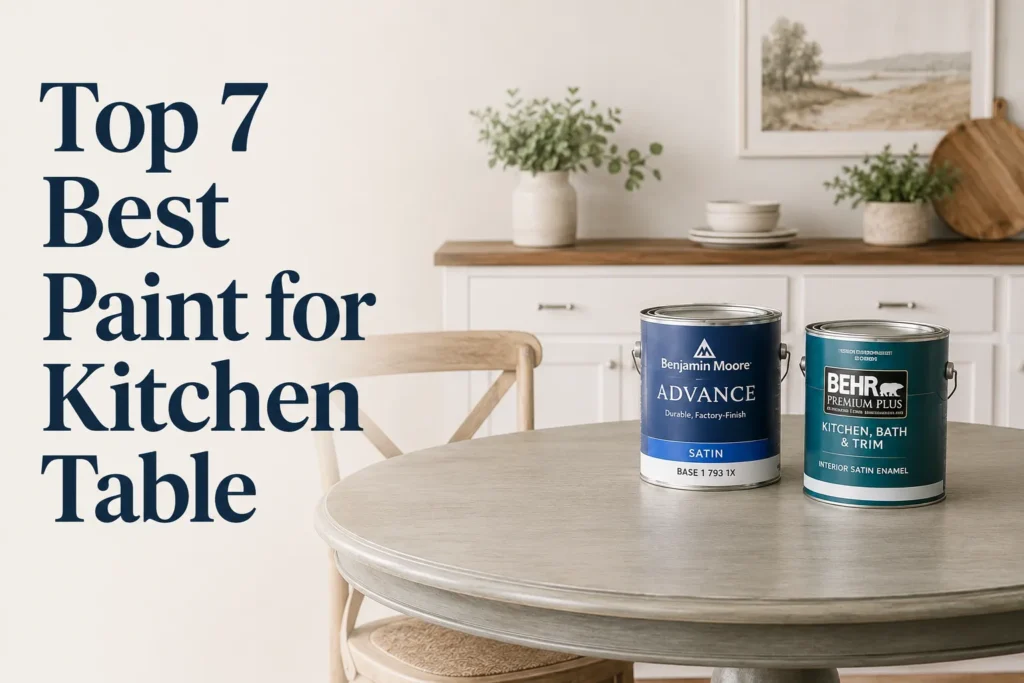
For a durable makeover, consider furniture enamel, waterborne alkyd paint, or a suitable all-in-one furniture formula. The right option depends on your table’s material, existing finish, and the appearance you want. This guide compares seven paint options and explains how to prepare, paint, and protect a kitchen table for better results.
Our Top Picks
- Best Overall: Benjamin Moore ADVANCE Interior Paint – A waterborne alkyd paint designed to cure to a hard, smooth finish suitable for demanding interior woodwork and furniture projects.
- Best for a Professional-Looking Finish: Sherwin-Williams Emerald Urethane Trim Enamel – A urethane enamel option for achieving a smooth, durable painted appearance.
- Best Alkyd Alternative: BEHR Urethane Alkyd Enamel – Worth considering for a hard-wearing finish on properly prepared furniture surfaces.
- Best Budget-Friendly Option: Rust-Oleum Painter’s Touch Ultra Cover – A versatile paint option for suitable furniture projects and smaller table makeovers.
- Best All-in-One Furniture Paint: Heirloom Traditions All-in-One Paint – A convenient option for people who prefer a furniture paint marketed with built-in preparation and finishing features.
- Best Chalk-Style Finish: Rust-Oleum Chalked Ultra Matte Paint – Suitable for a soft, vintage-inspired appearance when paired with an appropriate protective finish for tabletop use.
- Best for Decorative Furniture Projects: General Finishes Milk Paint – A water-based furniture paint option for decorative table makeovers and custom colors.
Best Paint for Kitchen Table Comparison Table
| Product Name | Best For | Check Price |
|---|---|---|
| Benjamin Moore ADVANCE Interior Paint | Overall durability and smooth finish | Check on Amazon |
| Sherwin-Williams Emerald Urethane Trim Enamel | Professional-looking finish | Check on Amazon |
| BEHR Urethane Alkyd Enamel | Hard-wearing alkyd finish | Check on Amazon |
| Rust-Oleum Painter’s Touch Ultra Cover | Budget-friendly furniture projects | Check on Amazon |
| Heirloom Traditions All-in-One Paint | Convenient furniture makeover | Check on Amazon |
| Rust-Oleum Chalked Ultra Matte Paint | Vintage and matte appearance | Check on Amazon |
| General Finishes Milk Paint | Decorative furniture projects | Check on Amazon |
Affiliate disclosure: As an Amazon Associate I earn from qualifying purchases.
Product note: These links open Amazon search results with the affiliate tracking tag. Some professional paint brands are primarily sold through authorized paint retailers, so Amazon listings and availability can vary. Confirm the exact product, formulation, sheen, container size, seller, and intended surface before ordering. Always check the manufacturer’s current technical instructions to determine whether a product is suitable for your particular tabletop.
Top 7 Best Paint for Kitchen Table Reviews
1. Benjamin Moore ADVANCE Interior Paint – Best Overall
Benjamin Moore ADVANCE Interior Paint
Benjamin Moore ADVANCE Interior Paint is a strong option to consider when refinishing a kitchen table that needs a smooth, durable appearance. Its waterborne alkyd formulation is designed to provide the flow and leveling characteristics associated with traditional alkyd paints while allowing cleanup with soap and water.
One of its main advantages is the finish it can produce. A well-applied coat can create a smooth, furniture-quality appearance that looks attractive on table legs, edges, and other visible surfaces. It is also available in different sheens, including satin and semi-gloss, so you can choose a look that complements your kitchen.
This paint is particularly interesting for homeowners who want to coordinate their table with painted kitchen furniture. You might choose a similar color to your existing kitchen cabinet paint or select a contrasting shade to make the table stand out.
However, preparation matters. Clean away grease, food residue, and old furniture polish before sanding. If the table has a slick factory finish or laminate surface, use a compatible bonding primer where required.
ADVANCE has a longer curing process than some quick-drying craft paints. Do not confuse a surface that feels dry with a fully hardened finish. Allow the recommended time before returning the table to regular use.
Pros:
- Waterborne alkyd formulation.
- Designed for a durable, smooth finish.
- Good flow and leveling characteristics.
- Available in different sheens and colors.
- Soap-and-water cleanup.
Cons:
- Generally more expensive than basic craft paints.
- Requires careful surface preparation.
- Recoating and curing take patience.
- Availability may depend on the retailer.
Best For: Homeowners who want a smooth, furniture-quality finish for a carefully prepared kitchen table.
2. Sherwin-Williams Emerald Urethane Trim Enamel – Best for a Professional-Looking Finish
Sherwin-Williams Emerald Urethane Trim Enamel
Sherwin-Williams Emerald Urethane Trim Enamel is worth considering when you want a refined painted finish on furniture and interior woodwork. It is a urethane enamel designed for demanding trim and cabinet applications, making it a useful candidate for certain properly prepared table surfaces.
The appeal of this type of paint is its smooth appearance. A carefully applied finish can make an older table look refreshed without hiding every detail of its original shape. This is particularly attractive for tables with decorative legs, shaped edges, or traditional wood profiles.
You can use a coordinated color scheme to give your dining area a more unified appearance. For example, a neutral table can complement colorful kitchen cabinets, while a darker tabletop can create contrast against lighter furniture.
Application technique makes a difference. Use a high-quality brush for detailed areas and a suitable fine-finish roller for broad surfaces. Thin, even coats are generally easier to control than one heavy coat.
Before purchasing, confirm that the specific product and sheen are approved for the table’s substrate and intended use. A paint designed for trim or cabinets should not automatically be assumed to be a complete tabletop protection system. Follow the manufacturer’s directions regarding primer, curing, and any additional protection.
Pros:
- Urethane enamel formulation.
- Suitable for selected demanding interior coating projects.
- Can produce a smooth, refined appearance.
- Available in multiple colors and sheens.
- Useful for coordinating furniture and cabinetry.
Cons:
- Requires thorough preparation.
- Professional paint products can be relatively expensive.
- Availability may vary by location.
- Tabletop protection must be evaluated separately.
Best For: DIYers seeking a smooth, professional-looking finish on a properly prepared kitchen table.
3. BEHR Urethane Alkyd Enamel – Best Alkyd Alternative
BEHR Urethane Alkyd Enamel is another product worth comparing if you want a hard-wearing enamel finish for an interior furniture project. Alkyd-based coatings are often considered for surfaces that receive more handling than ordinary walls.
A kitchen table is a good example of why paint selection matters. Its top gets frequent contact with plates, cups, hands, and cleaning cloths. A coating intended for demanding interior surfaces can be a better starting point than ordinary kitchen wall paint.
This option may also help when you want to refresh a table while coordinating its color with nearby cabinetry. A matching or complementary shade can make the kitchen feel more connected.
As with other enamel paints, proper preparation is essential. Remove grease and residue, sand the existing surface as directed, and use a suitable primer if the table material or previous finish requires one.
Do not assume that every BEHR enamel product has identical instructions. Check the exact container and technical data sheet for the recommended substrates, application conditions, recoat time, and full cure period. If you plan to use a clear topcoat, confirm compatibility before applying it.
Pros:
- Urethane alkyd enamel option.
- Worth considering for demanding interior projects.
- Available in different colors and finishes.
- Suitable for selected woodwork and furniture applications.
- Can coordinate with other painted kitchen surfaces.
Cons:
- Requires careful preparation.
- Full curing takes longer than surface drying.
- Exact product specifications should be checked.
- May require a separate compatible primer.
Best For: Homeowners comparing alkyd enamel options for a durable kitchen table makeover.
4. Rust-Oleum Painter’s Touch Ultra Cover – Best Budget-Friendly Option
Rust-Oleum Painter’s Touch Ultra Cover
Rust-Oleum Painter’s Touch Ultra Cover is a versatile paint line that may suit smaller furniture projects and budget-conscious makeovers. Depending on the specific version, it is available in different finishes and application formats.
For a kitchen table project, the exact formulation matters. Check whether you are buying the brush-on or spray version and whether the label lists the table’s material as a suitable surface. Do not assume that every product in the Painter’s Touch range has identical performance or application instructions.
This option can be useful for refreshing table legs, decorative details, and smaller furniture components. Spray versions may help with shaped or hard-to-reach areas, while brush-on versions give you more control over application on selected surfaces.
If you intend to paint a tabletop that will receive frequent spills and wiping, pay special attention to the product’s durability limitations. A suitable protective clear finish may be needed, provided the manufacturer confirms compatibility.
For the best appearance, clean and lightly sand the surface where appropriate. Apply thin coats and allow the recommended drying time between applications.
Pros:
- Budget-friendly option for selected projects.
- Available in different colors and formats.
- Useful for decorative furniture details.
- Convenient for smaller makeover projects.
- Widely recognized paint brand.
Cons:
- Different versions have different intended uses.
- Not every formula is ideal for a heavily used tabletop.
- Spray versions require overspray protection.
- A compatible protective finish may be necessary.
Best For: Budget-conscious DIYers painting table legs, decorative details, and suitable furniture surfaces.
5. Heirloom Traditions All-in-One Paint – Best All-in-One Furniture Paint
Heirloom Traditions All-in-One Paint
Heirloom Traditions All-in-One Paint is an appealing choice for people who want a convenient furniture makeover product. Its all-in-one positioning is intended to simplify preparation and finishing for suitable surfaces.
This can be attractive when you want to refresh an older kitchen table without purchasing a long list of separate decorative products. The paint is available in a range of colors, making it possible to create anything from a soft neutral finish to a more dramatic statement piece.
It is also worth considering if you want to coordinate the table with your kitchen cabinet paint. You could choose the same color for a consistent appearance or use a complementary shade to create a focal point.
Although the product is marketed as an all-in-one option, that does not mean every table can be painted without preparation. Grease, wax, silicone polish, loose coatings, and damaged finishes can still cause adhesion problems. Follow the manufacturer’s surface-preparation directions for the material you have.
For a high-use tabletop, verify whether the product’s finish is sufficient on its own or whether the manufacturer recommends additional protection. Allow the full curing period before placing heavy objects or using the table normally.
Pros:
- Convenient all-in-one furniture paint concept.
- Available in a variety of colors.
- Useful for furniture makeover projects.
- Can simplify product selection.
- Suitable for selected properly prepared surfaces.
Cons:
- Not every surface can skip preparation.
- Tabletop durability should be verified.
- Product directions may differ by surface.
- Full curing requires patience.
Best For: DIYers who want a convenient furniture paint for a kitchen table makeover.
6. Rust-Oleum Chalked Ultra Matte Paint – Best Chalk-Style Finish
Rust-Oleum Chalked Ultra Matte Paint
Rust-Oleum Chalked Ultra Matte Paint is worth considering if you prefer a soft, vintage-inspired appearance rather than a glossy or traditional enamel finish.
Chalk-style paint is popular for furniture transformations because it can create a distinctive matte look. It is particularly attractive on farmhouse tables, rustic dining furniture, and older pieces that need a decorative refresh.
You can use a contrasting color on the table legs and top to create a two-tone appearance. For example, a light neutral base with a darker top can give a traditional table a fresh look.
However, chalk-style paint needs special consideration on a kitchen tabletop. Its decorative matte finish should not automatically be treated as sufficient protection against food spills, water rings, and frequent cleaning. A suitable protective topcoat is important when the product instructions call for one.
Choose a clear finish specifically compatible with the paint and appropriate for a frequently used tabletop. Test the complete paint-and-sealer system on a sample before committing to the entire table. Some clear finishes can change the appearance of light-colored paint.
Pros:
- Attractive ultra-matte appearance.
- Suitable for vintage and farmhouse styles.
- Useful for decorative furniture makeovers.
- Available in different colors.
- Can create a distinctive distressed look.
Cons:
- Matte paint alone may not provide enough tabletop protection.
- Requires a compatible protective finish when specified.
- Some sealers can change the final appearance.
- Not the best choice if you want a glossy finish.
Best For: Decorative kitchen tables where a matte, rustic appearance is the priority and suitable tabletop protection is added.
7. General Finishes Milk Paint – Best for Decorative Furniture Projects
General Finishes Milk Paint is a water-based furniture paint option worth exploring if you want a smooth decorative finish and a range of attractive colors.
Despite the name, this type of modern milk paint is not necessarily the same as traditional powdered milk paint. It is sold as a ready-to-use furniture coating, making it convenient for people who want to update an older table.
It can be used for selected furniture projects, including table bases, legs, and other decorative surfaces. Depending on the exact finish system, you may also use it on a tabletop when the manufacturer’s directions support that application and you add the recommended protection.
One benefit is the flexibility to create different styles. You can choose a classic neutral, a deep color, or a more distinctive shade to complement your kitchen.
Preparation still matters. Clean the table carefully, sand where recommended, and use a suitable primer or bonding product if the existing surface needs additional adhesion support.
For a tabletop that receives regular use, pay particular attention to the recommended topcoat. Choose a compatible protective finish and allow it to cure fully before returning the table to everyday service.
Pros:
- Water-based furniture paint option.
- Available in different decorative colors.
- Suitable for selected furniture surfaces.
- Useful for custom table makeovers.
- Can create a refined painted appearance.
Cons:
- May need a separate protective topcoat.
- Surface preparation remains important.
- Not every finish system is suitable for every tabletop.
- Additional curing time may be necessary.
Best For: Homeowners who want decorative colors and a customizable finish for a kitchen table project.
How to Choose the Best Paint for a Kitchen Table
Selecting the right paint involves more than choosing a color you like. A tabletop has different demands from a wall or decorative shelf. Consider these factors before purchasing.
1. Choose Paint Designed for Furniture or High-Use Surfaces
A kitchen table is exposed to more wear than a typical wall. Plates slide across it, spills happen, and the surface gets wiped repeatedly.
Waterborne alkyd enamel and suitable urethane enamel are strong categories to investigate for this type of project. They are designed for demanding interior finishes and can provide a smoother, harder coating than ordinary wall paint.
Avoid choosing a product simply because it is labeled for kitchens. Kitchen wall paint is formulated for walls, not necessarily for the repeated contact and abrasion a tabletop experiences.
2. Consider the Table Material
Your table’s material determines how much preparation and priming may be necessary.
| Table Material | What to Consider |
|---|---|
| Solid wood | Clean, sand as needed, and prime where the paint system recommends it. |
| Previously painted wood | Remove loose paint and prepare the remaining finish for adhesion. |
| Varnished wood | Degrease and lightly abrade the glossy surface; use suitable primer if required. |
| Laminate | Use a bonding primer approved for the surface and chosen paint. |
| MDF | Seal vulnerable edges and follow the paint manufacturer’s preparation instructions. |
| Metal | Remove rust and use a compatible metal primer if required. |
Do not assume that paint will stick to every surface without preparation. A slick laminate or glossy varnish can cause peeling if the coating system is not suitable.
3. Select the Right Sheen
The sheen affects both the appearance and maintenance of your table.
- Matte: Provides a soft appearance but can be harder to clean and may show wear more readily.
- Satin: Offers a subtle sheen and can be a practical choice for many furniture finishes.
- Semi-gloss: Reflects more light and is generally easier to wipe clean.
- Gloss: Creates a shiny appearance but can highlight dents, sanding marks, and surface imperfections.
For many kitchen tables, satin or semi-gloss is worth considering. The exact durability depends on the paint formulation and protective finish, not just the sheen.
4. Check Whether Primer Is Required
Primer helps prepare the surface for the paint system. It is particularly important when painting laminate, glossy finishes, stained wood, or surfaces with potential discoloration.
A bonding primer can help paint adhere to difficult surfaces. A stain-blocking primer may be necessary when knots, tannins, or old stains could bleed through the new color.
Choose a primer that is compatible with both the table material and the topcoat.
5. Consider the Need for a Protective Topcoat
Some furniture enamels are designed to cure into a durable finish without an additional clear coat. Other paints, especially decorative chalk-style products, may need a compatible protective layer.
For a kitchen table, this decision matters because the surface receives frequent cleaning and contact. A clear polyurethane or another manufacturer-approved protective coating may provide additional resistance, but compatibility must be checked.
Do not automatically apply a clear coat over every paint. Some products are designed to be used alone, and an incompatible topcoat can affect adhesion, color, or appearance.
6. Check Drying and Curing Time
Paint can feel dry to the touch before it reaches its full hardness. A table that is used too soon may develop scratches, dents, sticking marks, or surface damage.
Read the manufacturer’s directions for:
- Time between coats.
- Minimum drying time.
- Recommended curing period.
- When light handling is allowed.
- When regular use can resume.
A little patience can make a significant difference in the finished result.
7. Choose a Color That Suits Your Kitchen
The table should complement the surrounding kitchen rather than compete with it.
White, cream, and light gray can make a small kitchen feel brighter. Navy, forest green, and charcoal can create a stronger focal point. Natural wood tones can also be combined with painted legs for a balanced appearance.
If your kitchen already has colorful cabinets, consider a neutral table. If the cabinetry is simple, a contrasting table color can add personality.
Best Paint for Kitchen Table: Which Type Should You Choose?
Different paint types provide different results. Here is a quick comparison to help you narrow your options.
| Paint Type | Main Advantage | Best Use |
|---|---|---|
| Waterborne alkyd enamel | Smooth, hard-curing finish | Frequently used furniture |
| Urethane enamel | Durable decorative coating | Selected furniture and woodwork |
| Acrylic furniture paint | Convenient application and cleanup | Decorative furniture projects |
| Chalk-style paint | Soft, matte appearance | Vintage-style furniture with suitable sealer |
| Milk-style furniture paint | Decorative color options | Furniture makeovers |
| Spray paint | Convenient application on suitable surfaces | Table legs and smaller components |
For a heavily used kitchen table, start by comparing furniture enamels and suitable urethane or alkyd coatings. Choose decorative paint types when their appearance is important and you are prepared to follow the recommended protection system.
Can You Use Kitchen Wall Paint on a Kitchen Table?
It is generally better to avoid ordinary kitchen wall paint on a tabletop.
Kitchen wall paint is designed for vertical surfaces. Although washable wall coatings can resist some stains and routine cleaning, a table experiences different types of wear, including friction from plates, utensils, decorations, and repeated wiping.
A product that performs well on kitchen walls may not have the hardness or block resistance needed for a tabletop.
If you have leftover kitchen wall paint, check the manufacturer’s approved surfaces and intended use before applying it to furniture. Do not assume that adding a clear coat will automatically turn wall paint into a durable furniture finish.
For a better result, select a coating specifically recommended for furniture, cabinets, trim, or comparable high-use interior surfaces.
Kitchen Table Paint vs. Kitchen Cabinet Paint
Kitchen table paint and kitchen cabinet paint can sometimes belong to the same product category, but the intended use should still be checked.
Cabinet enamel is designed for doors, frames, and other surfaces that receive regular handling and cleaning. Some cabinet coatings can also be suitable for a kitchen table when the manufacturer approves the tabletop substrate and intended use.
A table’s horizontal surface has additional demands. It receives standing water, food spills, hot dishes, and objects sliding across it. Therefore, a product suitable for kitchen cabinet paint is not automatically a complete tabletop finishing system.
Before using cabinet paint on a table, check whether a separate protective finish is recommended and allow the entire coating system to cure fully.
How to Paint a Kitchen Table: Step-by-Step Guide
A successful table makeover begins with preparation. Follow these steps to help create an even finish and reduce the risk of peeling or premature wear.
Step 1: Remove Hardware and Detachable Parts
If your table has removable leaves, metal fittings, or other detachable components, remove them where practical. This makes it easier to reach edges and prevents paint from building up around moving parts.
Cover any components that cannot be removed.
Step 2: Clean the Table Thoroughly
Kitchen tables often have invisible grease, food residue, furniture polish, and cleaning-product buildup.
Wash the surface with a suitable degreasing cleaner according to its directions. Wipe away residue and allow the table to dry completely before continuing.
Do not skip this step. Primer and paint cannot reliably bond to a contaminated surface.
Step 3: Sand the Existing Finish
Lightly sand the table with suitable sandpaper to prepare the surface. The goal is to remove gloss and create a surface that the primer or paint system can grip.
If the old coating is peeling or damaged, remove unstable material before proceeding. Avoid aggressive sanding if you are working on a very old finish that could contain lead. In that situation, seek appropriate testing and follow local safety guidance.
Step 4: Remove Sanding Dust
Use a suitable vacuum and clean cloth to remove dust. Make sure the tabletop, edges, legs, and joints are clean.
Any remaining dust can create bumps and imperfections in the finished coating.
Step 5: Apply a Compatible Primer
Apply the primer recommended for your table material and chosen paint. A bonding primer may be especially useful on laminate or glossy surfaces.
Use a roller for broad flat areas and a brush for corners, edges, and decorative details. Apply a thin, even coat and allow it to dry as directed.
Step 6: Apply the First Paint Coat
Stir the paint thoroughly and apply it with a high-quality brush or fine-finish roller.
Start with the tabletop and then work on the sides and legs. Use smooth, controlled strokes and avoid leaving thick areas of paint around edges.
Step 7: Apply Additional Coats
Allow the first coat to dry for the recommended time before applying another. Lightly sand between coats only if the product instructions recommend it.
Two thin coats often provide a more consistent appearance than one heavy coat, but follow the paint manufacturer’s recommended coverage and coat count.
Step 8: Apply a Protective Finish if Required
If your paint system calls for a clear protective finish, apply a compatible product after the paint has reached the required drying stage.
Follow the topcoat instructions for application, recoating, and curing. Do not combine products simply because they are individually popular for furniture projects.
Step 9: Allow the Table to Cure
Leave the table undisturbed for the full recommended curing period. Avoid placing heavy objects, hot dishes, or decorations on it too early.
A surface that feels dry may still be vulnerable to pressure and sticking.
Step 10: Return the Table to Use Carefully
Once the coating has cured according to the manufacturer’s directions, return the table to normal use. Use placemats and coasters, wipe spills promptly, and avoid abrasive cleaning products unless approved.
Common Mistakes to Avoid When Painting a Kitchen Table
1. Using Ordinary Wall Paint
Wall paint is not necessarily designed for the repeated friction and contact that a kitchen table experiences. Choose a suitable furniture or enamel coating instead.
2. Skipping the Cleaning Stage
Grease, polish, and food residue can interfere with adhesion. Clean the surface thoroughly before sanding and painting.
3. Ignoring the Existing Finish
Glossy varnish, laminate, and old paint may need specific preparation. Use a suitable primer when the paint manufacturer recommends one.
4. Applying Thick Coats
Heavy paint application can lead to uneven texture, visible brush marks, and a longer drying period. Thin, even coats are easier to control.
5. Using an Incompatible Clear Coat
A protective finish must be compatible with the paint beneath it. Check the product instructions before applying polyurethane, varnish, or another sealer.
6. Using the Table Too Soon
Paint that feels dry may not have reached full hardness. Wait for the recommended curing period before returning the table to daily use.
7. Forgetting About Heat and Moisture
Even a durable painted finish can be damaged by hot cookware, standing water, and harsh cleaners. Use trivets, coasters, and gentle cleaning methods to protect the surface.
Frequently Asked Questions
1. What is the best paint for a kitchen table?
A suitable waterborne alkyd or urethane furniture enamel is a strong choice for a frequently used kitchen table. Benjamin Moore ADVANCE is one option worth considering because it is designed to cure to a hard, furniture-quality finish. Always check the product’s suitability for your table material.
2. Can I use regular wall paint on a kitchen table?
Ordinary wall paint is generally not the best choice for a tabletop. Tables receive more direct friction, spills, and contact than walls. Choose a coating designed for furniture or another suitable high-use surface.
3. Do I need to sand a kitchen table before painting?
Many tables need at least some surface preparation, particularly when they have a glossy varnish or factory finish. Clean and sand as directed by the paint manufacturer. Some all-in-one products have different preparation requirements, but contamination and loose finishes still need attention.
4. Do I need primer when painting a kitchen table?
Primer is often helpful on bare wood, laminate, glossy finishes, and surfaces with potential stains or discoloration. The correct primer depends on the table material and paint system.
5. What is the best paint finish for a kitchen table?
Satin and semi-gloss are popular choices because they offer a practical balance of appearance and cleanability. The paint’s formulation and protective system matter more than sheen alone.
6. Can I use chalk paint on a kitchen table?
Yes, chalk-style paint can be used for a decorative makeover when the product supports the surface. However, a kitchen tabletop usually needs additional protection. Choose a compatible sealer recommended by the manufacturer and allow it to cure fully.
7. Should I put polyurethane over painted furniture?
Polyurethane can be suitable over some properly prepared and fully dried painted surfaces, but it is not appropriate for every paint system. Check the paint and clear-coat manufacturers’ compatibility instructions before applying it.
8. How many coats of paint should a kitchen table have?
The recommended number depends on the product, color, surface, and coverage. Many projects need two thin coats, but some paint systems specify a different number. Follow the technical instructions rather than applying extra coats automatically.
9. How long should kitchen table paint dry before use?
The answer depends on the formulation and room conditions. Touch-dry time is not the same as full cure time. Follow the manufacturer’s return-to-service instructions before using the table regularly.
10. Can I paint a laminate kitchen table?
Yes, provided the paint system is suitable for laminate. Clean the surface thoroughly, prepare it as directed, and use a compatible bonding primer when required.
11. Can I use spray paint on a kitchen table?
Some spray paints can be used on suitable furniture surfaces, but check the exact product label. Spray paint may be convenient for legs and decorative details, while a furniture enamel applied with a roller may be easier to control on a broad tabletop.
12. Is water-based or oil-based paint better for a kitchen table?
Both can produce durable finishes when the correct product is selected. Waterborne alkyd products offer a useful balance of a hard finish and water cleanup. Traditional oil-based products can also be durable but may have stronger odors and different drying requirements.
13. Can I use kitchen cabinet paint on a table?
Some cabinet paints are suitable for furniture surfaces, but check the manufacturer’s approved uses. A tabletop experiences more direct contact and abrasion than many cabinet surfaces, so additional protection may be necessary.
14. How do I prevent brush marks when painting a kitchen table?
Use a quality brush or fine-finish roller, apply thin coats, and avoid repeatedly brushing paint as it begins to dry. A paint with good flow and leveling properties can also help create a smoother appearance.
15. How do I keep a painted kitchen table looking new?
Allow the finish to cure fully, use coasters and placemats, wipe spills promptly, and clean with products approved for the coating. Avoid dragging heavy objects across the surface or placing hot cookware directly on it.
Final Words
The best paint for a kitchen table should provide the appearance you want while standing up to regular household use. Benjamin Moore ADVANCE is a strong option for a smooth, hard-curing finish, while Sherwin-Williams Emerald Urethane and BEHR Urethane Alkyd Enamel are worth comparing for their enamel formulations. If you prefer a decorative makeover, Heirloom Traditions, Rust-Oleum Chalked, and General Finishes offer different styles.
Before choosing, consider your table’s material, existing coating, desired sheen, and preparation requirements. Clean the surface carefully, use a compatible primer when needed, apply thin coats, and allow the complete finish to cure. Those steps are essential for getting a kitchen table that looks refreshed and remains practical for everyday use.
Helpful Resources
- Benjamin Moore – How to Paint a Table – A practical manufacturer guide covering cleaning, sanding, priming, and painting a wood or laminate table.
- Benjamin Moore – ADVANCE Interior Paint – Product information about the waterborne alkyd formulation, available sheens, and intended applications.