
The best paint for stairs should withstand frequent foot traffic, resist scuffs, and provide a durable finish that stays attractive over time. Staircases experience more daily wear than many other painted surfaces, so ordinary wall paint is rarely the right choice for steps. A quality floor or porch enamel is generally a better option for stair treads, while a durable trim enamel can work well on risers, railings, and spindles.
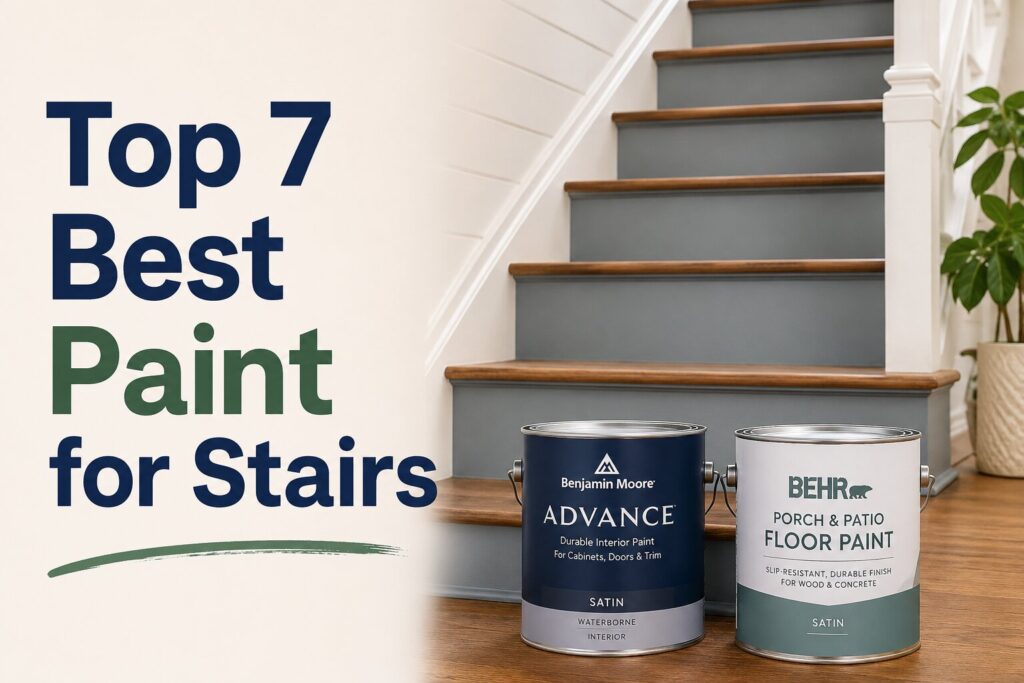
Choosing the right coating also depends on the material and location of your staircase. Interior wood stairs need a finish that bonds properly to prepared wood and handles repeated contact. Exterior steps require additional resistance to moisture and changing weather. This guide reviews seven paint options and explains how to select the right finish for your project.
Our Top Picks
- Best Overall: Benjamin Moore Floor & Patio Latex Enamel – A floor-focused enamel worth considering for properly prepared stair treads and other high-traffic surfaces.
- Best for Interior and Exterior Steps: Sherwin-Williams Porch & Floor Enamel – A practical option for compatible porch, floor, and stair surfaces.
- Best for High-Traffic Areas: INSL-X Tough Shield Floor and Patio Paint – Designed for floor surfaces where durability and resistance to everyday wear matter.
- Best Budget-Friendly Option: BEHR Porch & Patio Floor Paint – A floor-paint option for suitable interior or exterior projects, depending on the product label.
- Best for Decorative Floor Finishes: Rust-Oleum HOME Interior Floor Coating – A coating system for updating compatible interior floor surfaces; confirm stair and tread suitability before using it on steps.
- Best for Porch and Outdoor Steps: Valspar Porch, Floor & Patio Latex Paint – A floor-oriented coating to consider for compatible porch and exterior stair surfaces.
- Best for Risers and Railings: Sherwin-Williams Emerald Urethane Trim Enamel – A durable trim coating for vertical staircase components, not a substitute for floor-rated tread paint.
Best Paint for Stairs Comparison Table
| Product Name | Best For | Check Price |
|---|---|---|
| Benjamin Moore Floor & Patio Latex Enamel | Interior and exterior stair treads where approved | Check on Amazon |
| Sherwin-Williams Porch & Floor Enamel | Compatible porch and floor surfaces | Check on Amazon |
| INSL-X Tough Shield Floor and Patio Paint | High-traffic floor areas | Check on Amazon |
| BEHR Porch & Patio Floor Paint | Budget-friendly floor projects | Check on Amazon |
| Rust-Oleum HOME Interior Floor Coating | Decorative interior floor updates | Check on Amazon |
| Valspar Porch, Floor & Patio Latex Paint | Compatible outdoor steps and porches | Check on Amazon |
| Sherwin-Williams Emerald Urethane Trim Enamel | Risers, railings, and staircase trim | Check on Amazon |
Affiliate disclosure: As an Amazon Associate I earn from qualifying purchases.
Product note: These links open Amazon search results with the affiliate tracking tag. Some professional paint brands and product lines may have limited Amazon availability or different listings. Check the exact product name, intended surface, finish, container size, seller, and current availability before ordering. Most importantly, do not assume every product in this list is suitable for stair treads. The trim enamel is intended for vertical staircase components, and floor-coating systems must specifically permit the stair application.
Top 7 Best Paint for Stairs Reviews
1. Benjamin Moore Floor & Patio Latex Enamel – Best Overall
Benjamin Moore Floor & Patio Latex Enamel
Benjamin Moore Floor & Patio Latex Enamel is a strong option to consider when you want a coating specifically designed for floor surfaces. Stair treads experience repeated friction, shoe contact, and everyday abrasion, so choosing a floor-oriented enamel is more appropriate than using ordinary wall paint.
One advantage of this product category is that it is formulated for surfaces that receive regular use. When applied to a compatible, properly prepared substrate, a floor enamel can provide a more suitable finish for painted steps than a standard interior latex coating.
It is worth considering for homeowners updating older wood staircases. Before application, inspect the existing finish. Bare wood, previously painted boards, and glossy polyurethane-coated treads may need different preparation or primers. If the wood has a slick clear finish, sanding and a compatible bonding primer may be necessary to achieve proper adhesion.
You should also pay attention to the finish. A low-sheen appearance can help disguise minor surface imperfections and everyday marks. However, appearance should never take priority over traction. Smooth, glossy steps can become slippery, particularly when wearing socks.
Follow the product’s current technical instructions for application, recoat intervals, and curing. Do not return the staircase to regular use simply because the paint feels dry to the touch.
Pros:
- Floor-oriented enamel for suitable high-traffic surfaces.
- Appropriate product category to investigate for stair treads.
- Available in different color and finish options, depending on the product line.
- Useful for compatible interior and exterior floor projects.
- A practical choice for a staircase renovation.
Cons:
- May cost more than basic floor paints.
- Surface preparation is important for long-term adhesion.
- Availability and color selection vary by retailer.
- Full curing takes longer than initial drying.
Best For: Homeowners looking for a dedicated floor enamel for properly prepared stair treads and compatible floor surfaces.
2. Sherwin-Williams Porch & Floor Enamel – Best for Interior and Exterior Steps
Sherwin-Williams Porch & Floor Enamel
Sherwin-Williams Porch & Floor Enamel is another floor-focused product worth considering for stair projects. It is designed for compatible porch and floor applications, making it more relevant to walking surfaces than ordinary trim or wall paint.
This type of enamel can be useful when refreshing steps that receive regular foot traffic. It is particularly worth investigating for staircases connected to porches, entryways, and other areas where the floor coating needs to handle frequent use.
For wood stairs, preparation remains essential. Remove loose paint, clean away dirt and grease, and sand the surface according to the manufacturer’s instructions. If the existing wood has a glossy or previously sealed finish, check whether a bonding primer is required.
The product may also be useful for certain exterior applications, but outdoor exposure creates additional challenges. Rain, sunlight, temperature changes, and moisture can affect the performance of a coating. Confirm that the exact product version is approved for the location and substrate.
One important consideration is traction. A floor enamel is not automatically a slip-resistant coating. If your steps are frequently wet or used by children and older adults, investigate an approved anti-slip additive or a suitable textured stair treatment.
Pros:
- Designed for compatible floor and porch surfaces.
- More appropriate for walking surfaces than standard wall paint.
- Worth considering for suitable stair and entryway projects.
- Available in different finish and color options depending on the product.
- Useful for homeowners seeking a floor-oriented coating.
Cons:
- Exact application suitability depends on the product version.
- Glossy or sealed wood may require additional preparation.
- Anti-slip performance should not be assumed.
- Full cure and return-to-service times must be checked.
Best For: Homeowners who need a floor enamel for compatible interior or exterior steps and porch surfaces.
3. INSL-X Tough Shield Floor and Patio Paint – Best for High-Traffic Areas
INSL-X Tough Shield Floor and Patio Paint
INSL-X Tough Shield Floor and Patio Paint is designed for floor surfaces that need a durable coating. This makes it a useful candidate when comparing products for busy staircases, particularly when the steps receive repeated everyday traffic.
A staircase is a demanding surface because people place their weight on a relatively small area of each tread. The front edge, or nosing, often receives especially noticeable wear. Choosing a coating intended for floor applications is therefore an important starting point.
Tough Shield is worth investigating for compatible wood or concrete surfaces, depending on the exact product instructions. If you are painting an older staircase, check the existing finish before applying the topcoat. A previously varnished or polyurethane-sealed surface may need careful sanding and a compatible bonding primer.
The product is also worth considering for utility areas, basement steps, and other locations where floor durability matters. However, moisture and ventilation conditions should be evaluated before painting. Damp or leaking stair structures should be repaired rather than covered with a new coating.
For a staircase that needs extra traction, confirm whether an approved anti-slip additive can be used with the selected paint. Follow the recommended mixing ratio so the coating remains suitable for application.
Pros:
- Floor-focused paint for compatible surfaces.
- Worth considering for frequently used areas.
- Suitable product category for comparing stair tread coatings.
- Can be considered for certain basement and utility applications.
- Available in different product sizes and colors, depending on the retailer.
Cons:
- Does not automatically provide an anti-slip finish.
- Proper surface preparation is essential.
- Compatibility with old coatings must be checked.
- Product instructions may restrict certain applications.
Best For: Homeowners comparing durable floor paints for suitable high-traffic stair and patio surfaces.
4. BEHR Porch & Patio Floor Paint – Best Budget-Friendly Option
BEHR Porch & Patio Floor Paint
BEHR Porch & Patio Floor Paint is a practical option to investigate if you want to refresh suitable steps without choosing a premium-priced specialty coating. Its floor-oriented purpose makes it more relevant to stair treads than a conventional interior wall paint.
This type of paint can be useful for compatible porch, patio, and floor surfaces. If your staircase leads to an outdoor entryway or covered porch, it may be worth comparing with other floor enamels. Always check whether the exact product version is approved for your particular wood or concrete substrate.
For interior wood stairs, do not assume an exterior porch product is automatically the best choice. Check the label for indoor use, ventilation requirements, and any restrictions. The same applies to exterior steps exposed directly to rain and sunlight.
A good result depends heavily on preparation. Remove loose and flaking material, clean the surface thoroughly, and allow the wood to dry. If the existing finish is glossy, follow the manufacturer’s recommendations for sanding and priming.
Another important point is the finish texture. Smooth paint can create a slippery surface on stairs. If additional traction is needed, use only a compatible anti-slip additive or a stair-specific traction solution approved for the coating.
Pros:
- Floor-oriented product category.
- Worth comparing for budget-conscious projects.
- Useful for compatible porch and patio surfaces.
- Available in different colors and finishes depending on the product.
- Suitable option to investigate for certain exterior stair projects.
Cons:
- Exact stair suitability must be confirmed.
- Some versions may not be intended for interior use.
- Preparation can require extra time.
- Slip resistance should not be assumed.
Best For: Budget-conscious homeowners looking for a floor paint for compatible porch, patio, and step surfaces.
5. Rust-Oleum HOME Interior Floor Coating – Best for Decorative Floor Finishes
Rust-Oleum HOME Interior Floor Coating
Rust-Oleum HOME Interior Floor Coating is a decorative floor-renovation option worth considering when updating compatible interior surfaces. It is designed as a floor-coating system rather than ordinary wall paint, which makes it relevant to homeowners comparing products for interior renovation projects.
One reason people consider this type of product is the opportunity to change the appearance of an existing floor without undertaking a complete replacement. A similar decorative approach may appeal to someone planning a coordinated update between a hallway floor and staircase.
However, there is an important distinction between painting a floor and coating stair treads. Not every floor coating is approved for steps, and stairs create different safety and wear demands. Before buying, confirm that the current Rust-Oleum HOME system specifically permits your intended stair application. If the instructions do not approve it for stair treads, choose a floor enamel that does.
The application process may also involve multiple components, such as a base coat and a protective topcoat. Use the complete compatible system rather than mixing unrelated coatings.
This option is best treated as a decorative floor-coating candidate, not a universal staircase paint. Check the substrate requirements, preparation instructions, application temperature, and curing schedule carefully.
Pros:
- Designed for decorative interior floor renovation.
- Can help coordinate the appearance of connected floor surfaces.
- Available as a coating system with product-specific instructions.
- Worth considering for compatible interior renovation projects.
- Offers an alternative to ordinary floor paint.
Cons:
- Stair tread approval must be confirmed before use.
- May require multiple system components.
- Not intended for every substrate or staircase.
- Preparation and curing instructions must be followed carefully.
Best For: Homeowners considering a decorative coating for compatible interior floors who can verify whether the system is approved for their specific staircase.
6. Valspar Porch, Floor & Patio Latex Paint – Best for Porch and Outdoor Steps
Valspar Porch, Floor & Patio Latex Paint
Valspar Porch, Floor & Patio Latex Paint is another product to compare when planning an update to suitable exterior steps. Its floor-focused category makes it a more logical starting point for walking surfaces than general-purpose exterior house paint.
Outdoor staircases experience a combination of foot traffic and environmental exposure. Rain, dirt, sunlight, and seasonal temperature changes can all affect the appearance and durability of the coating. A product specifically intended for porch and floor surfaces is worth considering when those conditions are part of your project.
For wood stairs, inspect the boards before painting. Replace rotten or damaged sections, secure loose treads, and repair structural problems before applying a finish. Paint cannot make an unstable staircase safe.
The exact product version matters. Confirm that the label permits your wood type and stair application, and check whether a primer is recommended. Some previously coated or glossy surfaces may need additional preparation.
If the steps are exposed to rain, traction is especially important. A smooth painted finish can become hazardous when wet. Consider a compatible anti-slip additive or another approved traction treatment, and keep the steps clear while the coating cures.
Pros:
- Floor-oriented product category.
- Worth comparing for compatible outdoor steps.
- Suitable for investigating porch and patio renovation options.
- Latex formulation in the product line.
- Available in different color options depending on the listing.
Cons:
- Exact product availability may vary.
- Not every version is suitable for every wood surface.
- Outdoor traction requires separate consideration.
- Surface preparation affects the final result.
Best For: Homeowners looking for a porch-and-floor paint to evaluate for compatible exterior wood steps and outdoor surfaces.
7. Sherwin-Williams Emerald Urethane Trim Enamel – Best for Risers and Railings
Sherwin-Williams Emerald Urethane Trim Enamel
Sherwin-Williams Emerald Urethane Trim Enamel is different from the floor paints above because it is intended for trim and other suitable vertical surfaces. It deserves a place in this guide because a staircase includes more than the surfaces people walk on.
The risers, spindles, balusters, newel posts, and handrails all need a finish that can handle regular contact and cleaning. A quality trim enamel can be a good choice for these components when used according to its product instructions.
One advantage of a trim enamel is its suitability for detailed woodwork. It can help create a coordinated appearance across the staircase, particularly when you want white risers, contrasting railings, or a consistent finish on the balusters.
For the handrail, choose a finish that can tolerate frequent handling and cleaning. Proper sanding, cleaning, and priming are still important, especially if the wood has an old glossy coating.
Remember that this is not a replacement for floor-rated stair tread paint. Do not use a trim enamel on walking surfaces unless the manufacturer explicitly approves that application. A better approach is to pair a compatible floor coating for the treads with a suitable trim enamel for the vertical components.
Pros:
- Designed for suitable trim and woodwork applications.
- Useful for stair risers, balusters, and other vertical details.
- Helps create a coordinated staircase finish.
- Suitable for detailed brush and roller work.
- Available in different finish options depending on the product line.
Cons:
- Not a substitute for floor-rated tread paint.
- Requires suitable surface preparation.
- Professional paint availability can vary.
- May need a compatible primer on previously finished wood.
Best For: Homeowners painting staircase risers, railings, balusters, and other trim rather than the surfaces used for walking.
How to Choose the Best Paint for Stairs
Selecting the right paint involves more than choosing a color. You need to consider the surface, location, expected foot traffic, and finish. These factors can help you avoid premature peeling, scuffing, and other problems.
1. Identify the Staircase Surface
Start by identifying the material you plan to paint. Wood, concrete, and metal stairs have different preparation and coating requirements.
- Wood stairs: Choose a product approved for the specific wood and walking surface. Proper sanding and compatible primer may be necessary.
- Concrete stairs: Use a concrete floor coating designed for the surface and exposure conditions.
- Metal stairs: Select a compatible metal coating and corrosion-control primer where required.
- Previously painted stairs: Check whether the existing coating is firmly attached and compatible with the new system.
If your project involves wood stairs, inspect every tread for cracks, movement, rot, and loose boards. Repair structural problems before painting.
2. Choose Floor Paint for Stair Treads
The treads are the horizontal surfaces that receive direct foot traffic. They need a coating designed for floor use rather than ordinary interior wall paint.
Look for a product that specifically permits the intended stair application. Consider its abrasion resistance, adhesion, cleaning requirements, and recommended curing time.
The front edge of each tread receives considerable wear, so careful preparation and even application are especially important.
3. Use a Different Paint for Risers and Railings When Needed
A staircase has several components, and they do not all experience the same type of wear.
The treads need floor-rated paint. The risers, spindles, and decorative trim can often use a durable trim enamel. Handrails also need a finish suitable for repeated handling and cleaning.
Using two compatible products can give you a better result than forcing one coating to serve every purpose.
4. Consider Slip Resistance
Safety should be a major consideration when painting stairs. A smooth finish can become slippery, particularly when people walk in socks or when water is carried indoors.
Look for a product specifically rated for the intended stair application. If additional traction is required, use an anti-slip additive approved by the paint manufacturer.
Avoid adding sand or other materials without checking compatibility and application instructions. An unsuitable additive can create an uneven surface or interfere with coating performance.
5. Select the Right Finish
The finish affects the appearance, cleaning, and visible wear of a staircase.
- Low sheen: Can help hide minor surface imperfections and reduce the appearance of some scuffs.
- Satin: Offers a moderate sheen and is often selected for trim and other interior woodwork.
- Semi-gloss: Provides a more reflective surface and is commonly used on railings and trim.
- Gloss: Creates a shiny appearance but can highlight surface imperfections and may feel slippery on walking surfaces.
For treads, prioritize the manufacturer’s recommended finish and traction rather than choosing the glossiest option.
6. Check Interior or Exterior Suitability
Indoor stairs and outdoor steps face different conditions.
Interior staircases generally need a coating that handles frequent foot traffic, cleaning, and everyday abrasion. Exterior stairs need additional protection against weather, moisture, and sunlight.
Do not assume that a product labeled for floors is suitable for every outdoor or indoor application. Read the current product label and technical data sheet before purchasing.
7. Check Primer Compatibility
Primer helps prepare the surface for the topcoat, but the correct type depends on the existing material and finish.
Bare wood may need a suitable wood primer. Glossy or previously sealed surfaces may require a bonding primer after appropriate sanding. Stained wood may need a stain-blocking primer to prevent discoloration from showing through.
Use a primer recommended for the selected paint system. Mixing incompatible products can cause adhesion or finish problems.
8. Consider Drying and Curing Time
Drying and curing are not the same. Paint may feel dry to the touch while still being too soft for regular foot traffic.
Check the manufacturer’s instructions for:
- Time before recoating.
- Time before light foot traffic.
- Time before normal use.
- Full curing time.
- Temperature and humidity requirements.
Plan your project so that the staircase remains safely accessible. If you have only one staircase, painting every other tread may help maintain access during part of the project, but follow the coating’s recoat and curing instructions before using any painted step.
Best Paint for Wood Stairs: What Should You Look For?
Wood staircases are common in homes, but they can be challenging to repaint because the finish needs to bond to the wood and withstand repeated contact.
The first step is to determine whether the wood is bare, previously painted, stained, or covered with polyurethane. Each condition may require a different preparation method.
For bare wood, remove dust and contaminants, sand the surface appropriately, and apply a compatible primer if the selected coating requires one. For old painted stairs, remove loose and peeling material and check that the remaining finish is firmly attached.
Previously varnished or polyurethane-sealed wood needs particular attention. Simply applying a new coat of paint over a glossy finish can lead to poor adhesion. Scuff-sanding and a suitable bonding primer may be necessary.
Also consider the wood species. Some woods contain natural oils or tannins that can bleed through light-colored paint. A compatible stain-blocking primer can help prevent discoloration.
For the best result, use a floor-rated coating on the treads and a suitable trim enamel on the risers and railing. This combination allows each part of the staircase to receive a finish suited to its job.
How to Paint Stairs for a Durable Finish
A good paint job starts with preparation. Even a high-quality coating can peel or wear prematurely if the surface is dirty, glossy, damp, or damaged.
Step 1: Inspect the Staircase
Check every tread, riser, and railing before starting. Tighten loose components and repair damaged wood. Replace boards with rot or serious structural damage rather than trying to cover the problem with paint.
Step 2: Remove Dirt and Grease
Clean the staircase using a suitable cleaner. Pay attention to the tread edges, corners, and handrails because these areas often collect dirt and oils.
Allow the surface to dry fully before sanding or painting.
Step 3: Remove Loose Paint and Sand
Scrape away loose and flaking paint. Sand the surface according to the existing finish and the paint manufacturer’s instructions.
For previously glossy wood, scuff-sanding can help prepare the surface for a bonding primer. Avoid creating an excessively smooth or polished surface that could reduce adhesion.
If the staircase has old paint that may contain lead, especially in an older home, do not dry-sand or disturb it casually. Have the coating assessed and follow the appropriate lead-safe procedures.
Step 4: Fill and Repair Surface Imperfections
Use a suitable wood filler for small holes, dents, and minor imperfections. Allow it to dry and sand it smooth according to the product directions.
Do not use filler or paint to hide loose boards, structural cracks, or rotted wood.
Step 5: Apply the Correct Primer
Choose a primer compatible with the wood, existing finish, and topcoat. Apply it evenly and allow the recommended drying time.
Some floor paints may permit application without a separate primer on certain prepared surfaces. Follow the exact product instructions rather than assuming every staircase needs the same primer.
Step 6: Paint the Risers and Trim
If you are using a separate trim enamel, apply it to the risers, balusters, and other approved vertical components. Use a quality brush for corners and detailed areas.
Protect the treads from drips and allow the coating to dry as directed.
Step 7: Apply Floor Paint to the Treads
Use the selected floor-rated paint on the horizontal walking surfaces. Apply thin, even coats instead of one thick layer.
Pay particular attention to the front edges and corners. Avoid leaving heavy paint buildup around the tread nosing.
Step 8: Allow Proper Curing
Keep people and pets off the painted steps until the coating is ready for the specified level of use. Initial dryness does not mean the paint has reached full hardness.
Follow the manufacturer’s instructions for light traffic, regular use, and full cure.
Common Mistakes to Avoid When Painting Stairs
1. Using Ordinary Wall Paint on Treads
Wall paint is not designed for repeated foot traffic. It can become scuffed and worn quickly when used on horizontal steps.
Choose a product specifically approved for floor or stair applications.
2. Painting Over Glossy Wood Without Preparation
Paint may not bond properly to varnished or polyurethane-sealed wood. Clean, sand, and prime the surface as required.
3. Ignoring Slip Resistance
A beautiful staircase is not a good result if the steps become hazardous. Consider traction when selecting the finish and any anti-slip treatment.
4. Applying Thick Coats
Thick coats can dry unevenly, leave visible brush marks, and take longer to cure. Apply the recommended number of thin coats.
5. Walking on the Steps Too Soon
Paint that feels dry may still be soft underneath. Using the staircase too early can leave footprints, dents, and permanent marks.
6. Painting Over Damp or Damaged Wood
Moisture problems can cause coating failure. Repair leaks, dry the wood, and replace damaged sections before painting.
7. Using Incompatible Products
A primer, paint, and protective topcoat should work together as a system. Check the manufacturer’s compatibility instructions before combining products.
Frequently Asked Questions
1. What is the best paint for stairs?
The best choice depends on the staircase material and location. A floor-rated enamel such as Benjamin Moore Floor & Patio, Sherwin-Williams Porch & Floor Enamel, or INSL-X Tough Shield is worth comparing for compatible stair treads. Use a suitable trim enamel for risers and railings rather than assuming one product works for every surface.
2. Can I use regular wall paint on stairs?
Regular wall paint is generally not recommended for stair treads because it is not designed for repeated foot traffic. It may scuff, chip, and wear quickly. Choose a product specifically approved for floor or stair use.
3. What is the best paint for wood stairs?
A durable floor-rated paint approved for the specific wood surface is a good starting point. Proper cleaning, sanding, and compatible priming are important, particularly when the wood has an old varnish or polyurethane finish.
4. Do I need to sand wood stairs before painting?
Usually, yes. Sanding helps remove loose material and prepares the surface for better adhesion. The amount of sanding depends on the existing finish. Always follow the paint manufacturer’s preparation instructions.
5. Should I use primer before painting stairs?
Primer may be needed on bare wood, stained wood, glossy finishes, and surfaces with adhesion concerns. Some floor paints are designed for certain prepared surfaces without a separate primer. Check the product label before deciding.
6. What paint finish is best for stair treads?
The most important consideration is that the coating is approved for walking surfaces and provides suitable traction. A low-sheen or satin appearance may be attractive, but sheen alone does not determine slip resistance.
7. Is satin or semi-gloss better for stair railings?
Both can be suitable depending on the product and desired appearance. Satin offers a softer look, while semi-gloss is more reflective and commonly selected for trim that needs regular cleaning.
8. Can I paint stairs without removing the old finish?
Sometimes. If the existing finish is firmly attached, it may be possible to clean, scuff-sand, prime if required, and repaint. Loose, peeling, or incompatible coatings must be addressed first.
9. How many coats of paint do stairs need?
The number depends on the product, surface condition, and color change. Many projects require a primer where specified and two topcoats, but the manufacturer’s instructions should determine the actual application schedule.
10. How long should painted stairs dry before walking on them?
The answer varies by product, temperature, humidity, and application thickness. Check the label for the time allowed before light foot traffic and normal use. Do not rely only on the touch-dry time.
11. How do I make painted stairs less slippery?
Use a coating approved for stair treads and consider a compatible anti-slip additive or traction treatment. Follow the recommended quantity and application method. Do not assume ordinary floor paint is automatically slip resistant.
12. Can I use porch paint on indoor stairs?
Only if the exact product is approved for interior use and the intended substrate. Some porch and floor paints have application restrictions, ventilation requirements, or other conditions that matter indoors.
13. What is the best paint for exterior wood stairs?
Look for an exterior floor or porch coating specifically approved for wood and the expected weather exposure. Prepare the wood properly and consider a compatible anti-slip treatment for wet conditions.
14. Can I paint stair risers and treads the same color?
Yes. Using one color can create a simple, coordinated appearance. You can also paint the treads a darker shade and the risers white or another contrasting color. Make sure each product is suitable for the surface where it is used.
15. Is it better to paint or stain wood stairs?
Painting is useful when you want a solid color or need to cover uneven-looking wood. Staining preserves more of the natural grain and is often paired with a suitable protective clear finish. The best option depends on the wood’s condition and the appearance you prefer.
Final Words
The best paint for stairs should provide dependable adhesion, durability, and suitable traction for the surface being coated. Benjamin Moore Floor & Patio, Sherwin-Williams Porch & Floor Enamel, and INSL-X Tough Shield are worth comparing for compatible stair treads, while Sherwin-Williams Emerald Urethane Trim Enamel is intended for vertical details such as risers and railings.
Before purchasing, check the product label, prepare the staircase carefully, and allow the full recommended curing time before regular use. Choosing the right coating for each part of the staircase will help you achieve a more attractive and longer-lasting result.
Helpful Resources
- Tikkurila – How Do I Paint Wooden Stair Treads? – Guidance on primers, floor coatings, and curing considerations for wooden stair treads.
- This Old House – How to Paint Stair Treads – Practical advice on preparing and painting stair treads, including sanding and choosing suitable coatings.