
The best spray paint for wood furniture can make an old dresser, chair, cabinet, or wooden table look fresh and stylish without leaving visible brush marks. Whether you want a smooth enamel finish, a soft matte appearance, or a decorative color, choosing the right wood spray paint can make your furniture makeover easier. The best option depends on the wood type, existing finish, intended use, and amount of wear the furniture receives.
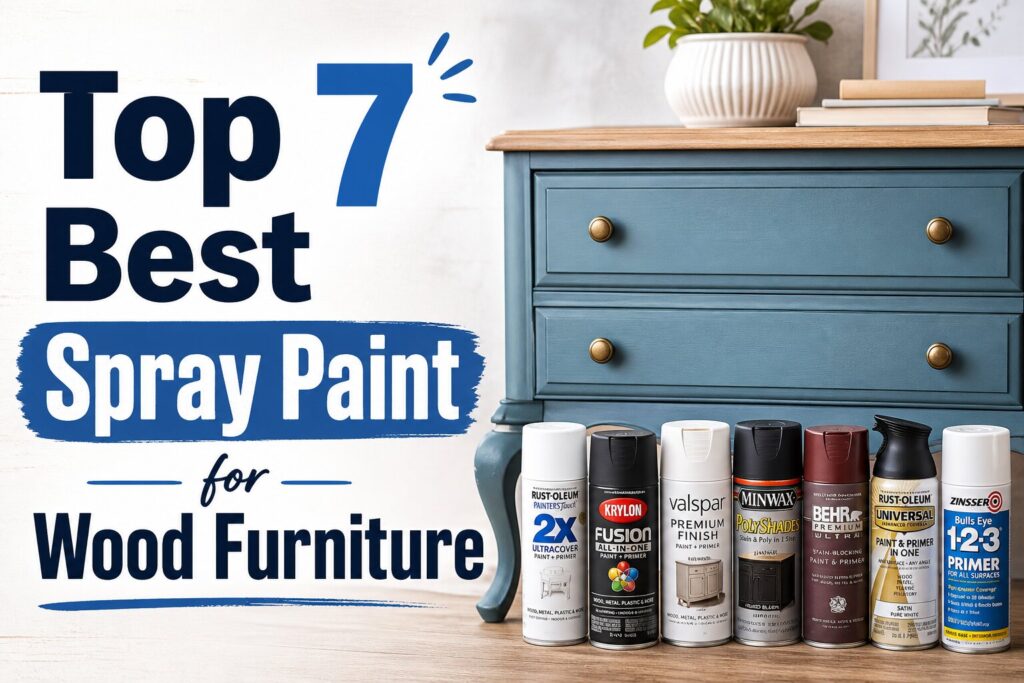
In this guide, we’ll compare seven spray paints for different furniture projects, including options for vintage-style chalk paint finishes and everyday decorative updates. We’ll also explain how to choose plywood paint, prepare bare wood, and understand why stain for pressure treated wood is a different product for a different purpose.
Top 7 Best Spray Paint for Wood Furniture at a Glance
| Product Name | Best For | Check Price |
|---|---|---|
| Rust-Oleum Painter’s Touch 2X Ultra Cover | Best Overall | Check on Amazon |
| Krylon COLORmaxx Spray Paint and Primer | Everyday Furniture Projects | Check on Amazon |
| Rust-Oleum Universal All Surface Spray Paint | Mixed-Material Furniture | Check on Amazon |
| Rust-Oleum Chalked Ultra Matte Spray Paint | Vintage and Matte Furniture | Check on Amazon |
| BEHR PREMIUM Chalk Decorative Spray Paint | Decorative Wood Furniture | Check on Amazon |
| KILZ Chalk Style Spray Paint | Detailed Furniture and Crafts | Check on Amazon |
| Krylon Fusion All-In-One Spray Paint | Compatible Indoor and Outdoor Projects | Check on Amazon |
Affiliate disclosure: As an Amazon Associate I earn from qualifying purchases.
Top Picks: 7 Best Spray Paint for Wood Furniture Reviews
1. Rust-Oleum Painter’s Touch 2X Ultra Cover – Best Overall
Check Rust-Oleum Painter’s Touch 2X Ultra Cover on Amazon
Rust-Oleum Painter’s Touch 2X Ultra Cover is our best overall choice for many small and medium-sized furniture projects. Its paint-and-primer formulation and broad selection of colors make it a convenient option for refreshing wooden shelves, picture frames, side tables, chairs, and decorative accessories.
One of its biggest advantages is versatility. You can choose from different finishes, including gloss, satin, and matte, depending on the style you want. A satin finish can give a side table or cabinet a balanced appearance, while gloss creates a brighter look. Matte is useful when you prefer a softer, less reflective surface.
This wood spray paint is particularly convenient for furniture with narrow edges, shaped legs, and decorative details. Aerosol application can reach areas that are difficult to cover evenly with a brush.
However, paint-and-primer does not mean every bare wood surface is ready for direct application. Knots, stains, porous plywood, and certain previously sealed surfaces may still need a separate primer. For furniture that receives frequent handling, check whether a compatible protective topcoat is recommended.
Pros:
- Paint-and-primer formulation.
- Available in several colors and finishes.
- Convenient for furniture details and smaller projects.
- Useful for many compatible wooden surfaces.
- Aerosol application helps reduce visible brush marks.
- Suitable for a variety of decorative DIY updates.
Cons:
- Some bare wood needs additional primer.
- Large furniture pieces may require several cans.
- Frequently used surfaces may need extra protection.
- Not a dedicated floor or stair coating.
Our Verdict: Rust-Oleum Painter’s Touch 2X is a versatile choice for general furniture makeovers. It is especially worth considering when you want a convenient aerosol with multiple color and sheen options.
2. Krylon COLORmaxx Spray Paint and Primer – Best for Everyday Furniture Projects
Check Krylon COLORmaxx on Amazon
Krylon COLORmaxx is a practical option for DIY decorators who want an easy-to-use spray paint for everyday furniture updates. Its paint-and-primer formulation is designed for several compatible surfaces, including wood, making it useful for wooden shelves, small cabinets, decorative boxes, and furniture accessories.
The product comes in different colors and finishes, giving you flexibility when coordinating a furniture makeover with your room’s décor. You can use a neutral shade for a subtle update or choose a more noticeable color for a statement piece.
Its aerosol format is particularly convenient for objects with curved legs, narrow edges, and detailed shapes. Instead of working around every corner with a brush, you can apply controlled passes across the surface.
For the best result, clean the furniture thoroughly before painting. Previously coated wood may need light scuff-sanding, while bare or stained wood may need a suitable primer. Always check the product label for the recommended preparation.
Pros:
- Paint-and-primer combination.
- Available in a variety of colors.
- Useful for compatible wooden furniture.
- Convenient for small DIY projects.
- Good option for decorative accessories.
- Aerosol application helps reach detailed areas.
Cons:
- Surface preparation is still necessary.
- Bare or stained wood may need additional primer.
- Not designed for high-wear floors or stair treads.
- Large projects can require multiple cans.
Our Verdict: Krylon COLORmaxx is worth considering for everyday furniture projects, especially smaller pieces and decorative accessories. It offers a convenient way to refresh compatible wood surfaces with a new color.
3. Rust-Oleum Universal All Surface Spray Paint – Best for Mixed-Material Furniture
Check Rust-Oleum Universal All Surface Spray Paint on Amazon
Rust-Oleum Universal All Surface Spray Paint is a versatile option when your furniture includes more than one material. Some furniture pieces combine wooden frames, metal legs, decorative hardware, and other compatible components. Using a product designed for multiple surfaces can make it easier to coordinate their appearance.
This spray paint is worth considering for wooden side tables, decorative cabinets, furniture legs, and mixed-material home accessories. Its range of finishes also gives you options beyond traditional solid colors.
The any-angle spray design can be useful when working around curved furniture legs and awkward corners. This is particularly helpful for chairs, small tables, and decorative pieces with detailed shapes.
Although the product is marketed for multiple surfaces, preparation remains important. Remove dirt and grease, address loose coatings, and check whether bare wood needs a compatible primer. Metallic and glossy finishes can highlight scratches and surface imperfections, so smooth the furniture before painting.
Pros:
- Designed for several compatible surfaces.
- Useful for mixed-material furniture.
- Available in different colors and finishes.
- Convenient any-angle spray application.
- Suitable for selected decorative projects.
- Helps coordinate wood and compatible metal components.
Cons:
- Not every finish is suitable for every furniture surface.
- Bare or stained wood may need primer.
- Metallic finishes can reveal imperfections.
- High-use surfaces may require additional protection.
Our Verdict: Rust-Oleum Universal is a good option when you want to update furniture that includes wood and other compatible materials. Its finish selection makes it useful for decorative makeovers and coordinated home projects.
4. Rust-Oleum Chalked Ultra Matte Spray Paint – Best for Vintage and Matte Furniture
Check Rust-Oleum Chalked Ultra Matte Spray Paint on Amazon
If you love farmhouse, rustic, or vintage-inspired furniture, Rust-Oleum Chalked Ultra Matte Spray Paint is worth considering. It creates a soft ultra-matte appearance that works well for decorative furniture and older wooden accessories.
Unlike a traditional glossy enamel, chalk-style paint offers a flatter, more understated look. It can be a good match for small dressers, picture frames, side tables, decorative cabinets, and other furniture pieces where you want a relaxed, aged appearance.
The aerosol format is especially useful for furniture with carved details, narrow spaces, and shaped edges. It can help you reach areas that might otherwise require careful brushwork.
However, chalk paint and standard enamel are not identical. Chalk-style finishes are generally chosen for their decorative appearance, and frequently handled furniture may need a compatible protective finish. Check the manufacturer’s instructions before applying wax or a clear topcoat.
For bare wood with knots or tannin-rich areas, a suitable stain-blocking primer may also be necessary to prevent discoloration.
Pros:
- Attractive ultra-matte finish.
- Suitable for vintage-inspired furniture.
- Convenient aerosol application.
- Useful for decorative wood projects.
- Works well on detailed furniture shapes.
- Can create a soft farmhouse-style appearance.
Cons:
- Matte surfaces may show marks without protection.
- High-use furniture may need a topcoat.
- Not ideal when you want a glossy finish.
- Some bare woods need stain-blocking primer.
Our Verdict: Rust-Oleum Chalked is a strong choice when the main goal is a vintage or farmhouse-style furniture makeover. Choose it for decorative pieces where a soft matte finish is more important than a glossy appearance.
5. BEHR PREMIUM Chalk Decorative Spray Paint – Best for Decorative Wood Furniture
Check BEHR PREMIUM Chalk Decorative Spray Paint on Amazon
BEHR PREMIUM Chalk Decorative Spray Paint is another option for furniture projects where you want a smooth matte finish. The manufacturer lists old and new wooden furniture among its intended applications, along with compatible metal, plastic, cast stone, and concrete surfaces.
This makes it worth considering for decorative cabinets, wooden frames, small tables, and furniture accessories. Its chalk-style appearance can help create a softer look than conventional gloss or semi-gloss spray paint.
One benefit of an aerosol chalk finish is the convenience of applying paint to detailed furniture shapes. It can be useful for decorative edges, narrow spaces, and small objects where brush marks may be noticeable.
BEHR lists a coverage estimate of approximately 12 square feet per can, although actual coverage can vary with the surface, application technique, and number of coats. For a large dresser or several furniture pieces, calculate the required amount before purchasing.
Although the product is intended for decorative use on compatible surfaces, you should still clean the furniture and follow the manufacturer’s preparation and curing instructions.
Pros:
- Smooth matte decorative finish.
- Manufacturer lists wooden furniture as an intended use.
- Suitable for several compatible materials.
- Convenient aerosol application.
- Useful for small furniture makeovers.
- Available in decorative colors.
Cons:
- Limited coverage per can compared with larger paint containers.
- Overspray requires masking and protection.
- Large furniture projects may need several cans.
- Frequently used surfaces may need additional protection.
Our Verdict: BEHR PREMIUM Chalk Decorative Spray Paint is a good option for smaller furniture makeovers where you want a matte decorative finish. It is particularly useful for wooden accessories and furniture with detailed shapes.
6. KILZ Chalk Style Spray Paint – Best for Detailed Furniture and Crafts
Check KILZ Chalk Style Spray Paint on Amazon
KILZ Chalk Style Spray Paint is worth considering if you want a decorative matte finish for furniture and smaller home projects. It is designed for several compatible surfaces, including wood, metal, plastic, cast stone, and wicker.
This versatility makes it useful for decorative chairs, picture frames, small wooden cabinets, craft projects, and furniture accessories. The chalk-style finish is particularly appealing when you want to create a vintage or understated appearance.
The aerosol format can help cover intricate shapes and narrow spaces. Its comfort-tip design is also intended to make spraying more comfortable during application.
KILZ offers coordinating clear chalk spray and sealing wax products, which may be useful when you want to adjust or protect the finished appearance. However, make sure the protective product is compatible with the paint and intended use of the furniture.
As with other chalk-style coatings, preparation still matters. Remove dust, grease, wax, and loose paint before applying the product. For bare wood with knots or stains, consider whether a suitable primer is needed.
Pros:
- Decorative matte finish.
- Suitable for several listed surface types.
- Convenient for detailed furniture shapes.
- Useful for smaller DIY projects.
- Coordinating sealing products are available.
- Comfort-tip aerosol design.
Cons:
- Not the most economical choice for large furniture.
- Matte surfaces may need protection.
- Some wood surfaces require additional preparation.
- Finish durability depends on the complete coating system.
Our Verdict: KILZ Chalk Style Spray Paint is a useful alternative for people who prefer a matte decorative finish. It is particularly worth comparing for small furniture pieces, crafts, and projects with detailed surfaces.
7. Krylon Fusion All-In-One Spray Paint – Best for Compatible Indoor and Outdoor Projects
Check Krylon Fusion All-In-One on Amazon
Krylon Fusion All-In-One is a versatile spray paint designed for several compatible materials, including wood. It is worth considering when a furniture project includes different surfaces or when you want a product marketed for indoor and outdoor applications.
For wooden furniture, it can be useful for selected decorative pieces, outdoor accessories, and compatible household projects. Its broad surface compatibility can also be convenient when you’re updating an item that combines wood with plastic or metal components.
However, a multi-surface formula should not be treated as a guarantee of adhesion to every finish. Smooth, sealed, or contaminated wood still needs suitable preparation. For bare wood, check whether the product instructions recommend primer or another preparation step.
If you’re painting an outdoor wooden bench or chair, make sure the specific product is suitable for the exposure and intended use. Outdoor furniture receives sunlight, rain, and temperature changes, so the entire coating system needs to be appropriate for those conditions.
Pros:
- Designed for several compatible materials.
- Useful for selected furniture and decorative projects.
- Convenient aerosol application.
- Suitable for certain indoor and outdoor applications.
- Available in multiple colors and finishes.
- Helpful for mixed-material projects.
Cons:
- Not a specialized furniture enamel for every application.
- Surface compatibility should be confirmed.
- Bare wood may need additional preparation.
- High-wear furniture may need a suitable protective finish.
Our Verdict: Krylon Fusion All-In-One is worth comparing when you need a versatile coating for compatible wood and mixed-material projects. Check the label carefully to confirm that the specific furniture surface and location are suitable.
Buying Guide: How to Choose the Best Spray Paint for Wood Furniture
The right spray paint depends on the type of wood, the furniture’s condition, the finish you want, and how frequently the item will be used. Consider these factors before purchasing.
1. Identify the Wood Surface
Start by determining whether your furniture is made from solid wood, plywood, MDF, veneer, or laminate. These materials can require different preparation methods.
- Solid wood: Usually provides a suitable base after cleaning and appropriate sanding.
- Plywood: Exposed edges and porous faces may absorb paint unevenly and benefit from sealing or primer.
- MDF: Cut edges are particularly absorbent and may need additional preparation.
- Wood veneer: Can be painted, but aggressive sanding may damage the thin wood layer.
- Laminate: Its smooth surface may require scuff-sanding or a suitable bonding primer.
Identifying the material helps you choose the correct plywood paint or furniture coating rather than assuming every wood-like surface behaves the same way.
2. Choose the Right Finish for Furniture
The finish affects the appearance and maintenance of your furniture.
- Matte: Provides a soft, low-reflection appearance.
- Satin: Offers a balanced sheen suitable for many household furniture projects.
- Semi-gloss: Creates a brighter appearance and can be easier to wipe clean.
- Gloss: Produces a reflective finish that can highlight surface imperfections.
- Chalk-style matte: Works well for vintage, rustic, and farmhouse-inspired furniture.
For everyday furniture, consider how much cleaning and handling the surface will receive. A decorative picture frame has different needs from a dining table or cabinet door.
3. Decide Between Enamel Spray Paint and Chalk Paint
Enamel-style spray paint and chalk paint are useful for different furniture styles.
Enamel spray paint is worth considering when you want a conventional painted finish in gloss, satin, or matte. It can be a practical choice for shelves, chairs, furniture legs, and decorative wooden pieces.
Chalk paint is generally chosen for its soft matte appearance and vintage-inspired decorative effects. It can be especially appealing for dressers, side tables, and farmhouse-style furniture.
Neither type automatically eliminates preparation or protection requirements. Follow the product instructions and consider the intended use of the finished furniture.
4. Choose Paint According to Furniture Use
Think about how the furniture will be used before selecting a coating.
For decorative accessories and picture frames, appearance may be the main priority. For dining chairs, drawer fronts, and cabinet doors, durability and cleaning become more important.
For tabletops and other frequently used horizontal surfaces, check whether the paint manufacturer recommends a compatible clear protective finish. Do not assume that ordinary spray paint alone will withstand repeated spills, friction, and cleaning.
5. Consider the Right Plywood Paint
Plywood is a common material for shelves, cabinets, desks, storage furniture, and DIY projects. However, it can be more challenging to paint than a smooth, sealed furniture surface.
The face veneer may have visible grain, while exposed edges can absorb more primer and paint. For a more even result:
- Sand rough areas carefully.
- Remove dust from the surface and edges.
- Fill holes or damaged areas with suitable filler.
- Seal porous edges when necessary.
- Use a compatible primer if the product requires one.
- Apply thin, even topcoats.
If you want the plywood grain to remain visible, a clear finish or suitable wood stain may be more appropriate than opaque spray paint. If you want a solid color, choose a compatible primer and topcoat system.
6. Understand Stain for Pressure Treated Wood
Stain for pressure treated wood is not the same as spray paint for furniture. Pressure-treated lumber is commonly used for outdoor structures such as decks, fences, and garden projects. It may contain moisture from the treatment process, which can interfere with stain or paint application.
Before applying a stain:
- Allow the wood to dry sufficiently.
- Check whether water absorbs into the surface rather than beading.
- Clean the wood and remove surface contamination.
- Choose an exterior stain suitable for pressure-treated lumber.
- Follow the stain manufacturer’s preparation and application instructions.
There is no universal waiting period for every treated board. Drying depends on the treatment, lumber condition, climate, and exposure. A moisture meter can help when the correct moisture level is specified by the finish manufacturer.
For a natural wood appearance, a penetrating stain may be preferable. For a solid painted appearance, use an exterior primer and paint system approved for pressure-treated wood. Neither should be confused with ordinary indoor furniture spray paint.
7. Check Whether You Need Primer
Some aerosol paints combine paint and primer, but that does not mean a separate primer is unnecessary for every project.
A suitable primer may be helpful when:
- The wood is bare and porous.
- The surface contains knots or stains.
- You’re painting over a glossy finish.
- Plywood or MDF edges absorb unevenly.
- The furniture has an unknown previous coating.
- You’re changing from a dark color to a much lighter one.
Choose a primer that is compatible with the wood and the selected topcoat. A stain-blocking primer can be particularly useful for knotty or tannin-rich wood.
8. Consider the Furniture’s Location
Indoor and outdoor furniture have different requirements.
Indoor furniture usually needs an attractive, cleanable finish that can withstand normal handling. Outdoor furniture also needs suitable resistance to sunlight, rain, and changing temperatures.
Check the product’s exterior-use instructions before applying it outdoors. A paint suitable for an indoor decorative cabinet should not automatically be used on a garden bench.
9. Compare Coverage and Number of Cans
Aerosol coverage varies according to the product, surface texture, color, and application technique.
A small chair may require less paint than a large dresser with multiple drawers and detailed legs. Porous wood and dramatic color changes may also require additional coats.
Check the manufacturer’s coverage estimate and calculate the number of cans before starting. For a large flat furniture project, compare the total aerosol cost with brush-on furniture paint or a suitable paint sprayer.
10. Check Drying and Curing Time
Dry-to-touch paint is not necessarily ready for regular furniture use. A coating may need additional time to develop its intended durability.
Check the product label for:
- Dry-to-touch time.
- Recoat window.
- Recommended handling time.
- Full curing period.
- Temperature and humidity requirements.
- Instructions for applying a protective finish.
Avoid placing heavy objects on freshly painted furniture or reinstalling hardware before the coating is ready.
How to Spray Paint Wood Furniture Properly
Proper preparation and application can make a major difference in the finished appearance. Follow these general steps while checking the directions for your specific spray paint.
Step 1: Prepare the Work Area
Work outdoors or in a suitable, well-ventilated spray area. Cover the floor and nearby objects to protect them from overspray.
Keep aerosol products away from flames, sparks, heaters, and other ignition sources. Follow the safety instructions on the product label and use appropriate protective equipment.
Step 2: Remove Hardware and Detachable Parts
Remove handles, knobs, hinges, and drawers when practical. This makes it easier to paint the furniture evenly and prevents unwanted paint buildup on hardware.
Step 3: Clean the Furniture
Remove dust, grease, wax, polish, and other contamination. Furniture used in kitchens or dining areas may have accumulated oils that can interfere with adhesion.
Allow the surface to dry completely before painting.
Step 4: Sand and Repair the Surface
Smooth rough areas and remove loose or peeling paint. Previously finished furniture may need light scuff-sanding if recommended by the paint manufacturer.
Fill small holes and dents with a suitable wood filler. Allow repairs to dry and sand them smooth.
Be careful with older painted furniture. If the existing coating may contain lead, do not dry-sand or disturb it without following appropriate lead-safe procedures.
Step 5: Apply Primer if Needed
Use a compatible primer when the surface requires additional sealing or adhesion support.
Bare plywood, porous wood, knots, stains, and certain glossy finishes may need a separate primer. Follow the manufacturer’s drying instructions before applying the spray paint.
Step 6: Shake the Spray Can and Test It
Shake the can according to the label instructions. Test the nozzle on cardboard to check the spray pattern before painting the furniture.
This helps you identify uneven spraying or splattering before it affects the finished surface.
Step 7: Apply Thin, Even Coats
Hold the can at the recommended distance and move it steadily across the surface. Overlap each pass slightly and avoid stopping in one spot.
Several light coats are generally easier to control than one heavy coat. Pay attention to corners, edges, and furniture legs, where paint can accumulate.
Step 8: Follow the Recoat Instructions
Allow each coat to dry according to the manufacturer’s directions. Different aerosol products have different recoat windows, so do not assume every spray paint follows the same schedule.
Step 9: Apply a Compatible Protective Finish if Needed
Frequently handled furniture may benefit from a compatible protective finish. Check whether the manufacturer recommends a clear topcoat or another finishing product.
Be especially careful with chalk-style and metallic finishes because some protective products can change the appearance or sheen.
Step 10: Allow Full Curing
Let the complete coating system cure according to the product instructions before returning the furniture to regular use.
Reinstall the hardware and drawers only when the painted surfaces are ready for handling.
Common Mistakes to Avoid When Spray Painting Wood Furniture
- Skipping cleaning: Grease, wax, and dust can interfere with adhesion.
- Applying heavy coats: Thick layers can cause drips and uneven coverage.
- Ignoring bare wood preparation: Porous wood may need primer or sealing.
- Forgetting plywood edges: Exposed edges can absorb paint differently from the flat face.
- Using chalk paint without considering protection: Frequently handled furniture may need a compatible protective finish.
- Painting damp wood: Moisture can interfere with coating performance.
- Using incompatible primer and topcoat: Choose products designed to work together.
- Handling furniture too soon: Touch-dry paint may not be fully cured.
- Using indoor paint outdoors: Exterior furniture needs an appropriate coating system.
- Disturbing old paint without precautions: Older coatings may contain lead.
Frequently Asked Questions
1. What is the best spray paint for wood furniture overall?
Rust-Oleum Painter’s Touch 2X Ultra Cover is our best overall choice for many furniture projects. Its paint-and-primer formulation and range of colors and finishes make it a versatile option for compatible wooden surfaces.
2. Can I use regular spray paint on wood furniture?
Yes, many general-purpose spray paints are suitable for compatible wood surfaces. However, clean and prepare the furniture properly, and use a suitable primer when the wood or existing finish requires it.
3. Is spray paint good for wooden furniture?
Spray paint can be useful for furniture with detailed shapes, narrow edges, and decorative components. It can also help reduce visible brush marks. For large flat surfaces, compare the cost and coverage with brush-on furniture paint.
4. Is chalk paint better than regular spray paint for furniture?
Neither is automatically better. Chalk-style paint is useful when you want a soft matte or vintage-inspired finish. Conventional spray paint offers other sheens, including satin and gloss. Choose according to the furniture’s appearance and intended use.
5. Do I need to sand wood furniture before spray painting?
Often, some sanding is helpful. Bare wood may need smoothing, while previously painted or glossy furniture may need light scuff-sanding. Follow the selected product’s instructions and take appropriate precautions with potentially lead-containing older paint.
6. Can I spray paint plywood furniture?
Yes. Plywood can be spray-painted after suitable preparation. Sand rough areas, remove dust, and consider sealing porous edges or applying a compatible primer before the topcoat.
7. What is the best paint for plywood furniture?
A suitable wood-compatible enamel or paint-and-primer aerosol can work for many plywood furniture projects. Porous faces and exposed edges may need primer or sealing to achieve more even coverage.
8. Does spray paint on furniture need a clear coat?
Not every project needs one. Decorative pieces may be fine without an additional finish, while tabletops, chairs, and frequently handled surfaces may benefit from a compatible protective coating. Check the paint manufacturer’s recommendations.
9. Can I use spray paint on outdoor wood furniture?
Yes, if the exact product is approved for exterior use and the wood is properly prepared. Outdoor furniture needs protection appropriate for sunlight, rain, and changing weather conditions.
10. Can I use stain instead of spray paint on pressure-treated wood?
Yes. An exterior wood stain can be a suitable option for pressure-treated lumber when the wood is dry enough to absorb the product. Stain can preserve a more natural wood appearance, while paint creates a more opaque finish. Follow the manufacturer’s instructions for the specific treated wood.
11. How do I know when pressure-treated wood is ready for stain?
A simple water test can help. Sprinkle a few drops of water onto the surface. If the water absorbs readily, the wood may be ready for staining. If it beads on the surface, allow more drying time and check again. Follow the stain manufacturer’s moisture requirements.
12. How many coats of spray paint should I use on wood furniture?
The number depends on the product, color, wood condition, and desired coverage. Several thin, even coats are generally easier to control than one heavy coat. Follow the label’s recoat instructions.
13. How long should spray-painted furniture cure before use?
Curing time varies by product, application thickness, temperature, and humidity. A surface may feel dry before it reaches its full durability. Check the manufacturer’s instructions before handling, cleaning, or placing objects on the furniture.
Final Words
The best spray paint for wood furniture depends on the finish you want and how the furniture will be used. Rust-Oleum Painter’s Touch 2X Ultra Cover is our overall choice for versatile DIY projects, while Krylon COLORmaxx is a practical option for everyday updates. Rust-Oleum Universal is worth considering for mixed-material furniture, and Rust-Oleum Chalked offers a soft matte finish for vintage-inspired makeovers.
BEHR PREMIUM Chalk Decorative Spray Paint and KILZ Chalk Style Spray Paint are also worth comparing if you prefer a decorative chalk finish. For selected projects involving different compatible materials, Krylon Fusion All-In-One offers another versatile option.
Before buying, identify the wood surface, check whether primer is needed, and consider how much wear the furniture will receive. Remember that plywood may need extra preparation and that stain for pressure treated wood is intended for a different type of project. With the right product, careful preparation, and enough curing time, you can give old furniture a fresh and attractive appearance.
Helpful Resources
- U.S. Forest Service – Finishing Wood – Educational guidance on wood finishes, moisture, surface preparation, and protecting indoor and outdoor wood.
- Treated Wood – Staining Treated Wood – Learn how to check whether pressure-treated lumber is dry enough to accept paint or stain.