
Choosing what color to paint a brick house can completely change its curb appeal, from a fresh, welcoming look to a bold, modern exterior. The best shade should complement your roof, windows, doors, landscaping, and architectural style while giving your home a balanced appearance.
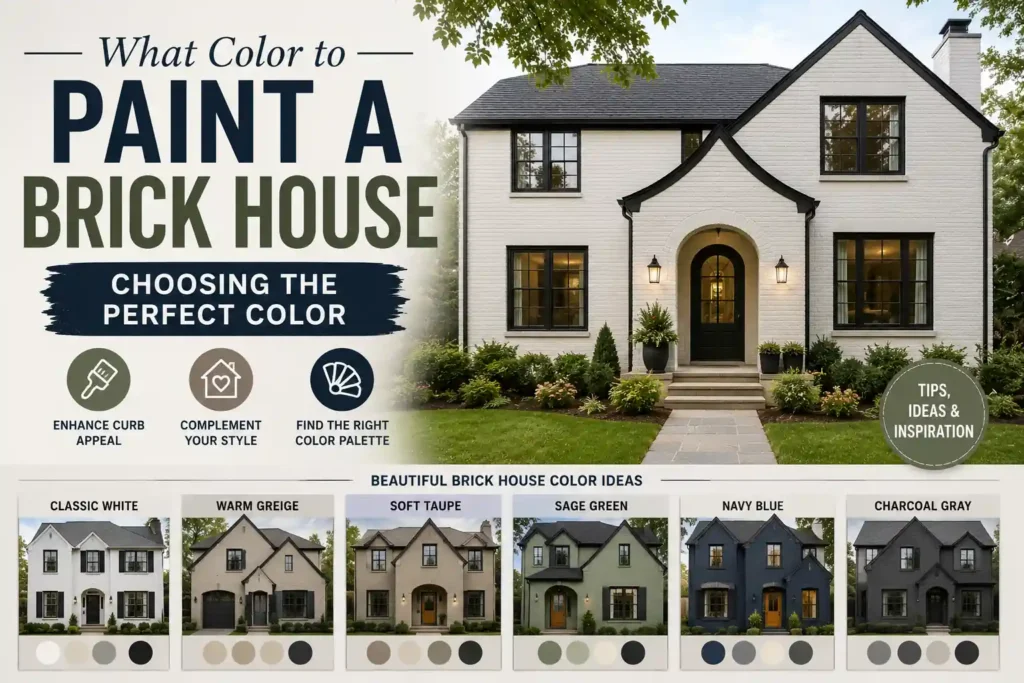
Before choosing a color, consider how much of the brick you want to cover and whether painting is the right long-term decision. This guide explores beautiful exterior color ideas, practical combinations, and important tips for choosing a suitable finish.
Affiliate disclosure: As an Amazon Associate I earn from qualifying purchases.
What to Buy for Painting a Brick House
Choosing suitable materials is just as important as selecting the color. Brick is porous, so use products specifically designed for masonry and follow their compatibility instructions.
- Exterior masonry paint
- Masonry primer
- Paint color sample pots
- Paint brushes for masonry
- Heavy-duty paint rollers
- Extension roller pole
- Paint trays
- Exterior paint sprayer
- Drop cloths
- Painter’s tape
- Protective gloves and safety glasses
- Masonry cleaning brush
Check that the primer and paint are compatible with your brick, mortar, and any existing coating. For exterior masonry, breathable products that allow water vapor to escape are particularly important.
What Color to Paint a Brick House: Choosing the Perfect Color
The right exterior color depends on the home’s architectural style, the natural surroundings, and the appearance you want to achieve. Here are 12 attractive options to consider before making your decision.
1. Warm White
Warm white is a timeless choice for homeowners who want a bright, clean exterior without the stark appearance of a cool white. Its subtle cream or beige undertones create a welcoming look and work beautifully with traditional, farmhouse, and contemporary architecture.
Pair warm white brick with black window frames, natural wood doors, or dark bronze lighting for contrast. A charcoal or medium-gray roof can complete the design. If your home receives plenty of sunlight, test the shade outdoors first because warm whites can appear brighter in direct light.
2. Cream
Cream offers a softer alternative to pure white. Its gentle yellow or beige undertones give a brick house a comfortable, traditional appearance that feels inviting rather than overly bright.
This color works especially well with brown roofs, wooden doors, bronze fixtures, and stone landscaping. You can use a slightly darker cream on exterior trim for a subtle layered effect. Cream is also a lovely option for cottages and older homes where a relaxed, classic appearance is more appropriate than a sharp modern finish.
3. Light Gray
Light gray creates a calm, understated exterior that suits many architectural styles. It offers a modern appearance while remaining neutral enough to coordinate with different roof and trim colors.
Combine light-gray brick with white trim and a charcoal front door for a balanced design. If you prefer a softer look, choose a gray with warm undertones rather than a cool, blue-based shade. This helps prevent the exterior from looking too cold, particularly when the house has a lot of shade.
4. Greige
Greige combines gray and beige, making it a versatile choice for brick exteriors. It offers the subtle sophistication of gray with the warmth of a traditional neutral.
This shade looks beautiful with white trim, dark bronze fixtures, natural wood accents, and gray or brown roofing. It is particularly useful when you cannot decide between a warm beige and a cool gray. Choose a greige with undertones that complement the existing roof and surrounding materials.
5. Taupe
Taupe is a refined neutral with brown, gray, and sometimes subtle purple undertones. It creates a grounded appearance that works well with natural stone, wooden details, and mature landscaping.
For a coordinated exterior, pair taupe brick with cream trim and a deep brown or charcoal front door. It can make a large house feel elegant without relying on a very dark color. Before committing, compare samples in morning and afternoon light because taupe undertones can change noticeably throughout the day.
6. Charcoal Gray
Charcoal gray gives a brick house a dramatic, contemporary appearance. Its deep tone creates a strong backdrop for white trim, black windows, metallic fixtures, and lighter landscaping.
This color is especially attractive on modern homes with simple architectural lines. You can soften the overall appearance with natural wood accents, warm outdoor lighting, or a lighter-colored front door. Keep in mind that dark exterior colors can absorb more heat, so consider the local climate, wall exposure, and paint manufacturer’s recommendations before choosing charcoal.
7. Sage Green
Sage green brings a natural, relaxed feeling to an exterior. Its muted gray-green undertones make it less overpowering than brighter greens, allowing it to blend beautifully with gardens, trees, and outdoor spaces.
Pair sage-green brick with cream trim, natural wood, or dark bronze fixtures. A deep brown front door can add warmth, while black windows create a more modern contrast. Sage is an excellent option for cottage-inspired homes, traditional houses, and properties surrounded by greenery.
8. Olive Green
Olive green is a deeper, earthier option that gives a brick house plenty of character. It works particularly well with traditional architecture, natural stone pathways, mature trees, and warm-toned landscaping.
Use cream or soft beige trim to prevent the exterior from looking too dark. Wooden doors and bronze hardware can add warmth, while a dark brown roof creates a coordinated appearance. If you want a distinctive color that still feels connected to nature, olive green is worth considering.
Navy blue creates a bold and sophisticated exterior without looking as severe as black. Its deep blue tone pairs beautifully with white trim, light stone details, and natural wood accents.
For a classic appearance, combine navy brick with crisp white window trim and a warm wooden front door. A charcoal roof can tie the design together. Navy works particularly well on homes with symmetrical windows, traditional detailing, or clean contemporary lines.
10. Soft Blue-Gray
Soft blue-gray offers a subtle hint of color while maintaining a peaceful, understated appearance. It can make a brick exterior feel fresh and distinctive without becoming too bright.
Pair it with white or cream trim and a dark gray roof. Natural wood doors and simple landscaping can add warmth to the cool color palette. This shade is a good choice if you like blue but prefer something more muted than navy.
11. Terracotta
Terracotta is inspired by the warm reddish-orange tones found in natural clay and traditional brick. It creates an earthy, welcoming exterior that looks especially attractive alongside stone, timber, and Mediterranean-inspired architectural details.
Combine terracotta with cream trim, dark brown doors, and warm outdoor lighting. If the existing brick already has attractive natural color variations, consider whether a masonry stain or lime-based finish would achieve the look you want without completely hiding its texture.
12. Warm Brown
Warm brown creates a natural, grounded appearance that blends easily with surrounding landscapes. Depending on the shade, it can make a home look rustic, traditional, or contemporary.
Pair medium brown with cream trim, bronze fixtures, and a darker brown roof. For a more modern design, choose a deeper chocolate brown and add lighter wood or stone accents. Avoid choosing a brown that closely matches every other exterior element; a little contrast helps the house look more defined.
How to Choose the Best Color for Your Brick House
A beautiful paint shade on a sample card may look very different when applied to an entire exterior. Consider these factors before buying paint.
Consider Your Roof Color
The roof covers a large part of the home’s exterior, so its color should influence your choice.
- Black or charcoal roof: Works well with warm white, greige, light gray, sage, and soft blue-gray.
- Brown roof: Complements cream, taupe, warm white, olive, and terracotta.
- Gray roof: Pairs easily with white, charcoal, navy, and many neutral shades.
- Red or terracotta roof: Often looks attractive with cream, warm beige, olive, and soft neutral colors.
If your roof is not being replaced, choose a brick color that works with its existing undertones.
Match the Window and Door Colors
Windows and doors provide important visual contrast. Black frames can make a light exterior feel modern, while white frames create a softer and more traditional appearance.
Consider your front door as an opportunity to introduce a complementary accent color. A navy, deep green, natural wood, or dark brown door can give a neutral brick exterior more personality.
Think About Your Home’s Architectural Style
Some colors naturally suit particular architectural designs.
- Farmhouse homes: Warm white, cream, greige, and sage green.
- Modern homes: Charcoal, soft gray, navy, and warm white.
- Traditional homes: Taupe, cream, olive, and warm brown.
- Cottage-style homes: Sage, soft blue-gray, warm white, and terracotta.
- Mediterranean-inspired homes: Cream, warm beige, terracotta, and earthy brown.
These are starting points rather than strict rules. The best choice is the one that works with your home’s actual features.
Consider the Surrounding Landscape
Look at the trees, plants, pathways, fencing, and neighboring buildings around your property. A house surrounded by greenery may look beautiful in sage, cream, or warm gray.
For a property with stone landscaping or a natural setting, earthy colors such as taupe, olive, and warm brown can create a harmonious appearance.
If your home is in a closely built neighborhood, consider how the color will look alongside nearby houses without copying their designs.
Test Paint Samples in Different Lighting
Never choose an exterior color based only on a small paint chip or a digital image.
Test several large samples on a suitable surface and view them in morning sunlight, afternoon light, and shade. Look at them from different distances to understand how the color will appear across the entire house.
Also consider how the shade looks beside your roof, trim, and front door. A color that seems perfectly neutral on its own may reveal strong yellow, pink, green, or blue undertones outdoors.
Should You Paint a Brick House or Keep the Natural Brick?
Painting brick can give a home a completely different appearance, but it is a significant decision. Traditional paint can form a surface film, and an unsuitable coating may interfere with the way moisture moves through masonry.
If your brick is in good condition and you like its natural appearance, leaving it unpainted may be the simplest long-term option. You can update the exterior by painting the trim, changing the front door, improving the landscaping, or replacing outdated light fixtures.
If you want to change the brick’s appearance while retaining more of its natural texture, consider alternatives such as:
- Limewash: Creates a soft, aged appearance while allowing the brick’s texture and some original color to remain visible.
- Mineral paint: Can provide a more uniform color while maintaining good vapor permeability when the correct product and system are used.
- Masonry stain: Changes the brick’s appearance while allowing its natural texture to show through, depending on the product.
Not every treatment is suitable for every brick wall. Check the masonry condition and product specifications before proceeding. Painting previously unpainted historic brick may also be discouraged or restricted in some areas.
How to Prepare a Brick House Before Painting
Proper preparation helps create a more reliable finish. Brick is porous and textured, so it needs more attention than many smooth exterior surfaces.
1. Inspect the Brick and Mortar
Look for cracked bricks, loose mortar, crumbling joints, water stains, and white salt deposits known as efflorescence.
Address the source of moisture and repair damaged masonry before considering a coating. If you notice structural cracks, recurring dampness, or deteriorating mortar, consult a qualified masonry professional.
2. Clean the Exterior Carefully
Remove dirt, dust, loose debris, and organic growth using a cleaning method suitable for the brick. Avoid aggressive pressure washing that could damage the brick surface or mortar joints.
Do not use acidic cleaners unless a qualified professional and the product instructions specifically establish that they are appropriate for your masonry.
3. Allow the Brick to Dry
Brick can retain moisture after rain or washing. Allow it to dry thoroughly before applying any primer or coating.
Do not paint over damp masonry or ignore recurring water problems. A coating applied under unsuitable conditions may fail prematurely.
4. Choose a Compatible Masonry Primer
If the selected paint system requires a primer, use one specifically designed for the type and condition of your brick. Follow the manufacturer’s guidance for application, coverage, and drying time.
Do not assume that an ordinary wall primer is suitable for exterior masonry.
5. Apply the Masonry Coating
Use a breathable coating designed for the brick and local exposure conditions. Work the product into the textured surface according to its instructions, ensuring that mortar joints and recessed areas receive suitable coverage.
Follow the recommended number of coats and recoat intervals. Allow the finished surface to dry and cure as directed before exposing it to heavy rain or other conditions.
For a whole-house exterior project, a contractor experienced in masonry coatings can help assess the wall and select a suitable system.
Common Mistakes to Avoid When Choosing a Brick House Color
Even an attractive color can disappoint if it does not work with the building or the coating system. Avoid these common mistakes:
- Ignoring the roof color: A new exterior shade may clash with an existing roof.
- Choosing a color from a screen: Digital colors rarely reproduce exterior lighting accurately.
- Using too many accent colors: Too many competing shades can make the exterior feel visually busy.
- Ignoring the window frames: Window colors should complement the main exterior shade.
- Choosing very dark paint without considering heat: Darker colors can absorb more solar heat, depending on the material and exposure.
- Using ordinary interior paint: Exterior brick requires a suitable masonry coating.
- Painting damp or damaged brick: Moisture and masonry problems should be addressed first.
- Forgetting long-term maintenance: Painted brick may require cleaning, inspection, and eventual recoating.
- Painting without checking restrictions: Historic properties and some neighborhoods may have exterior alteration rules.
Frequently Asked Questions
What is the most popular color to paint a brick house?
Warm white, cream, light gray, greige, and charcoal are popular choices because they work with many architectural styles. The best option depends on the roof, windows, landscaping, and overall appearance of the property.
What is the best color for a traditional brick house?
Cream, warm white, taupe, olive green, and warm brown can complement traditional architecture. These shades work particularly well with natural wood, stone details, and classic window designs.
Should I paint my brick house white?
White can create a bright, fresh appearance and make a home feel more contemporary. Warm white is often a softer alternative to stark white, especially when paired with natural wood and dark window frames.
What trim color looks best with painted brick?
White and cream trim work well with many exterior shades. Charcoal or black trim can create stronger contrast, while warm beige and brown trim provide a softer, more traditional appearance.
Is gray a good color for a brick house?
Yes. Light gray creates a subtle modern appearance, while charcoal offers a more dramatic look. Choose a gray undertone that complements your roof and other exterior materials.
Can you paint a brick house more than one color?
Yes. You can use one main shade for the brick and a complementary color for trim, shutters, doors, and other architectural details. Keeping the palette coordinated helps the exterior look balanced.
Is painting a brick house a permanent decision?
It should be treated as a long-term decision. Removing paint from porous brick can be difficult, expensive, and potentially damaging. Consider limewash, mineral paint, or masonry stain if you want a different appearance while retaining more of the brick’s natural character.
What type of paint should I use on exterior brick?
Choose a coating specifically designed for exterior masonry. It should be compatible with the brick and mortar and provide suitable vapor permeability for the wall. Follow the manufacturer’s technical instructions rather than choosing paint based on color alone.
Does painted brick require maintenance?
Yes. Inspect the exterior periodically for peeling, cracking, moisture problems, and damaged mortar. Clean it using methods approved for the coating and follow the manufacturer’s recommendations for repairs and future recoating.
Final Words
Choosing the right brick house color is about more than following exterior design trends. The best shade should complement your roof, windows, doors, landscaping, and architectural style while giving the property the appearance you want.
Warm white, cream, greige, sage green, charcoal, and navy are all attractive options, but testing samples in natural light is essential before making a final decision. Most importantly, inspect the brick carefully and choose a compatible, breathable masonry coating if you decide to paint. With thoughtful color selection and proper preparation, you can create an exterior that looks beautiful and suits your home for years to come.
Helpful Resources
- The Do’s and Don’ts of Painting Brick – Brick Industry Association – Explains important considerations when painting brick, including breathable mineral coatings and preparation.
- Guidelines for Painting Brick – Acme Brick – Provides technical guidance on selecting suitable masonry products and preparing brick before painting.