
Best Exterior House Paint Colors can completely transform the look of your home, increasing curb appeal while reflecting your personal style. Whether you’re updating a traditional farmhouse, a modern home, or a cozy cottage, choosing the right exterior paint color creates a welcoming first impression and adds long-lasting value.
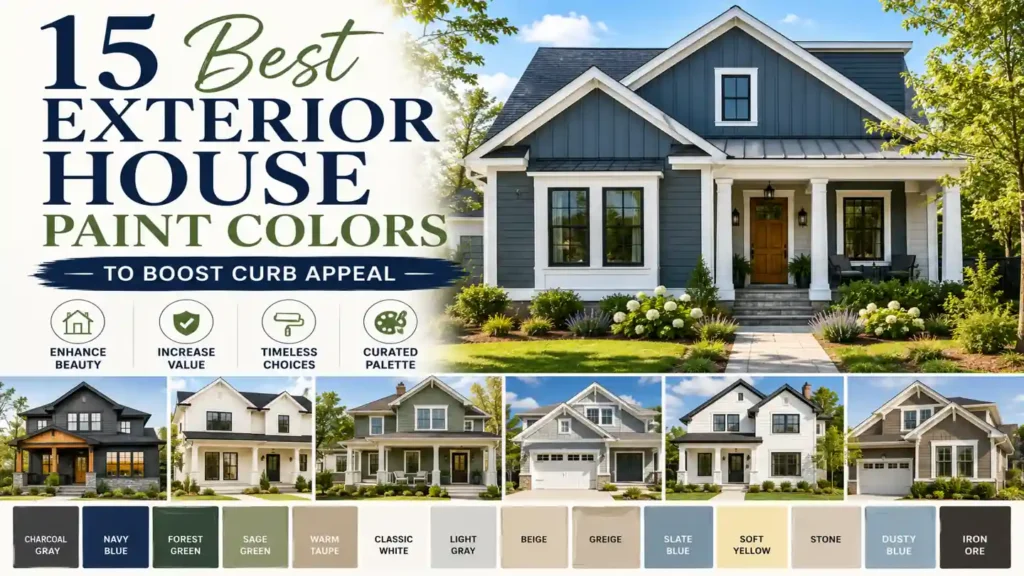
From timeless neutrals to bold contemporary shades, today’s exterior paint colors offer something for every architectural style. This guide explores popular color choices, practical painting tips, and expert advice to help you select a beautiful finish that stands the test of time.
Items to Buy
Before painting your home’s exterior, gather these essential supplies:
- Exterior house paint
- Exterior primer
- Paint rollers
- Exterior paintbrushes
- Paint sprayer (optional)
- Extension poles
- Paint trays
- Painter’s tape
- Drop cloths
- Pressure washer
- Exterior caulk
- Wood filler
- Scraper
- Sandpaper
- Ladder or scaffolding
- Safety glasses
- Work gloves
- Paint stir sticks
Quality exterior paints and proper preparation tools help produce a smoother finish while protecting your home from weather, moisture, and UV damage.
How to Choose an Exterior House Paint Color
Selecting the right exterior color starts with considering your home’s architectural style. Traditional homes often look best with classic whites, grays, and warm neutrals, while modern designs pair beautifully with bold charcoal, black, or clean monochromatic palettes.
Take your surroundings into account as well. Landscaping, roof color, stonework, brick, and neighboring homes all influence how a paint color appears once applied.
Always test several paint samples on different sides of your home before making a final decision. Exterior colors change dramatically throughout the day depending on sunlight, shade, and weather conditions.
Choose a high-quality exterior paint with excellent UV resistance and moisture protection. Premium paint may cost more initially but generally lasts longer and maintains its color better over time.
15 Best Exterior House Paint Colors
1. Classic White
Classic white remains one of the most popular exterior paint colors because it creates a fresh, clean, and timeless appearance. It complements nearly every architectural style, from cottages and farmhouses to modern homes and coastal properties.
Pair white siding with black shutters, natural wood accents, or charcoal roofing for a sophisticated contrast. This versatile color also reflects sunlight well, helping homes appear brighter and more spacious.
2. Warm Greige
Greige combines the warmth of beige with the modern elegance of gray, creating a balanced neutral that works beautifully in almost any neighborhood.
Its subtle warmth complements natural stone, brick, and wood while providing a contemporary appearance that doesn’t feel overly trendy. Greige pairs especially well with white trim and dark front doors.
3. Soft Sage Green
Soft sage green creates a peaceful connection with nature while adding subtle color without overwhelming the home’s exterior. It’s especially popular for cottages, craftsman homes, and farmhouse designs.
Combine sage siding with crisp white trim and natural wood details to create an inviting, timeless look that blends beautifully with surrounding landscaping.
4. Charcoal Gray
Charcoal gray offers bold sophistication while maintaining remarkable versatility. It complements both traditional and modern architecture and provides dramatic curb appeal without appearing harsh.
Bright white trim and warm wood doors create beautiful contrast against charcoal siding. This color also hides dirt better than many lighter shades, making it practical for busy households.
5. Light Beige
Light beige provides warmth, elegance, and timeless appeal. Its neutral appearance works well across many architectural styles while creating a welcoming atmosphere.
Pair beige with cream trim and dark brown shutters for a classic look, or use black accents to give this traditional color a more contemporary edge.
Navy blue creates a rich, elegant exterior that stands out without becoming overwhelming. This classic color works beautifully on colonial, coastal, craftsman, and traditional homes.
White trim, natural cedar accents, and brass lighting fixtures complete the sophisticated appearance. Navy also maintains its popularity year after year because of its timeless versatility.
7. Creamy Off-White
Creamy off-white offers the timeless beauty of white while adding a touch of warmth that feels inviting and comfortable. It’s an excellent choice for traditional homes, cottages, and farmhouse exteriors where a softer appearance is preferred.
Pair creamy off-white with black window frames, natural wood front doors, or dark bronze hardware for an elegant finish. The warm undertones also complement brick, stone, and mature landscaping beautifully.
8. Slate Blue
Slate blue combines the calming qualities of blue with muted gray undertones, creating a sophisticated exterior that’s both modern and timeless. It works especially well on coastal, craftsman, and contemporary homes.
Bright white trim and light gray stone create a fresh contrast, while warm cedar accents soften the cool color palette. Slate blue also looks beautiful in both sunny and shaded environments.
9. Forest Green
Forest green creates a rich, natural appearance that blends seamlessly with wooded landscapes and mature gardens. This deep shade brings warmth and character while making a bold architectural statement.
Combine forest green siding with cream trim and natural wood details for a balanced look. Copper lighting fixtures and stone pathways further enhance the home’s connection to nature.
10. Soft Taupe
Soft taupe is a versatile neutral that balances gray and brown undertones, making it suitable for nearly every home style. Its understated elegance creates excellent curb appeal without feeling overly trendy.
Use bright white trim to create definition around windows and doors. Black shutters or a deep navy front door add contrast while maintaining the timeless sophistication of the overall design.
11. Black
Black has become one of the most popular modern exterior colors thanks to its dramatic and luxurious appearance. It works exceptionally well on contemporary homes, cabins, and updated farmhouses.
Balance the dark siding with warm wood accents, oversized windows, and light-colored stone. Proper landscaping and outdoor lighting help soften the bold exterior while highlighting architectural details.
12. Light Gray
Light gray continues to be a homeowner favorite because of its versatility and clean appearance. It complements both traditional and modern architecture while pairing effortlessly with many accent colors.
White trim creates a crisp, fresh look, while charcoal shutters or black doors provide subtle contrast. Light gray also works well with brick, stone, and natural wood features.
13. Earthy Terracotta
Earthy terracotta brings warmth and Mediterranean charm to an exterior. Inspired by natural clay, this welcoming shade pairs beautifully with stucco, stone, and rustic architectural details.
Complement terracotta walls with cream trim, dark bronze fixtures, and wood accents. Drought-tolerant landscaping and decorative planters complete the relaxed, sun-inspired aesthetic.
14. Dusty Blue
Dusty blue offers a softer alternative to navy while maintaining a classic, refined appearance. Its muted tone creates a peaceful exterior that feels elegant without being overpowering.
Pair dusty blue with bright white trim and a medium-toned wood front door. This versatile color works especially well on cottages, beach homes, and craftsman-style properties.
15. Warm Mushroom Gray
Warm mushroom gray blends subtle beige and gray undertones into a sophisticated neutral that’s easy to coordinate with other exterior materials. It creates a polished appearance suitable for nearly any architectural style.
White trim keeps the home looking bright, while black windows or deep green shutters add modern contrast. Stone walkways and natural landscaping further enhance the earthy, balanced color palette.
Exterior Painting Tips
Proper preparation is the foundation of a long-lasting exterior paint job. Begin by pressure washing the siding to remove dirt, mildew, loose paint, and debris. Allow the surface to dry completely before making repairs or applying primer.
Inspect the exterior carefully for cracks, damaged caulk, peeling paint, and rotted wood. Repairing these issues before painting helps create a smoother finish and prevents future moisture damage.
Always use a high-quality exterior primer when painting bare wood, patched areas, or dramatically changing colors. Primer improves paint adhesion, increases durability, and creates more even color coverage.
Paint during mild weather whenever possible. Most exterior paints perform best when temperatures remain between the manufacturer’s recommended range and rain isn’t expected for at least 24 hours.
Work from the top of the house downward to avoid dripping paint onto freshly finished areas. Apply multiple thin coats rather than one thick coat for better durability and a smoother appearance.
Choosing the Right Trim and Accent Colors
The main body color is only one part of a beautiful exterior. Trim, shutters, doors, and other architectural details should complement the primary paint color without overwhelming the design.
White trim remains the most versatile option because it creates crisp definition around windows and doors. Cream trim works better with warm paint colors, while charcoal or black trim gives modern homes a bold, contemporary appearance.
Your front door provides an opportunity to introduce personality. Rich navy, forest green, deep red, stained wood, and matte black all create welcoming focal points while complementing many neutral exterior colors.
Consider the roof, driveway, brick, and stonework before choosing accent colors. Coordinating these permanent features creates a cohesive appearance that increases curb appeal.
Common Mistakes to Avoid
One of the biggest mistakes homeowners make is choosing paint solely from a small color chip. Exterior colors appear much lighter and often change dramatically depending on sunlight and surrounding landscaping.
Skipping surface preparation is another common problem. Painting over dirty siding, loose paint, or damaged caulk often leads to peeling, cracking, and reduced paint lifespan.
Using interior paint outdoors is also a costly mistake. Exterior paints contain specialized ingredients that resist moisture, UV rays, mildew, and temperature changes.
Avoid painting in direct midday sun or immediately before rain. Extreme conditions can affect drying time and produce uneven finishes that reduce durability.
Finally, don’t overlook color harmony. The siding, trim, roof, stonework, front door, and landscaping should work together to create a balanced, attractive exterior.
Maintaining Your Exterior Paint
A well-maintained exterior stays beautiful for many years. Inspect your home’s paint annually for peeling, cracking, or fading, especially around windows, doors, and areas exposed to heavy weather.
Wash the exterior once or twice a year using gentle pressure and mild cleaning solutions to remove dirt, pollen, and mildew before they damage the finish.
Trim shrubs and tree branches away from painted surfaces to improve airflow and reduce moisture buildup. This simple maintenance step helps extend the life of your paint.
Address small chips and scratches promptly with matching touch-up paint. Minor repairs prevent moisture from reaching the underlying materials and reduce the need for larger repainting projects later.
FAQs
What is the most popular exterior house paint color?
Classic white, light gray, greige, and navy blue remain some of the most popular choices because they complement a wide range of architectural styles and maintain timeless curb appeal.
Which exterior paint color adds the most value?
Neutral colors such as white, greige, soft gray, and beige generally appeal to the widest range of buyers and can help increase resale value by creating a clean, updated appearance.
How often should I repaint my home’s exterior?
Most quality exterior paint lasts between 7 and 15 years depending on the paint type, climate, surface material, and amount of sun exposure. Regular maintenance can help extend its lifespan.
Should the trim be lighter or darker than the house?
Most homeowners choose lighter trim to create contrast and highlight architectural details. However, darker trim can create a bold, modern appearance on contemporary homes.
How do I test exterior paint colors?
Purchase sample pots and paint large sections on different sides of your home. Observe the colors throughout the day to see how changing sunlight affects their appearance.
What finish is best for exterior paint?
Low-lustre, satin, and eggshell finishes are popular for siding because they balance durability with an attractive appearance. Semi-gloss is commonly used for trim and doors because it’s easier to clean.
Final Words
Best Exterior House Paint Colors do more than refresh your home’s appearance—they enhance curb appeal, protect exterior surfaces, and reflect your personal style. Whether you prefer the timeless elegance of classic white, the modern sophistication of charcoal gray, the warmth of greige, or the bold character of navy blue, the right color can completely transform your home’s exterior.
Taking the time to prepare surfaces properly, test paint samples, and coordinate trim and accent colors will produce a more professional and longer-lasting finish. Choosing premium exterior paint and applying it under the right weather conditions also helps maximize durability and maintain vibrant color for years.
Most importantly, select a color that complements your home’s architecture, surrounding landscape, and personal taste rather than following short-lived trends. A carefully chosen exterior paint color creates a welcoming first impression, increases curb appeal, and ensures your home looks beautiful season after season.