
Choosing what color to paint crown molding can have a surprisingly big impact on the overall look of a room. Crown molding serves as a visual transition between the walls and ceiling, helping to frame the space and add architectural character. While many homeowners automatically paint crown molding white, there are several color options that can create dramatically different effects.
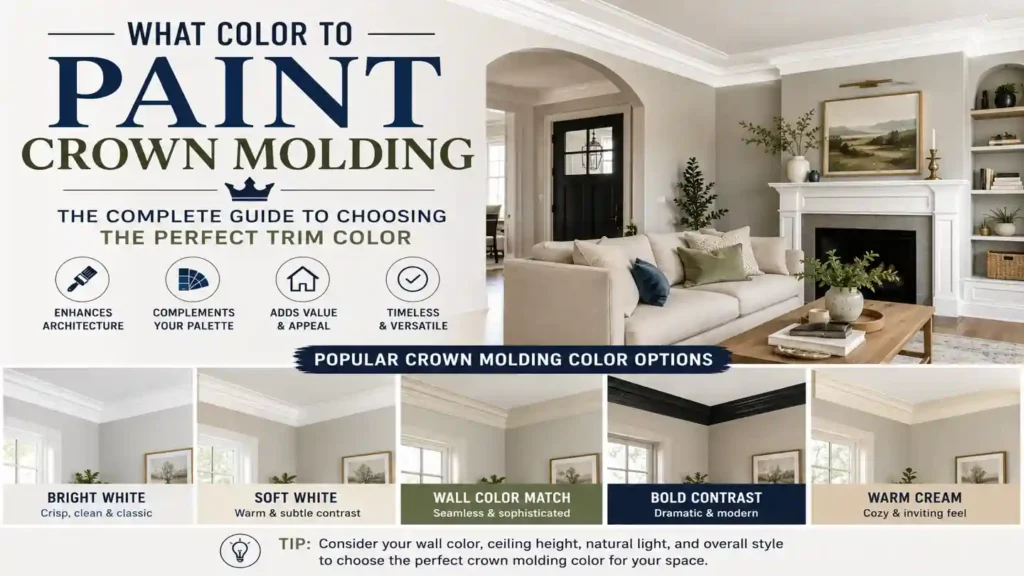
The right crown molding color can make ceilings appear taller, highlight architectural details, create contrast, or blend seamlessly into the room. Whether you’re updating a traditional living room, a modern bedroom, or an open-concept space, this guide will help you choose the best color for your crown molding.
Why Crown Molding Color Matters
Crown molding may occupy a relatively small portion of a room, but it has a significant visual impact because it sits where the walls and ceiling meet.
The right color can:
- Highlight architectural details
- Make ceilings appear higher
- Create contrast and visual interest
- Add elegance and sophistication
- Tie together walls, trim, and ceilings
- Influence how large or cozy a room feels
Because crown molding naturally draws the eye upward, its color choice affects the perception of the entire room.
Factors to Consider Before Choosing a Crown Molding Color
Before selecting a paint color, evaluate the room’s existing design elements.
Ceiling Height
The height of your ceilings can influence whether lighter or darker molding colors work best.
Lighter colors generally make ceilings feel taller, while darker colors can create a more intimate atmosphere.
Wall Color
Your wall color is one of the most important factors when choosing crown molding paint.
You can either create contrast or achieve a seamless look depending on your design goals.
Ceiling Color
The relationship between crown molding and the ceiling significantly affects the room’s visual flow.
Many designers coordinate molding closely with the ceiling color.
Design Style
Traditional, modern, farmhouse, and contemporary homes often favor different molding colors.
Consider the overall style of your space before making a decision.
Best Colors to Paint Crown Molding
1. Classic White
White remains the most popular crown molding color and has been a design staple for decades.
Its clean appearance highlights architectural details and works with virtually every wall color.
Why it works:
- Timeless and versatile
- Creates crisp contrast
- Brightens the room
- Enhances molding details
Best for:
- Traditional homes
- Farmhouse interiors
- Coastal designs
- Transitional spaces
White crown molding is often the safest choice when you’re unsure which direction to take.
2. Bright White
Bright white creates maximum contrast and definition.
It helps molding stand out and adds a fresh, polished appearance.
Why it works:
- Sharp visual impact
- Reflects light
- Creates clean lines
- Modern aesthetic
Best for:
- Contemporary homes
- Dark wall colors
- Minimalist interiors
Bright white works particularly well when paired with matching baseboards and window trim.
3. Soft White
Soft white offers a warmer alternative to bright white.
Its subtle undertones create a gentler transition between walls and ceilings.
Why it works:
- Warm and inviting
- Less stark than bright white
- Complements neutral color palettes
- Timeless appearance
Best for:
- Traditional homes
- Beige and cream walls
- Cozy living spaces
4. Matching the Ceiling Color
Many designers prefer painting crown molding the same color as the ceiling.
This creates a seamless appearance that draws less attention to the transition between surfaces.
Why it works:
- Makes ceilings appear higher
- Creates visual continuity
- Produces a clean look
- Works well in modern interiors
Best for:
- Small rooms
- Contemporary spaces
- Low ceilings
This approach is increasingly popular in modern design.
5. Matching the Wall Color
Painting crown molding the same color as the walls creates a color-drenched effect that feels sophisticated and current.
Why it works:
- Creates a seamless appearance
- Makes rooms feel larger
- Modern designer-inspired look
- Highlights furnishings instead of trim
Best for:
- Bedrooms
- Home offices
- Contemporary interiors
This strategy works particularly well with muted colors and rich tones.
6. Light Gray
Light gray crown molding provides subtle contrast without feeling as bold as white.
Why it works:
- Sophisticated appearance
- Soft visual transition
- Modern appeal
- Complements gray color palettes
Best for:
- Contemporary homes
- Gray walls
- Transitional spaces
7. Greige
Greige combines gray and beige for a versatile neutral that works with many design styles.
Why it works:
- Warm and modern
- Subtle contrast
- Timeless versatility
- Coordinates easily with décor
Best for:
- Open-concept homes
- Neutral color schemes
- Modern traditional interiors
8. Charcoal Gray
Charcoal gray crown molding creates dramatic contrast and architectural emphasis.
Why it works:
- Bold visual impact
- Highlights molding profiles
- Modern sophistication
- Creates depth
Best for:
- Large rooms
- Contemporary interiors
- High ceilings
Dark molding generally works best when repeated elsewhere in the room.
9. Black
Black crown molding can transform ordinary trim into a striking architectural feature.
Why it works:
- Maximum contrast
- Luxurious appearance
- Modern elegance
- Strong design statement
Best for:
- Modern homes
- High ceilings
- Dramatic interiors
Proper lighting is important when using black trim.
10. Natural Wood Tones
In some homes, especially those with high-quality woodwork, painting crown molding may not be necessary.
Natural wood finishes can add warmth and character.
Why it works:
- Highlights wood grain
- Adds texture
- Timeless appeal
- Complements hardwood floors
Best for:
- Craftsman homes
- Rustic interiors
- Traditional designs
Should Crown Molding Match Baseboards?
In most homes, crown molding is painted the same color as:
- Baseboards
- Door trim
- Window trim
Matching trim creates consistency and a cohesive appearance throughout the room.
However, modern interiors sometimes intentionally vary trim colors to create visual interest.
Should Crown Molding Match the Ceiling?
Matching crown molding to the ceiling is a popular designer technique.
Benefits include:
- Creates a seamless appearance
- Makes ceilings feel taller
- Reduces visual clutter
- Works well in modern spaces
This approach is particularly effective in rooms with lower ceilings.
Should Crown Molding Match the Walls?
Painting crown molding the same color as the walls has become increasingly popular.
Benefits include:
- Sophisticated appearance
- Color-drenched effect
- Makes the room feel larger
- Modern design appeal
This trend is especially common with:
- Sage green walls
- Navy blue walls
- Greige walls
- Charcoal walls
Best Crown Molding Colors by Style
Traditional Style
Popular choices include:
- White
- Soft white
- Cream
These colors emphasize architectural details and timeless elegance.
Modern Style
Recommended options include:
- Matching wall color
- Matching ceiling color
- Charcoal gray
- Black
These choices create clean lines and simplicity.
Farmhouse Style
Best choices include:
- White
- Warm white
- Soft cream
These colors complement rustic materials and natural textures.
Contemporary Style
Popular options include:
- Black
- Charcoal gray
- Wall-colored molding
- Ceiling-colored molding
These choices create a sleek and sophisticated appearance.
How Ceiling Height Affects Crown Molding Color
Low Ceilings
Lighter molding colors are generally the best option.
Recommended choices:
- White
- Soft white
- Ceiling-colored molding
These shades help create the illusion of height.
High Ceilings
Tall rooms can support darker molding colors.
Recommended choices:
- Charcoal gray
- Black
- Dark navy
- Deep wall colors
These shades help add warmth and visual balance.
Best Paint Finish for Crown Molding
Finish is just as important as color.
Semi-Gloss Finish
Semi-gloss is the most common choice for crown molding.
Benefits include:
- Easy to clean
- Highlights trim details
- Durable surface
- Reflects light
Satin Finish
Satin provides a softer appearance while still offering durability.
Benefits include:
- Subtle sheen
- Modern appearance
- Easy maintenance
High-Gloss Finish
High-gloss creates a dramatic and formal look.
However, it also highlights imperfections.
Common Crown Molding Color Mistakes
Automatically Choosing White
White is versatile, but it isn’t always the best option for every room.
Ignoring Ceiling Height
The wrong molding color can make a room feel shorter or less balanced.
Forgetting About Other Trim
Crown molding should coordinate with baseboards, doors, and window trim.
Using Excessive Contrast
Too much contrast can make a room feel visually busy.
Skipping Paint Samples
Always test colors under your room’s lighting conditions before making a final decision.
Designer Tips for Beautiful Crown Molding
To maximize the impact of crown molding:
- Coordinate molding with other trim elements
- Use matching colors for a seamless look
- Create contrast in large rooms
- Consider ceiling height before choosing dark colors
- Test colors at different times of day
- Balance bold trim with neutral furnishings
These strategies help create a polished and professionally designed appearance.
Final Thoughts
If you’re wondering what color to paint crown molding, classic white remains the most versatile and timeless choice because it highlights architectural details and works with virtually every design style. However, modern design trends increasingly favor matching crown molding to the ceiling or walls for a seamless, sophisticated appearance.
The best crown molding color ultimately depends on your ceiling height, wall color, lighting, and overall design goals. By selecting a color that complements the room’s architecture and style, you can turn crown molding into a beautiful finishing detail that enhances the entire space.