
Choosing what color to paint kitchen cabinets can completely change the look and atmosphere of your kitchen. The right shade can make a small space feel brighter, give a large kitchen more warmth, or create a timeless style that works with your countertops and flooring.
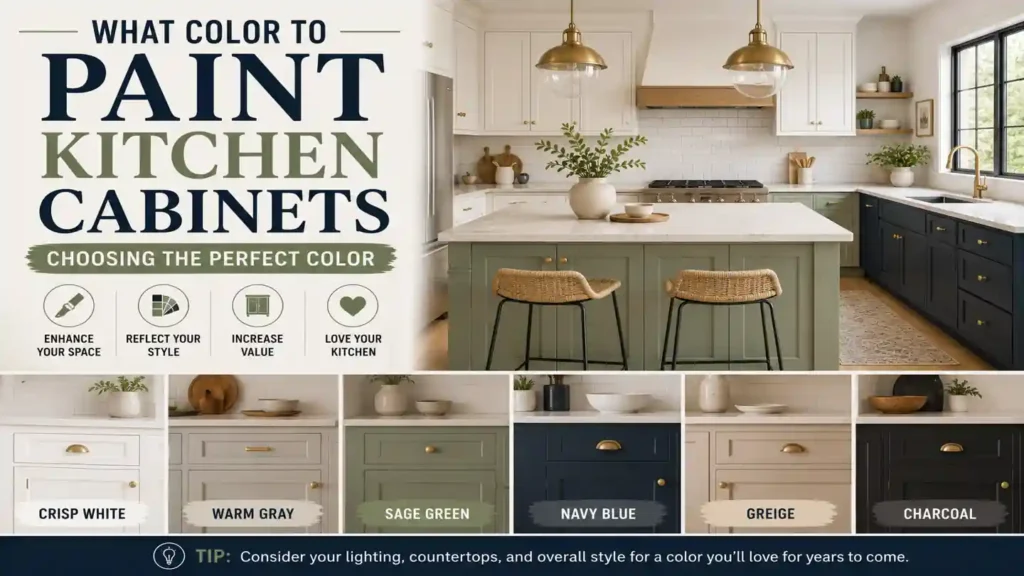
Whether you love classic neutrals, soft greens, dramatic dark tones, or modern two-tone designs, this guide explores beautiful cabinet colors and practical tips to help you choose confidently.
Affiliate disclosure: As an Amazon Associate I earn from qualifying purchases.
What to Buy for Painting Kitchen Cabinets
Before choosing your paint color, gather the supplies needed to prepare and paint your cabinets. Using suitable products can help create a smoother finish that holds up to everyday kitchen use.
- Cabinet paint
- Cabinet bonding primer
- Paint brushes for cabinets
- High-density foam paint rollers
- Cabinet paint sprayer
- Degreasing cleaner
- Fine-grit sanding sponges
- Painter’s tape
- Drop cloths
- Cabinet door hardware
Choose paint and primer specifically designed for cabinets or interior trim. Their compatibility with your cabinet material and existing finish matters more than simply choosing a popular brand or color.
How to Choose the Right Kitchen Cabinet Color
Before settling on a shade, look at the kitchen as a complete space. Cabinet color should work with the permanent features you already have, including countertops, backsplash, flooring, appliances, and wall paint.
Consider the Size of Your Kitchen
Light colors such as white, cream, and pale gray can help a small kitchen feel open and airy. They reflect more available light and create a clean appearance.
Darker shades can make a large kitchen feel cozy, sophisticated, and dramatic. You can also use a dark island or lower cabinets while keeping the upper cabinets light.
However, cabinet color alone does not determine how spacious a kitchen feels. Natural light, cabinet layout, ceiling height, and the amount of visual clutter also matter.
Think About Natural and Artificial Lighting
A paint color may look different in a showroom, on a sample card, and inside your kitchen. Natural daylight, warm bulbs, cool lighting, and nearby surfaces can all affect its appearance.
Test samples in several locations. Look at them in the morning, afternoon, and evening before making a final decision.
Match Your Countertops and Backsplash
Your cabinets should complement the undertones and patterns of your countertops and backsplash.
For example, warm cream cabinets can work beautifully with beige stone, while cool gray cabinets may pair better with white or gray surfaces. Natural wood and green cabinets can also create an inviting combination.
Choose a Finish That Suits Kitchen Use
Cabinet finishes affect both appearance and maintenance.
- Satin: A balanced finish with a soft sheen that is often practical for kitchen cabinets.
- Semi-gloss: Reflects more light and can be easier to wipe clean, although surface imperfections may be more noticeable.
- Matte: Creates a soft, understated appearance but may require more careful cleaning depending on the product.
- Gloss: Gives a reflective, contemporary look but highlights surface preparation and application flaws.
Always follow the paint manufacturer’s recommendations for cabinet surfaces and cleaning.
What Color to Paint Kitchen Cabinets: 15 Beautiful Ideas
The best kitchen cabinet color depends on your personal style, the room’s lighting, and the materials already in place. These 15 ideas offer inspiration for everything from timeless kitchens to bold contemporary spaces.
1. Classic White
White cabinets remain a popular choice because they create a bright, clean, and timeless appearance. They work particularly well in kitchens with limited natural light or smaller layouts.
Pair white cabinets with warm wood flooring, marble-look countertops, or a simple subway tile backsplash. If pure white feels too stark, choose a softer white with a subtle warm undertone.
2. Warm Cream
Cream cabinets offer the brightness of white with a softer, more welcoming appearance. They are especially attractive in traditional, farmhouse, cottage, and transitional kitchens.
Combine cream cabinets with brass hardware, warm wood accents, and beige or natural stone countertops. Avoid choosing a cream shade that clashes with the undertones of your flooring or backsplash.
3. Light Gray
Light gray is a versatile neutral that gives kitchen cabinets a refined, modern appearance without feeling as bright as white.
It works beautifully with stainless steel appliances, white countertops, and gray or white backsplashes. For a warmer look, select a gray with a slight beige undertone rather than a cool blue-gray.
4. Greige
Greige combines gray and beige to create a balanced neutral. It is a good option if you want something more distinctive than white but less noticeable than a strong color.
This shade pairs well with natural wood, cream walls, stone countertops, and brushed metal hardware. It can also connect warm and cool finishes in an open-plan home.
Navy blue cabinets create a bold yet sophisticated kitchen. The deep color adds character while remaining versatile enough to work with many traditional and contemporary styles.
Use navy on the lower cabinets or kitchen island and balance it with white upper cabinets. Brass or brushed gold hardware can add warmth, while white countertops help prevent the room from feeling too dark.
6. Sage Green
Sage green brings a calm, natural feeling into the kitchen. Its muted appearance makes it easier to use than brighter greens, especially when paired with neutral materials.
Try sage cabinets with white walls, warm wood shelving, and simple black or brass handles. This shade works particularly well in cottage, farmhouse, and nature-inspired interiors.
7. Forest Green
Forest green creates a rich, elegant look that gives kitchen cabinets a strong visual presence. It is an excellent choice if you want a deeper alternative to navy or charcoal.
Pair it with creamy countertops, warm metallic hardware, and wood accents. In a kitchen with limited natural light, consider using forest green on the island or lower cabinets instead of covering every cabinet surface.
8. Charcoal Gray
Charcoal gray offers a dramatic, contemporary appearance without the intensity of pure black. It can make a kitchen feel polished and sophisticated.
Balance charcoal cabinets with light countertops, pale walls, and reflective hardware. A combination of charcoal lower cabinets and white upper cabinets can create a stylish contrast without overwhelming the room.
9. Black
Black cabinets create a striking and modern kitchen. They look particularly attractive with white countertops, natural wood, metallic accents, and simple cabinet designs.
If you prefer a softer effect, choose a warm black or deep charcoal instead of an extremely dark, cool black. Good lighting is important because dark cabinets can make a poorly lit kitchen feel smaller.
10. Dusty Blue
Dusty blue offers a gentle touch of color without becoming overly bright. It can make a kitchen feel relaxed, fresh, and slightly coastal.
Pair it with white walls, light wood, brushed nickel hardware, and pale stone countertops. A muted blue is particularly effective when you want color but still prefer a subtle overall design.
11. Muted Olive Green
Olive green adds warmth and personality to kitchen cabinets. Compared with sage, it usually has a deeper, earthier appearance that works well with natural materials.
Combine olive cabinets with cream walls, wood accents, and aged brass hardware. This shade can create a welcoming kitchen with a relaxed, organic style.
12. Taupe
Taupe is a sophisticated neutral that sits between brown and gray. It offers more warmth than many traditional gray shades and can create a comfortable, understated kitchen.
Use taupe cabinets with white stone countertops, warm flooring, and soft metallic hardware. It is particularly useful when you want a neutral palette that feels less predictable than plain white.
13. Soft Beige
Beige cabinets create a warm, inviting appearance that works well in traditional and modern kitchens alike.
Pair them with natural stone, cream backsplashes, and wood flooring for a coordinated look. Choose a beige shade carefully because some have pink, yellow, or gray undertones that may not work with your existing finishes.
14. Warm Brown
Warm brown cabinets bring depth and a natural appearance to the kitchen. They can create a comfortable, classic look, especially when paired with stone, cream, and wood finishes.
For a modern interpretation, choose a medium brown rather than a very dark reddish-brown. Keep the walls and countertops relatively light to maintain visual balance.
15. Two-Tone Cabinets
Two-tone cabinets allow you to combine two complementary colors instead of choosing just one. A popular approach is to use a lighter shade on the upper cabinets and a darker color on the lower cabinets.
Try white and navy, cream and sage, light gray and charcoal, or beige and olive green. You can also use a different color on the kitchen island to create a focal point without making the entire room feel busy.
Best Kitchen Cabinet Colors for Different Design Styles
Your preferred interior style can help narrow down the options.
Modern Kitchens
Modern kitchens often benefit from simple, balanced color combinations. Consider:
- Pure or warm white
- Charcoal gray
- Black
- Greige
- Navy blue
Pair these shades with clean cabinet lines, minimal hardware, and uncluttered countertops.
Farmhouse Kitchens
Farmhouse kitchens often look welcoming with softer, natural colors.
- Cream
- Sage green
- Warm white
- Muted blue
- Soft beige
Wood accents, traditional handles, and simple backsplash designs can help complete the look.
Traditional Kitchens
Traditional kitchens can accommodate richer colors and warm neutrals.
- Warm cream
- Taupe
- Forest green
- Navy
- Warm brown
Decorative cabinet details and classic hardware can complement these shades.
Scandinavian interiors usually favor light, calm, and natural-looking palettes.
- Soft white
- Pale gray
- Light beige
- Muted sage
- Warm greige
Natural wood, simple lines, and plenty of light help create the relaxed appearance associated with this style.
How to Match Kitchen Cabinet Colors With Countertops and Flooring
Cabinets occupy a large amount of visual space, so their relationship with countertops and floors is important.
White Countertops
White countertops are versatile and can work with almost any cabinet color. Navy, sage, charcoal, cream, and gray all create attractive combinations.
If your countertop has noticeable veining, choose a cabinet shade that complements its undertones rather than competing with its pattern.
Dark Countertops
Dark countertops can look striking with white, cream, light gray, or sage cabinets. These lighter colors provide contrast and help prevent the kitchen from feeling too heavy.
If you prefer dark cabinets as well, introduce lighter walls, a bright backsplash, or reflective lighting.
Wood Flooring
Wood flooring adds warmth, so it pairs naturally with cream, beige, sage, olive, and navy cabinets.
Pay attention to the wood’s undertone. Golden floors may work better with warm cabinet colors, while cooler brown or gray-toned floors may suit more neutral shades.
Tile Flooring
Tile flooring gives you more opportunities to coordinate color and pattern. If the tile has a busy design, consider simple cabinet colors that do not compete with it.
For plain or neutral tiles, you can experiment with more noticeable cabinet shades such as dusty blue, forest green, or charcoal.
How to Choose Between Light and Dark Kitchen Cabinet Colors
Both light and dark cabinets can look beautiful. The best choice depends on the atmosphere you want and the conditions in your kitchen.
Benefits of Light Cabinets
- Help reflect available light.
- Create an open and airy appearance.
- Work well with many countertop materials.
- Make it easier to introduce colorful accessories.
- Suit traditional, modern, and farmhouse interiors.
Light cabinets can show certain stains and marks clearly, so choose a finish that suits your cleaning routine.
Benefits of Dark Cabinets
- Create a dramatic and sophisticated appearance.
- Add depth and visual interest.
- Pair beautifully with light countertops.
- Make a kitchen island stand out.
- Work well in contemporary and transitional designs.
Dark cabinets may show dust, fingerprints, and some water spots more noticeably. Consider the finish and the amount of everyday maintenance you are comfortable with.
Tips for Testing Kitchen Cabinet Paint Colors
Before buying enough paint for the entire kitchen, test your favorite colors.
Use Large Sample Boards
Paint sample boards rather than relying only on small color cards. Larger samples make it easier to understand how the shade will look across a cabinet door.
Check the Color at Different Times
Look at the sample in daylight, under your kitchen lights, and in the evening. A color that appears warm during the day may look cooler under artificial lighting.
Compare It With Existing Materials
Place the sample next to your countertop, backsplash, flooring, and wall color. This helps reveal undertones that may not be obvious when viewing the paint alone.
Consider the Entire Kitchen
Do not choose a cabinet shade in isolation. Think about the appliances, handles, lighting fixtures, and nearby rooms, especially if your kitchen opens into a living or dining area.
Give Yourself Time to Decide
Live with the samples for a few days if possible. A little patience can prevent an expensive color choice that you later regret.
Common Mistakes to Avoid When Choosing Cabinet Colors
Even attractive colors can disappoint when they do not suit the kitchen. Keep these common mistakes in mind:
- Choosing paint from a tiny sample: Small color cards do not always show how a shade will look across large cabinet surfaces.
- Ignoring undertones: A warm white may clash with cool gray countertops, even when both colors look neutral.
- Overlooking lighting: Natural and artificial light can change how paint appears.
- Using too many competing colors: A kitchen can feel visually crowded when cabinets, backsplash, walls, and countertops all demand attention.
- Choosing dark colors without considering light: Dark cabinets may feel overwhelming in a kitchen with little natural light.
- Following trends without considering your home: A fashionable shade may not complement your existing materials or personal taste.
- Ignoring the cabinet material: Different surfaces require different primers and preparation methods.
- Choosing a finish only for appearance: Kitchen cabinets need a coating suitable for regular handling and cleaning.
How to Paint Kitchen Cabinets for a Beautiful Finish
Once you have chosen your color, proper preparation and application are essential. A carefully selected shade will not look its best if the cabinet surface is greasy, damaged, or poorly painted.
- Remove cabinet doors and hardware. Label each door and drawer so you can return everything to the correct position.
- Clean the surfaces. Remove grease, food residue, and dirt with a suitable degreasing cleaner.
- Repair imperfections. Fill small holes and dents with a compatible filler, then allow it to dry.
- Prepare the surface. Sand lightly when appropriate for the existing finish and primer system. Follow the product instructions and use suitable respiratory and eye protection.
- Remove dust. Wipe away sanding residue so it does not become trapped under the paint.
- Apply compatible primer. Choose a bonding primer suitable for the cabinet material and existing coating.
- Apply the cabinet paint. Use a quality brush, roller, or suitable sprayer, following the manufacturer’s application directions.
- Add additional coats. Allow each coat to dry as directed before applying the next.
- Allow the finish to cure. Dry-to-touch does not mean fully cured. Follow the product’s stated curing period before heavy use or cleaning.
- Reinstall the hardware. Once the finish is ready, reattach doors, drawers, knobs, and handles carefully.
If your home has older painted cabinets, consider the possibility of lead-containing paint before sanding or disturbing the coating. Follow local safety guidance and use qualified professionals when necessary.
Frequently Asked Questions
What is the most popular color for kitchen cabinets?
White remains a widely used cabinet color because it is versatile and creates a bright appearance. Cream, gray, navy, and green are also popular choices for homeowners who want more warmth or personality.
What color makes a kitchen look bigger?
White, cream, pale gray, and other light shades can help a kitchen feel more open by reflecting available light. However, lighting, layout, and visual clutter also affect how spacious a kitchen feels.
Are white kitchen cabinets still in style?
Yes. White cabinets remain a timeless option because they work with many design styles and materials. You can make them feel more current by pairing them with warm wood, distinctive hardware, or a contrasting island.
What is the best neutral color for kitchen cabinets?
Cream, greige, taupe, and light gray are excellent neutral choices. The best one depends on the undertones of your countertops, flooring, backsplash, and wall paint.
Are dark kitchen cabinets a good idea?
Dark cabinets can look elegant and dramatic, particularly when balanced with lighter countertops and good lighting. They may show fingerprints or dust more clearly, so consider maintenance before choosing a very dark shade.
Should kitchen cabinets be lighter or darker than walls?
There is no fixed rule. Lighter cabinets against darker walls create contrast, while darker cabinets against light walls can add depth. Choose a combination that works with the room’s lighting and other finishes.
What color cabinets go with stainless steel appliances?
White, gray, navy, sage, charcoal, and cream can all complement stainless steel appliances. The best option depends on the undertones and overall style of your kitchen.
Is satin or semi-gloss better for kitchen cabinets?
Both can work well. Satin offers a softer sheen, while semi-gloss is more reflective and may be easier to wipe clean. Check the manufacturer’s recommendations and consider how much surface texture you want to show.
Can I paint kitchen cabinets without sanding?
Some bonding primers are designed for certain surfaces with limited or no sanding, but this depends on the cabinet material and existing finish. Proper cleaning and following the complete primer-and-paint system are essential.
How long should painted kitchen cabinets cure?
Curing time varies by paint type, temperature, humidity, and application thickness. Follow the manufacturer’s instructions rather than assuming the cabinets are ready for heavy use as soon as they feel dry.
Final Words
Choosing the right kitchen cabinet color is a simple way to refresh your space and create a kitchen that feels more inviting. Classic white, warm cream, sage green, navy blue, charcoal, and two-tone combinations all offer beautiful possibilities.
Consider your lighting, countertops, flooring, and personal style before making a decision. Test your favorite shades on larger samples and give yourself time to see how they look throughout the day. With a thoughtful color choice and proper preparation, your kitchen cabinets can become a lasting feature you enjoy every day.
Helpful Resources
- National Kitchen and Bath Association – Offers kitchen and bath design information, professional resources, and inspiration for planning functional spaces.
- ENERGY STAR – Lighting – Explains lighting options that can help you consider how different light sources affect the atmosphere and appearance of your kitchen.