
Choosing what color to paint stairs can change the entire look of your entryway, hallway, or staircase. The right shade can make a narrow stairwell feel brighter, add contrast to plain steps, or create a beautiful focal point that complements your home.
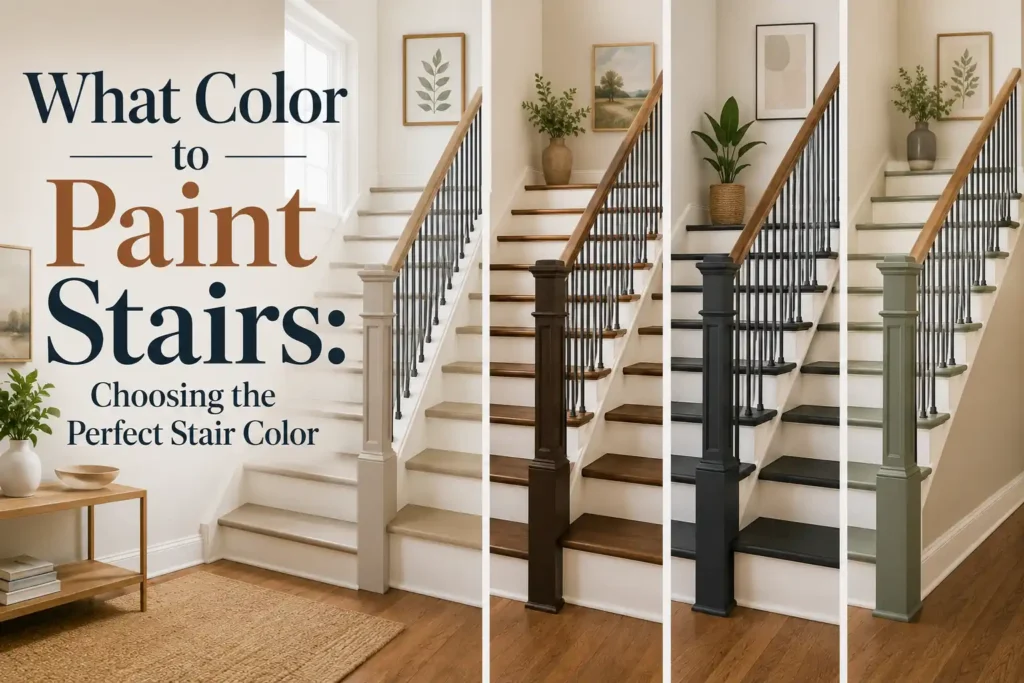
From classic white and warm gray to dramatic black, navy, and natural wood tones, there are plenty of ways to refresh your stairs. Explore these color ideas, learn how to coordinate treads and risers, and discover practical tips for choosing a durable finish.
Affiliate disclosure: As an Amazon Associate I earn from qualifying purchases.
What to Buy for Painting Stairs
Gather the right supplies before starting your staircase project. Choose paint and primer specifically suitable for your stair material and whether the steps are indoors or outdoors.
- Interior or porch and floor paint
- Wood primer
- Concrete bonding primer
- Anti-slip floor additive
- Paintbrush set
- Small paint roller and tray
- Fine-grit sandpaper
- Painter’s tape
- Wood filler
- Floor cleaning solution
- Drop cloth
- Paint tray liners
What Color to Paint Stairs: 12 Beautiful Ideas
The best staircase color depends on your home’s decorating style, wall color, flooring, lighting, and the material of your steps. These 12 ideas offer inspiration for traditional, modern, farmhouse, and contemporary interiors.
1. Classic White
White is a timeless staircase color that creates a bright, clean, and welcoming appearance. It works particularly well in narrow hallways, small entryways, and homes where natural light is limited.
You can paint both the treads and risers white for a simple, uniform look or combine white risers with natural wood treads for more warmth. White also complements nearly every wall color, from soft beige and pale gray to deep navy. Keep in mind that white can show dirt and scuff marks more easily in busy households, so choose a washable, durable coating.
2. Warm Gray
Warm gray is a versatile choice if you want something more forgiving than white without making your staircase look too dark. Its subtle beige undertones create a comfortable appearance that works well with cream walls, wood flooring, and neutral furnishings.
Use warm gray on the entire staircase for a coordinated look, or paint the risers white to create gentle contrast. This shade is especially attractive in transitional, farmhouse, and contemporary homes. Test a sample beside your flooring before committing because gray can look different under natural and artificial lighting.
3. Charcoal Gray
Charcoal gray adds depth and sophistication to a staircase. It is darker than traditional gray but often feels softer than black, making it a good option for homeowners who want a dramatic appearance without an extremely bold color.
Pair charcoal treads with white risers for a crisp two-tone design. You can also use charcoal throughout the staircase and keep the surrounding walls light. This combination looks particularly attractive with black metal railings, simple wall trim, and natural wood accents.
4. Black
Black stairs create a striking focal point and bring a modern, polished feel to an interior. They look especially beautiful in homes with white walls, pale flooring, and minimal decorations.
For a balanced design, paint the treads black and leave the risers white. This creates a classic contrast that makes the staircase stand out. If you prefer a more dramatic appearance, use black on the treads, risers, and railing. Remember that dust and scratches may be noticeable on dark surfaces, so choose a suitable durable finish and keep the steps clean.
5. Natural Wood Brown
Natural wood brown is an excellent choice when you want your staircase to feel warm, inviting, and timeless. Rather than covering the wood grain with an opaque color, consider using a suitable wood stain or clear finish if the existing material is in good condition.
Medium brown tones work beautifully with white risers, cream walls, and traditional furnishings. Darker walnut-inspired shades create a richer appearance, while lighter oak tones suit Scandinavian and modern farmhouse interiors. If your stairs are already painted, achieving a natural wood appearance may require more preparation or refinishing than simply applying another coat of paint.
Navy blue adds elegance and personality without feeling overly bright. It works beautifully in traditional, coastal, and contemporary homes, especially when paired with white walls and light-colored flooring.
Try navy treads with white risers for a sophisticated two-tone staircase. Brass or warm metallic details can add another layer of character, while black railings create a more modern combination. If the stairwell is small or receives little natural light, use navy as an accent rather than covering every surrounding surface in a dark shade.
7. Sage Green
Sage green brings a gentle, natural appearance to your staircase. Its muted green undertones make it easier to coordinate with neutral interiors than brighter shades of green.
Pair sage green steps with warm white risers, beige walls, or natural wood railings. The result feels relaxed and welcoming, particularly in cottage, farmhouse, and nature-inspired homes. You can also use sage green on the staircase trim or side stringers while keeping the treads in a natural wood finish.
8. Beige
Beige is a warm neutral that creates a soft and understated staircase. It works especially well in homes decorated with cream, tan, ivory, and other earthy colors.
Choose a light beige for a subtle appearance or a deeper sand tone when you want the steps to stand out slightly from pale walls. Beige can also coordinate beautifully with natural wood handrails and warm flooring. Pay attention to undertones when choosing a shade so the staircase does not look too yellow or pink beside your existing finishes.
9. Greige
Greige combines gray and beige, offering a flexible color that works with both warm and cool decorating elements. It is a useful option when your home has a mixture of wood, stone, white trim, and neutral furniture.
Paint the staircase greige for a soft, coordinated appearance or use it on the treads with white risers. This color is particularly suitable for modern farmhouse, transitional, and minimalist interiors. Because greige shades vary considerably, compare samples with your wall paint and flooring before making a final choice.
10. Two-Tone White and Wood
A white-and-wood staircase combines brightness with natural warmth. This design is especially attractive when the treads have visible wood grain and the risers are painted white.
The white risers help the staircase feel fresh, while the wood treads add texture and prevent the overall design from looking too plain. This combination works with farmhouse, traditional, Scandinavian, and contemporary interiors. If the wood is already in good condition, you may only need to refresh the risers rather than repaint the entire staircase.
11. Dusty Blue
Dusty blue is a softer alternative to navy. It adds color while maintaining a calm, relaxed appearance, making it suitable for coastal, cottage, and traditional homes.
Pair dusty blue treads with white risers and light gray or cream walls. A natural wood handrail can make the combination feel warmer. If you want a little more visual interest, use dusty blue on the staircase sides and keep the steps in a neutral finish.
12. Deep Forest Green
Forest green creates a rich, distinctive staircase that feels connected to nature. It works particularly well with cream walls, warm wood, brass details, and traditional architectural features.
You can use deep green on the treads with white risers or paint the entire staircase for a more dramatic effect. In a dark hallway, balance the shade with good lighting and lighter surrounding surfaces. Forest green is a strong choice when you want the staircase to become a memorable design feature rather than simply blending into the background.
How to Choose the Best Staircase Paint Color
A beautiful staircase should complement the rest of your home rather than look disconnected from nearby rooms. Consider these details before selecting your final shade.
Consider Your Wall and Floor Colors
Start by looking at the colors already present around the staircase. If your walls are white or cream, you have plenty of flexibility to choose either a neutral or a bold stair color.
For rooms with warm wood flooring, beige, greige, brown, and sage green can create a coordinated appearance. Cool gray floors often work well with white, charcoal, dusty blue, and navy.
You do not have to match the stairs exactly to the floor. A little contrast can make the staircase more interesting, provided the colors share compatible undertones.
Think About the Staircase Size
Light colors can help a narrow or enclosed staircase feel brighter. White, warm gray, beige, and pale greige are useful choices when you want to create a more open impression.
Dark colors can make a staircase feel more dramatic and defined. Black, navy, and forest green are attractive options in larger spaces or stairwells with good lighting. If you love a dark shade but have a small hallway, consider using it only on the treads while keeping the risers and walls light.
Match the Style of Your Home
Your home’s overall design can help you narrow down the options.
- Modern: Black, charcoal, white, or greige.
- Farmhouse: Warm white, sage green, beige, or natural brown.
- Traditional: Navy, warm gray, deep green, or stained wood.
- Coastal: White, dusty blue, and natural wood.
- Scandinavian: Pale gray, white, and light natural wood.
- Rustic: Medium brown, warm beige, and earthy green.
- Minimalist: White, charcoal, or a simple two-tone combination.
These are starting points rather than strict decorating rules. Choose a combination that feels natural in your space.
Test Paint Samples Before Deciding
A paint color can look different on a large staircase than it does on a small sample card. Lighting, nearby wall colors, and flooring can all influence how a shade appears.
Test a few samples on suitable areas or sample boards. Look at them during the day and at night with your usual lights switched on. This helps you avoid choosing a shade that looks too dark, too cool, or too warm once the project is complete.
Consider Cleaning and Everyday Wear
Stairs experience regular foot traffic, so practical maintenance matters as much as appearance. Very light colors may show muddy footprints and dirt, while dark finishes can reveal dust and scratches.
A medium neutral such as warm gray, greige, or medium brown can be a practical middle ground. However, the quality and suitability of the coating, surface preparation, and cleaning routine are also important.
Should You Paint Stair Treads and Risers the Same Color?
You can paint stair treads and risers the same color, but using two complementary shades often creates more visual interest.
Same-Color Staircase
Painting the entire staircase one color creates a simple, consistent appearance. White, beige, gray, and charcoal can all work well for this design.
This approach is particularly useful when you want the staircase to blend with the surrounding interior. It can also make a traditional staircase look more contemporary.
White Risers With Dark Treads
White risers paired with black, charcoal, navy, or brown treads create a strong contrast. This combination highlights the shape of each step and gives the staircase a defined appearance.
It works well in traditional and modern homes. However, the contrast may make dirt and marks on the white risers more noticeable.
Natural Wood Treads With Painted Risers
This is a popular way to refresh a staircase without hiding all the natural wood. Keep the treads stained or sealed in a suitable finish and paint the risers white, cream, or another complementary neutral.
The result combines the warmth of wood with the brightness of painted surfaces. It is especially attractive in farmhouse, cottage, and Scandinavian interiors.
What Is the Best Paint Finish for Stairs?
Choosing the right paint finish is important because stairs are high-traffic surfaces. The best option depends on whether you are painting the horizontal treads, vertical risers, railings, or surrounding trim.
Low-Sheen or Satin Finish
A low-sheen or satin finish offers a relatively subtle appearance. It can be suitable for certain staircase components when the paint is specifically formulated for the surface and expected wear.
Check the product label for its recommended use and cleaning requirements.
Semi-Gloss Finish
Semi-gloss has more shine and is generally easier to wipe clean than flatter finishes. It can be useful for risers, stringers, and painted trim, depending on the product.
However, a glossy coating on horizontal treads should not automatically be considered safe. The surface needs appropriate traction.
Floor Paint With an Anti-Slip Additive
For stair treads, prioritize a coating designed for floors or steps and consider a compatible anti-slip additive or textured finish. Ordinary wall paint is not designed for repeated foot traffic on horizontal surfaces.
Painted steps can become slippery, particularly when wet. Follow the coating manufacturer’s instructions and choose a suitable slip-resistant system for the stair material and location. An anti-slip finish does not replace good lighting, secure handrails, or careful maintenance.
How to Paint Stairs Step by Step
Once you have chosen your color and paint, prepare the staircase carefully. The following process is suitable as a general guide for many paintable stair surfaces, but the exact preparation and products will depend on whether your steps are wood, concrete, or another material.
Step 1: Prepare the Staircase
Remove rugs, runners, decorations, and other items from the staircase. Cover nearby flooring and surfaces with suitable drop cloths.
Make sure you have a safe way to access the area during the project. If the staircase is the only route between floors, plan the work so household members are not forced to walk across wet paint.
Step 2: Clean the Steps Thoroughly
Remove dust, dirt, grease, and other residue from the treads, risers, and railings. Use a cleaner suitable for the material and rinse or wipe away residue as directed.
Allow the staircase to dry completely before sanding or applying primer. Paint applied over dirt or moisture may not adhere properly.
Step 3: Inspect and Repair the Surface
Look for loose paint, cracks, dents, holes, and damaged areas. Repair minor imperfections with a filler suitable for the stair material.
If the steps are loose, damaged, or structurally unsafe, address those issues before painting. Paint is not a substitute for repairing a staircase.
Step 4: Sand Where Appropriate
Lightly sand previously painted or glossy surfaces when the coating manufacturer’s instructions recommend it. Sanding can help smooth imperfections and prepare the surface for better adhesion.
Remove dust thoroughly afterward. If the existing paint may contain lead, do not sand, scrape, or otherwise disturb it until you have obtained appropriate testing and safety guidance.
Step 5: Apply the Correct Primer
Choose a primer compatible with the staircase material and the finish paint. Wood, concrete, and previously coated surfaces may require different products.
Apply an even coat, paying attention to edges and corners. Allow it to dry according to the manufacturer’s instructions before painting.
Step 6: Paint the Risers and Stair Details
Start with the vertical risers, side stringers, and other areas that will not be walked on. Use a quality brush for corners and detailed sections.
Apply thin, even coats rather than trying to cover everything with one thick layer. Allow each coat to dry as directed.
Step 7: Paint the Treads
Use a suitable floor or stair coating for the horizontal walking surfaces. Follow the product instructions for application, coverage, and any required anti-slip additive.
Plan the order carefully so you do not trap yourself above wet paint. If the staircase cannot be closed to traffic, consider completing alternate steps only when the coating instructions permit it and a safe route remains available. Do not use freshly painted steps before they are ready for foot traffic.
Step 8: Apply Additional Coats
Inspect the staircase after the first coat has dried. Apply additional coats if needed for even color and coverage.
Follow the recommended recoat times. Applying another coat too soon can affect the finish, while rushing the project can leave visible marks or uneven areas.
Step 9: Allow the Paint to Cure
Drying and curing are different. A surface may feel dry before it has reached the hardness needed for regular use.
Keep foot traffic off the staircase for the period specified by the manufacturer. Do not place rugs or runners back on the steps until the coating is ready for them.
Step 10: Check the Finished Staircase
Once the paint has cured, inspect the treads, risers, edges, and railings. Check that the finish is even and that the walking surfaces provide suitable traction.
Remove protective coverings, clean the work area, and return any decorations or runners only when the coating instructions allow.
Common Mistakes to Avoid When Painting Stairs
A few avoidable mistakes can affect both the appearance and safety of your staircase.
Using Ordinary Wall Paint on Treads
Wall paint is not designed for the repeated wear that horizontal steps receive. Choose a coating specifically suitable for floors or stairs.
Ignoring Slip Resistance
A smooth painted surface can become slippery, especially when wet. Use an appropriate anti-slip system for the product and surface, and keep the stairs dry and well maintained.
Skipping Surface Preparation
Dust, grease, loose paint, and moisture can interfere with adhesion. Clean and prepare the staircase according to the coating instructions before painting.
Applying Thick Coats
Thick coats can leave drips, uneven texture, and longer drying times. Use thin, even applications and allow enough time between coats.
Rushing the Curing Process
Paint that feels dry may not be ready for everyday foot traffic. Follow the manufacturer’s instructions before reopening the staircase.
Choosing a Color Without Testing It
A shade that looks beautiful on a sample card may appear different beside your flooring or under hallway lighting. Test your preferred colors before painting the full staircase.
Frequently Asked Questions
What is the best color to paint stairs?
White, warm gray, charcoal, black, navy, and natural brown are versatile choices. White and pale neutrals help create a bright appearance, while darker shades add contrast and drama. The best color depends on your interior style, lighting, and surrounding finishes.
Should stairs be lighter or darker than the floor?
Either option can work. Lighter stairs can create a brighter appearance, while darker steps can add contrast and definition. Consider the colors and undertones of nearby flooring, walls, and trim when deciding.
What color makes a narrow staircase look bigger?
White, warm off-white, pale gray, and light beige can help a narrow staircase feel brighter and more open. Keeping the walls and risers light can also create a more spacious impression.
Are black stairs a good idea?
Yes. Black stairs can look elegant and modern, especially when paired with white risers and light walls. They may show dust and scratches, so choose a suitable durable coating and maintain the surface regularly.
Can I paint wooden stairs without sanding?
Some products allow limited preparation on certain existing finishes, but many painted or glossy wood surfaces benefit from light sanding. Follow the primer and paint instructions for your particular staircase. Never disturb potentially lead-containing paint without appropriate safety precautions.
What type of paint should I use on stair treads?
Choose a durable coating specifically approved for floor or stair use and suitable for the material. Consider an anti-slip additive or textured finish to improve traction. Always follow the manufacturer’s instructions.
Is glossy paint safe for stairs?
A glossy finish is not automatically safe for walking surfaces. Smooth painted treads can become slippery, particularly when wet. Prioritize a suitable floor coating with appropriate slip resistance rather than choosing a finish based on shine alone.
How many coats of paint do stairs need?
The number depends on the surface, primer, original color, and paint product. Many projects require a primer coat followed by two finish coats, but some products have different coverage requirements. Follow the manufacturer’s recommendations.
How long should I wait before walking on painted stairs?
The waiting period depends on the specific coating, temperature, humidity, and application conditions. Touch-dry time does not necessarily mean the paint is ready for foot traffic. Follow the product’s instructions for light use and full curing.
Final Words
Choosing the right stair color can transform an ordinary staircase into an attractive feature of your home. White, warm gray, and beige create a bright, timeless look, while black, navy, charcoal, and forest green add depth and personality. Natural wood treads with painted risers offer another beautiful way to balance warmth and contrast.
Before starting, compare paint samples with your walls and flooring, select a coating suitable for your stair material, and pay special attention to slip resistance on the treads. With thoughtful color choices and careful preparation, you can create a staircase that looks beautiful and stands up to everyday use.
Helpful Resources
- How to Paint Your Staircase – BEHR – A practical guide to cleaning, preparing, priming, and painting a staircase.
- Porch, Floor and Patio Paint – Valspar – Explains floor coating options, including textured anti-skid finishes for steps and other walking surfaces.