
Choosing what color to paint bedroom walls is one of the most important decorating decisions you’ll make. Unlike living rooms or kitchens, bedrooms are personal spaces designed for rest, relaxation, and comfort. The color on your walls can influence the mood of the room, affect how large or cozy it feels, and even impact the quality of your sleep.
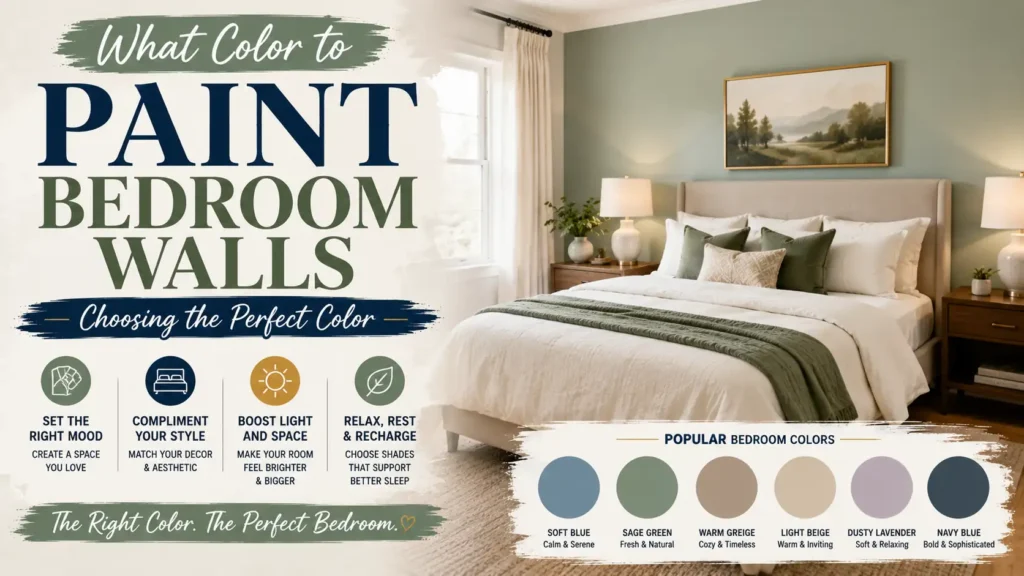
While there is no single best bedroom paint color for everyone, certain shades consistently create a calming and inviting atmosphere. Whether you prefer soft neutrals, nature-inspired greens, cozy earth tones, or dramatic dark colors, the right paint can transform your bedroom into a retreat you’ll love spending time in. This guide covers the best bedroom wall colors, how to choose the right shade, and common mistakes to avoid.
Why Bedroom Wall Color Matters
Your bedroom is often the first room you see in the morning and the last room you see at night. Because of this, color plays a significant role in how the space feels.
The right bedroom paint color can:
- Create a relaxing environment
- Make the room feel larger or cozier
- Improve the overall design aesthetic
- Complement furniture and bedding
- Enhance natural and artificial light
- Help create a restful atmosphere
A carefully chosen wall color can make your bedroom feel like a personal sanctuary.
Factors to Consider Before Choosing a Bedroom Color
Before selecting a paint color, take time to evaluate the room and your personal preferences.
Room Size
Lighter colors generally make bedrooms feel larger and more open.
Darker colors can create a cozy, intimate atmosphere and often work well in larger rooms.
Natural Light
The amount of sunlight your bedroom receives will affect how paint colors appear throughout the day.
Bright rooms can handle deeper and more saturated colors, while darker rooms often benefit from lighter shades that reflect available light.
Existing Furniture
Look at the colors of your furniture, flooring, curtains, and bedding.
The wall color should complement these elements rather than compete with them.
Desired Mood
Think about how you want the room to feel.
Do you want:
- Calm and relaxing?
- Warm and cozy?
- Bright and airy?
- Sophisticated and dramatic?
Your answer can help narrow down your color choices.
Best Colors to Paint Bedroom Walls
1. Soft White
Soft white remains one of the most popular bedroom colors because it creates a clean and peaceful environment.
Unlike stark bright white, soft white contains subtle warm undertones that make the room feel inviting.
Why it works:
- Bright and timeless
- Makes rooms feel larger
- Complements any décor style
- Easy to update with different bedding and accessories
Best for:
- Small bedrooms
- Minimalist designs
- Modern interiors
2. Warm Greige
Greige blends gray and beige into a sophisticated neutral that works beautifully in bedrooms.
It offers more depth than white while maintaining a calm and versatile appearance.
Why it works:
- Warm and welcoming
- Works with many furniture styles
- Creates a luxurious feel
- Timeless appeal
Best for:
- Primary bedrooms
- Transitional homes
- Contemporary interiors
3. Sage Green
Sage green has become one of the most popular bedroom paint colors in recent years.
Its muted, earthy appearance creates a relaxing atmosphere inspired by nature.
Why it works:
- Promotes calmness
- Feels fresh and soothing
- Pairs well with wood furniture
- Adds subtle color without overwhelming the space
Best for:
- Farmhouse bedrooms
- Nature-inspired designs
- Modern interiors
4. Pale Blue
Blue is often associated with tranquility and relaxation, making it a classic bedroom choice.
A pale blue shade can create an airy and peaceful environment.
Why it works:
- Calming and restful
- Makes rooms feel fresh
- Reflects light beautifully
- Complements white trim
Best for:
- Coastal homes
- Guest bedrooms
- Small bedrooms
5. Light Gray
Light gray offers a clean and contemporary look while remaining soft and inviting.
It serves as an excellent neutral backdrop for a variety of decorating styles.
Why it works:
- Sophisticated appearance
- Pairs with virtually any accent color
- Creates a serene atmosphere
- Timeless and versatile
Best for:
- Modern bedrooms
- Urban homes
- Minimalist spaces
6. Soft Beige
Beige has made a strong comeback as homeowners embrace warmer, more welcoming interiors.
Modern beige shades feel sophisticated rather than outdated.
Why it works:
- Warm and cozy
- Easy to decorate around
- Complements natural materials
- Creates a comfortable atmosphere
Best for:
- Traditional homes
- Cozy bedroom designs
- Rooms with warm wood tones
7. Dusty Blue-Gray
A blue-gray color combines the calming effects of blue with the versatility of gray.
The result is elegant, soothing, and highly adaptable.
Why it works:
- Relaxing without feeling cold
- Sophisticated appearance
- Complements many design styles
- Works with both light and dark furniture
Best for:
- Primary bedrooms
- Transitional interiors
- Contemporary homes
8. Muted Lavender
Lavender isn’t just for children’s rooms.
A muted lavender shade can create a soft and sophisticated retreat.
Why it works:
- Gentle and calming
- Adds subtle personality
- Works well with gray and white accents
- Creates a luxurious feel
Best for:
- Romantic bedroom designs
- Guest rooms
- Cottage-style interiors
For homeowners who prefer dramatic interiors, navy blue can create a cozy and sophisticated bedroom.
When paired with proper lighting, it feels rich and luxurious.
Why it works:
- Creates intimacy
- Adds depth and elegance
- Makes light-colored bedding stand out
- Timeless appeal
Best for:
- Large bedrooms
- Modern designs
- Statement-making interiors
10. Charcoal Gray
Charcoal gray offers drama without sacrificing sophistication.
This rich neutral creates a cozy atmosphere that many homeowners love.
Why it works:
- Modern and stylish
- Creates contrast
- Feels luxurious
- Highlights architectural details
Best for:
- Large bedrooms
- Contemporary homes
- Rooms with plenty of natural light
Best Bedroom Colors for Small Rooms
Small bedrooms often benefit from colors that create a sense of openness.
Top choices include:
- Soft white
- Warm white
- Pale blue
- Light gray
- Light greige
These shades reflect light and help rooms feel larger than they actually are.
Best Bedroom Colors for Relaxation
If your primary goal is creating a calming retreat, consider these colors:
- Sage green
- Pale blue
- Blue-gray
- Soft white
- Muted lavender
These shades are commonly associated with relaxation and comfort.
Warm vs. Cool Bedroom Colors
Warm Colors
Examples:
- Beige
- Greige
- Cream
- Soft taupe
Benefits:
- Cozy atmosphere
- Inviting feel
- Comfortable and relaxing
Cool Colors
Examples:
- Blue
- Green
- Gray
- Lavender
Benefits:
- Calm and refreshing
- Airy appearance
- Spa-like atmosphere
Both can work beautifully depending on your personal style and the room’s lighting.
How Lighting Affects Bedroom Paint Colors
Lighting can dramatically change the appearance of paint.
North-Facing Bedrooms
These rooms often receive cooler light.
Warm colors such as beige, greige, and cream can help balance the space.
South-Facing Bedrooms
These rooms receive abundant warm sunlight.
Both warm and cool colors typically perform well.
East-Facing Bedrooms
Morning sunlight enhances warm tones and creates a bright atmosphere early in the day.
West-Facing Bedrooms
Afternoon light tends to be warmer and richer, making many paint colors appear more saturated.
Always test paint samples under your room’s actual lighting conditions.
Best Paint Finish for Bedroom Walls
Eggshell Finish
Eggshell is one of the most popular finishes for bedrooms.
Benefits include:
- Soft appearance
- Easy maintenance
- Subtle durability
Satin Finish
Satin provides slightly more durability and is easy to clean.
It works well in family homes.
Matte Finish
Matte paint creates a smooth and elegant appearance.
Many designers prefer matte finishes for bedrooms because they reduce glare and create a soft atmosphere.
Common Bedroom Paint Mistakes
Choosing a Color Based Only on Trends
Trends change, but your bedroom should reflect your personal preferences.
Ignoring Lighting
Paint colors can look dramatically different depending on the room’s light exposure.
Using Extremely Bright Colors
Highly saturated colors can feel overwhelming in a space designed for relaxation.
Forgetting About Furniture
Wall color should complement existing furnishings and décor.
Skipping Sample Testing
Always test several paint samples before making a final decision.
Final Thoughts
If you’re wondering what color to paint bedroom walls, soft white, warm greige, sage green, and pale blue are among the best choices because they create a relaxing atmosphere while remaining versatile and timeless. These colors work well in a variety of home styles and provide a soothing backdrop for rest and relaxation.
The best bedroom wall color ultimately depends on your room’s size, lighting, furniture, and personal taste. By selecting a shade that supports the mood you want to create, you can transform your bedroom into a comfortable retreat that feels both stylish and restful for years to come.