
A fresh garage door color can change the entire look of your home’s exterior. Whether you want a clean, classic appearance or a little more personality, the right shade can bring your siding, roof, trim, and front entrance together. If you’re deciding what color to paint garage doors, consider the colors and materials already surrounding your home before choosing a paint.
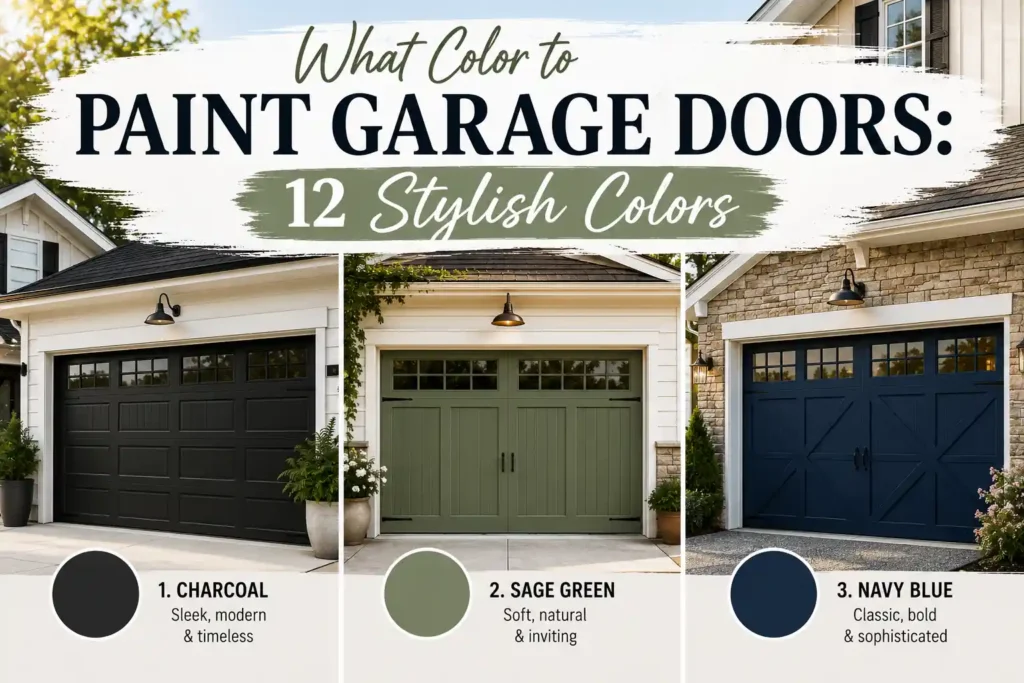
From timeless white to rich navy and earthy sage green, there are plenty of attractive options. These 12 garage door colors offer inspiration for different home styles, helping you find a shade that looks beautiful and feels right for your exterior.
Affiliate disclosure: As an Amazon Associate I earn from qualifying purchases.
Items to Buy
Before starting your project, make sure you have paint and supplies suitable for your garage door’s material. Wood, steel, aluminum, and vinyl may require different preparation methods and products.
- Exterior garage door paint
- Exterior bonding primer
- Paint roller and brush set
- Painter’s tape
- Sanding sponges
- Drop cloths
- Paint tray
How to Choose a Color That Complements Your Home
Before settling on a shade, take a look at your home’s permanent exterior features. The roof, siding, brickwork, stone, and window frames can all influence which garage door colors look best.
Consider the siding. A garage door that closely matches the siding creates a coordinated appearance. For example, warm beige works beautifully with cream walls, while charcoal gray provides an attractive contrast against white siding.
Look at the roof. A brown roof often pairs naturally with beige, taupe, and chocolate brown. Gray or black roofing gives you more flexibility with cool neutrals, navy, and darker greens.
Think about your home’s style. Traditional homes often look lovely with white, taupe, or warm gray. Contemporary properties can carry charcoal, black, or deep navy particularly well. Farmhouse and cottage exteriors often suit sage green, cream, and muted blue.
Decide how noticeable you want the garage to be. If your garage door takes up much of the front of your house, a shade close to the siding can help it blend in. If you want it to become a design feature, choose a complementary color with more contrast.
Remember the front door. Your garage door and front door do not have to match. They simply need to work together. A white garage door, for instance, can look lovely alongside a navy or natural wood front door.
What Color to Paint Garage Doors: 12 Stylish Colors
1. Classic White
White is one of the easiest garage door colors to coordinate with different exterior styles. It creates a fresh, clean appearance and looks particularly attractive on traditional houses, cottages, farmhouses, and homes with dark siding. If your exterior already has white window frames or trim, a white garage door can help create a seamless finish.
You can choose warm white for cream siding, beige stone, and natural wood details. A cooler white works nicely with gray siding and black accents. Although white can show dirt more easily than some darker shades, it remains a versatile option that rarely feels out of place.
2. Charcoal Gray
Charcoal gray gives a garage door a modern, sophisticated appearance without the intensity of solid black. It looks especially attractive against white, pale gray, and light beige exteriors. This shade is a natural fit for contemporary houses with dark window frames, simple landscaping, and clean architectural lines.
For a balanced exterior, pair charcoal with lighter siding or contrasting trim. If your home already has a dark roof and stonework, consider a slightly softer gray so the garage does not feel too heavy. A warm charcoal can also complement brown or beige exterior details.
3. Warm Beige
Warm beige is a lovely choice if you prefer a subtle, welcoming exterior. It works well with cream siding, tan brick, brown roofing, and natural stone. Unlike bright white, beige creates a softer appearance and can make a large garage door feel less prominent.
Choose a shade that complements the undertones of your home’s existing materials. A sandy beige looks beautiful with warm brick and wood, while a more neutral beige can work with a wider range of exterior colors. This is a particularly good option for traditional, rustic, and farmhouse-style homes.
4. Matte Black
A black garage door can make a strong design statement. It creates striking contrast against white siding, pale brick, light stucco, and other bright exterior finishes. Black also works well when your home already has dark window frames, exterior lights, railings, or other black details.
If you like a modern, dramatic appearance, this shade is worth considering. However, dark paint can absorb more heat, so check your garage door manufacturer’s recommendations before using it, especially on vinyl or insulated doors. Charcoal is a good alternative if you want a similar appearance with slightly less intensity.
5. Sage Green
Sage green brings a soft, natural touch to a home’s exterior. Its muted appearance makes it easier to coordinate than brighter greens, and it pairs beautifully with cream, warm white, beige, stone, and natural wood.
This shade is particularly attractive on cottage-style and farmhouse homes. It can also complement a property surrounded by trees, gardens, or other greenery. Choose a grayish sage for a subtle look or a slightly warmer green if you want the garage door to feel more inviting.
Navy blue is a timeless alternative to black and charcoal. It adds depth and character while keeping the exterior looking refined. Against white siding and trim, navy creates a crisp contrast that works especially well on coastal, traditional, and modern homes.
You can also use navy with light gray walls, pale stone, or certain brick exteriors. If your front door is already colorful, choose a navy shade that complements it rather than competing for attention. A muted navy is often easier to coordinate than a brighter blue.
7. Greige
Greige combines the warmth of beige with the understated appearance of gray. This makes it a flexible choice for homes with mixed exterior materials, such as cream siding, gray roofing, natural stone, and white trim.
One of its biggest advantages is its versatility. A warmer greige can complement brown roofs and tan brick, while a cooler version works nicely with gray siding and dark accents. Before purchasing paint, compare samples with your exterior in natural light because greige shades can look quite different depending on their undertones.
8. Chocolate Brown
Chocolate brown creates a warm, rich appearance that works beautifully with earthy exterior palettes. It complements cream siding, tan walls, natural stone, red brick, and homes with wood accents. If your roof or exterior features already contain brown tones, this shade can help bring everything together.
A deep chocolate color gives you some of the drama of black without looking quite as sharp. Medium brown is a softer alternative if you want the garage door to blend more naturally into the exterior. Make sure the chosen shade works with your roof and brick undertones.
9. Light Gray
Light gray is a practical choice when you want something neutral but not as bright as white. It creates a clean appearance and works well with white siding, blue exteriors, darker trim, and contemporary architectural styles.
A cool light gray can complement blue-gray roofing and black window frames. A warmer gray may be more suitable for homes with beige siding or natural stone. This shade is particularly useful when you want the garage door to look coordinated without becoming the main feature of your home’s exterior.
10. Muted Blue
Muted blue introduces color without making the garage door look overly bold. Dusty blue, slate blue, and soft blue-gray are attractive choices for cottage, coastal, and traditional homes. They look lovely alongside white trim, cream siding, pale gray walls, and natural wood.
For a more polished result, keep the surrounding exterior details simple. Muted blue can be enough to add personality, especially if your garage door has decorative panels or windows. If your home already has blue shutters or a colorful front door, choose a shade that complements those features.
11. Deep Forest Green
Deep forest green is a beautiful option for homeowners who want something distinctive but still grounded in nature. It looks especially attractive with warm white, cream, tan brick, stone, and timber details. The rich color can give traditional and farmhouse-style homes a more individual appearance.
If your property has mature trees or a landscaped garden, forest green can create a pleasing connection with the surroundings. For a balanced look, use it alongside lighter exterior surfaces. If your home is already dark, a softer green may be a better choice.
12. Taupe
Taupe is a refined neutral that combines gray and brown undertones. It is an excellent choice if you want something warmer than traditional gray but more understated than beige. Taupe works well with cream siding, stonework, brown roofing, and natural wood features.
You can choose a light taupe for a subtle, blended appearance or a deeper shade for more contrast. It is particularly useful on homes with several exterior materials because it can help connect different colors without making the garage door stand out too much.
Should Your Garage Door Match Your House or Trim?
There is no single rule that every homeowner needs to follow. The best approach depends on the appearance you want.
- Match the siding: This creates a subtle, unified appearance and helps a large garage door blend into the house.
- Match the trim: This can create a neat, coordinated look, especially when the trim is a prominent architectural feature.
- Choose a complementary color: A contrasting shade adds personality and can make the garage door an attractive exterior feature.
If your garage occupies most of the front of your house, matching the siding is often a good way to avoid making it dominate the exterior. If the garage is smaller or set back from the main entrance, a contrasting color may work beautifully.
Which Paint Finish Looks Best on a Garage Door?
The finish affects how the paint looks in daylight and how easily the surface can be cleaned.
Satin: Satin has a gentle sheen that looks attractive without being overly shiny. It is a useful option if you want a softer appearance.
Semi-gloss: Semi-gloss offers more shine and is generally easier to wipe clean. It can give a properly prepared garage door a crisp, finished appearance.
Gloss: Gloss creates a reflective surface that makes colors look more noticeable. However, it can highlight dents, scratches, and other imperfections.
For most projects, satin or semi-gloss is a sensible starting point. Always check the paint manufacturer’s instructions to confirm that the finish is suitable for your garage door material and exterior conditions.
Tips for Testing Colors Before Painting
A paint color can look very different on a small sample card than it does across a full garage door. Before making your final choice, take time to see how the shade works with your home’s exterior.
- Choose a few options: Narrow your selection to two or three shades that complement your siding and roof.
- Test in natural light: View the samples in both sunlight and shade. Some colors look warmer in direct sunlight and cooler in shaded areas.
- Compare with permanent features: Hold the samples beside your brick, siding, trim, and other exterior materials.
- Step back from the house: Look at the samples from the street to get a better idea of how the full garage door will appear.
- Check the material requirements: Make sure the paint and color are approved for your specific garage door, especially if it is vinyl or insulated.
These simple checks can help you avoid choosing a shade that looks attractive on a sample but feels wrong once the entire door is painted.
Garage Door Painting Mistakes to Avoid
A good color choice is only part of a successful project. Surface preparation and suitable paint products are just as important.
- Ignoring the existing exterior palette: A beautiful color may clash with your roof or brick if you choose it without considering the rest of the house.
- Using the wrong paint: Not every exterior paint is suitable for every garage door material.
- Skipping surface preparation: Dirt, grease, rust, and peeling paint can interfere with adhesion.
- Applying thick coats: Several thin, even coats usually create a smoother finish than one heavy application.
- Ignoring weather conditions: Rain, high humidity, extreme temperatures, and strong direct sunlight can affect the application and drying process.
- Choosing dark paint without checking manufacturer guidance: Dark shades can increase surface temperatures and may be unsuitable for certain door materials.
- Painting moving parts: Avoid coating hinges, tracks, rollers, weather seals, and other moving or functional components unless the manufacturer specifically allows it.
Read the product instructions carefully and allow each coat to dry as directed before applying another.
Frequently Asked Questions
What is the most popular garage door color?
White, beige, gray, and other neutral shades are widely used because they coordinate with many exterior styles. Charcoal, black, navy, and green are also attractive options for homeowners who prefer a little more contrast.
Should a garage door be lighter or darker than the house?
Either can look good. A lighter door can brighten a darker exterior, while a darker shade creates contrast against pale siding. Consider your roof, trim, and overall exterior palette before choosing.
Should the garage door match the front door?
No. They can match, but they do not have to. Complementary colors often create a more interesting exterior. For example, a white garage door can look lovely with a navy front door.
Is white a good color for garage doors?
Yes. White is versatile and suits many home styles. It creates a bright, clean appearance, although it may show dirt and marks more easily than some darker shades.
Can I paint my garage door black?
Possibly, but check the manufacturer’s instructions first. Dark paint absorbs more heat, and some vinyl or insulated garage doors have restrictions on darker colors. Use only a compatible paint system.
What is the best neutral color for a garage door?
Greige, taupe, warm beige, and light gray are excellent neutral options. The right choice depends on whether your home’s exterior has warmer or cooler undertones.
How often should a garage door be repainted?
There is no universal repainting schedule. Paint quality, preparation, material, weather exposure, and maintenance all affect how long the finish lasts. Inspect the door regularly and repaint when the coating begins to deteriorate.
Final Words
The right garage door color can make your home’s exterior look more balanced, welcoming, and complete. Classic white, warm beige, and light gray are dependable choices, while charcoal, navy, sage green, and forest green offer more personality. Compare a few samples with your siding, roof, and trim before making a decision, and always check the paint requirements for your door material. A thoughtful color choice and proper preparation can give your garage door a fresh appearance that complements your home.
Helpful Resources
- Amarr – Painting Your Garage Doors – Manufacturer guidance on painting different garage door materials.
- Benjamin Moore – Painting Garage Doors – Advice on selecting paint and preparing a garage door for painting.