
The best HVLP paint sprayers can help you achieve smooth, even finishes on cabinets, furniture, doors, trim, and other surfaces without relying entirely on brushes or rollers. HVLP stands for High Volume Low Pressure, a spraying method that uses a high volume of air at relatively low pressure to atomize paint. This design can help reduce overspray and provide better control for detailed finishing work.
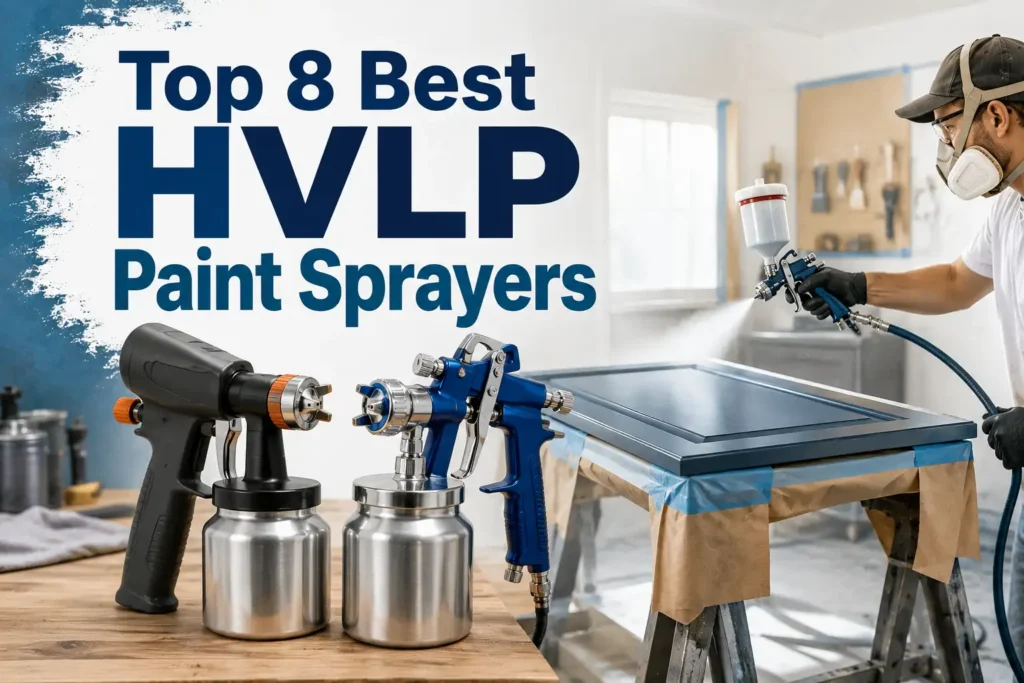
Whether you’re refinishing kitchen cabinets, staining outdoor furniture, painting interior doors, or tackling smaller home improvement projects, choosing the right sprayer makes a difference. Some models are compact handheld units, while others use a separate turbine and hose to make extended spraying more comfortable. Below, you’ll find eight HVLP paint sprayers worth comparing, along with their advantages, limitations, and buying considerations.
Affiliate disclosure: As an Amazon Associate I earn from qualifying purchases.
Top Picks: 8 HVLP Paint Sprayers
- Wagner Spraytech Control Spray Max HVLP Paint Sprayer – Best overall for furniture, doors, and trim
- HomeRight Super Finish Max HVLP Paint Sprayer – Best budget-friendly handheld option
- Fuji Spray 2203G Semi-PRO 2 Gravity HVLP Spray System – Best premium turbine system
- Wagner FLEXiO 595 Handheld HVLP Paint Sprayer – Best for larger DIY painting projects
- Earlex Spray Station 5500 HVLP Paint Sprayer – Best for detailed woodworking and furniture
- Wagner FLEXiO 5000 Stationary HVLP Paint Sprayer – Best for cabinets and home projects
- NEU MASTER N3140 HVLP Paint Sprayer – Best for beginners
- VONFORN VF803 HVLP Paint Sprayer – Best for versatile household projects
Comparison Table: HVLP Paint Sprayers
| Product Name | Best For | Check Price |
|---|---|---|
| Wagner Control Spray Max | Furniture, doors, and trim | Check on Amazon |
| HomeRight Super Finish Max | Budget-friendly DIY projects | Check on Amazon |
| Fuji Spray 2203G Semi-PRO 2 | Premium fine-finish spraying | Check on Amazon |
| Wagner FLEXiO 595 | Larger household painting jobs | Check on Amazon |
| Earlex Spray Station 5500 | Woodworking and furniture | Check on Amazon |
| Wagner FLEXiO 5000 | Cabinets and home projects | Check on Amazon |
| NEU MASTER N3140 | Beginners and small projects | Check on Amazon |
| VONFORN VF803 | Versatile household painting | Check on Amazon |
Top 8 Best HVLP Paint Sprayers Reviews
1. Wagner Spraytech Control Spray Max HVLP Paint Sprayer – Best Overall
The Wagner Spraytech Control Spray Max is a versatile option for homeowners who want a turbine-powered HVLP sprayer for furniture, cabinets, doors, trim, and other household projects. Its separate turbine base connects to the spray gun through a hose, keeping the motor weight off your hand while you work.
One of its useful features is adjustable material flow, which lets you control how much coating reaches the surface. It also offers different spray patterns, making it easier to adapt the application to narrow trim, wider boards, and larger furniture panels.
The Control Spray Max is designed for thinner materials such as stains, sealers, and certain paints prepared according to the manufacturer’s instructions. It can be a practical choice for projects where finish control matters more than covering an entire house quickly.
What makes it appealing
- Turbine-powered HVLP spraying system
- Separate base reduces weight in the spray gun
- Adjustable material flow
- Multiple spray pattern options
- Useful for furniture, doors, and trim
- Suitable for compatible stains, sealers, and paints
Things to consider
This model may require thinning for certain latex paints. Check the viscosity limits and material instructions before spraying. Its coverage speed is also different from that of a high-production airless sprayer, so it may not be the best choice for painting several large rooms.
Best for: Homeowners who want an adaptable HVLP system for furniture, doors, trim, and general finishing projects.
2. HomeRight Super Finish Max HVLP Paint Sprayer – Best Budget-Friendly Handheld Option
The HomeRight Super Finish Max is a popular handheld HVLP sprayer for smaller home improvement and refinishing projects. Its self-contained design makes it convenient for users who do not want a separate turbine base, long air hose, or compressor setup.
One of its main advantages is the selection of interchangeable brass spray tips. Different tip sizes can help accommodate compatible materials with different viscosities, including thinner stains and some thicker paints when properly prepared. It also offers adjustable spray patterns and material flow, giving users some control over how the coating is applied.
This sprayer is useful for projects such as painting chairs, bookshelves, cabinets, fences, shutters, and other household surfaces. Its relatively accessible design also makes it appealing to DIY users who are learning how to spray finishes.
What makes it appealing
- Handheld HVLP design
- Interchangeable brass spray tips
- Adjustable material flow
- Multiple spray pattern options
- Useful for furniture and cabinet refinishing
- Convenient for occasional household projects
Things to consider
The motor and paint container are carried together, which can become tiring during longer sessions. Some materials may also need thinning and straining before spraying. Clean the nozzle and material passages promptly after use to prevent dried paint from affecting performance.
Best for: DIY users who want an affordable handheld sprayer for furniture, cabinets, fences, and smaller projects.
3. Fuji Spray 2203G Semi-PRO 2 Gravity HVLP Spray System – Best Premium Turbine System
The Fuji Spray 2203G Semi-PRO 2 is a premium option for users who want a more dedicated finishing system. Unlike compact handheld sprayers, it uses a separate turbine unit and a professional-style gravity-feed spray gun.
The gravity-feed arrangement places the paint cup above the gun, allowing material to flow toward the nozzle. This design is convenient for controlled spraying and can be useful when working on furniture, cabinets, doors, and detailed woodwork.
Its two-stage turbine provides the air supply, so a separate compressor is not needed. The system also includes a hose and spray gun designed for finishing applications. This setup can be particularly appealing to woodworkers and serious DIY users who frequently spray clear finishes, stains, and compatible paints.
What makes it appealing
- Two-stage turbine-powered HVLP system
- Gravity-feed spray gun
- Separate turbine keeps motor weight off the hand
- Suitable for detailed finishing projects
- Useful for furniture, cabinetry, and woodworking
- Does not require a separate air compressor
Things to consider
This is a more expensive investment than a basic handheld sprayer. It may also require material adjustment depending on the coating being used. Check the recommended viscosity, air-cap configuration, and application instructions before purchasing.
Best for: Serious DIY painters, woodworkers, and furniture finishers who want a dedicated turbine HVLP system.
4. Wagner FLEXiO 595 Handheld HVLP Paint Sprayer – Best for Larger DIY Painting Projects
The Wagner FLEXiO 595 is a handheld electric HVLP sprayer designed for a range of household painting tasks. It is worth considering when you need something more versatile than a small detail sprayer but do not want to invest in a premium turbine system.
One of its main features is the X-Boost turbine, which provides the air needed for spraying. The system includes an iSpray nozzle for broader coverage and a detail-finish nozzle for smaller or more precise applications, depending on the package.
The FLEXiO 595 also offers adjustable power and material flow settings. These controls help users adapt the spray output to different surfaces and materials. It can be useful for furniture, doors, fences, and selected interior or exterior painting jobs.
What makes it appealing
- Handheld electric HVLP design
- X-Boost turbine technology
- iSpray nozzle for broader coverage
- Detail-finish nozzle for smaller work
- Adjustable power and material flow
- Suitable for a variety of household projects
Things to consider
The motor, paint container, and spray assembly are held together, so the unit can feel heavy during extended use. Larger projects may require frequent refilling and cleaning. Confirm the material compatibility of the selected nozzle and follow the manufacturer’s thinning guidance.
Best for: DIY homeowners who want one handheld sprayer for a variety of household painting and refinishing tasks.
5. Earlex Spray Station 5500 HVLP Paint Sprayer – Best for Detailed Woodworking and Furniture
The Earlex Spray Station 5500 is worth considering for woodworking and finishing projects where control and a consistent application are important. It uses a separate turbine unit connected to a spray gun through a hose, reducing the weight you need to hold while spraying.
This type of arrangement can be convenient when refinishing furniture, applying stains, coating cabinets, and working on detailed wood projects. A separate spray station also makes it easier to move around a workpiece without carrying the motor in your hand.
The system is designed for compatible finishing materials, including stains and clear coatings. Depending on the material and setup, you may need to adjust viscosity and select the appropriate nozzle configuration.
What makes it appealing
- Separate turbine and spray-gun arrangement
- Suitable for woodworking and furniture finishing
- Convenient for longer spraying sessions
- Designed for compatible stains and coatings
- Useful for cabinets, furniture, and detailed surfaces
- Reduces the weight carried in the hand
Things to consider
Check current availability and the exact package contents because older and newer versions may differ. The Spray Station 5500 is not the same product as every Earlex or Wagner-branded finishing system. Confirm that the model includes the spray gun and accessories you need.
Best for: Woodworkers and DIY finishers who regularly apply stains, sealers, and compatible coatings to furniture and cabinetry.
6. Wagner FLEXiO 5000 Stationary HVLP Paint Sprayer – Best for Cabinets and Home Projects
The Wagner FLEXiO 5000 is a stationary HVLP sprayer designed to make household painting more manageable. Instead of carrying the motor in your hand, you keep the base unit on the floor and use a hose to connect it to the spray gun.
This arrangement can be useful when painting multiple cabinet doors, furniture pieces, interior doors, and other surfaces that require repeated spraying. Keeping the motor separate may also make the spray gun easier to maneuver around edges and detailed areas.
The FLEXiO 5000 is part of Wagner’s FLEXiO range and is designed for different types of household coatings, depending on the selected nozzle and preparation. Its adjustable settings help users adapt the spray output to the project.
What makes it appealing
- Stationary turbine base
- Hose-connected spray gun
- Convenient for repeated cabinet and furniture work
- Adjustable spray settings
- Designed for compatible household paints and stains
- Less motor weight in the hand
Things to consider
Do not assume that every paint can be sprayed without preparation. Check the instructions for the selected material and nozzle. Also, compare the package contents carefully because the included spray attachments can differ between product versions.
Best for: Homeowners who want a stationary HVLP setup for cabinet doors, furniture, and repeated indoor painting projects.
7. NEU MASTER N3140 HVLP Paint Sprayer – Best for Beginners
The NEU MASTER N3140 is a compact electric HVLP sprayer that may appeal to beginners who want a straightforward tool for occasional household painting. Its handheld format makes it convenient to store and carry between small projects.
It is designed for applications such as furniture, doors, fences, and other compatible surfaces. The adjustable spray pattern and material flow controls can help users adapt the output to different shapes and project sizes.
For someone learning spray techniques, a sprayer in this category can be a useful starting point. You can practice controlling the distance, speed, and overlap on scrap material before moving on to more visible surfaces.
What makes it appealing
- Compact handheld design
- Electric HVLP operation
- Adjustable spray pattern
- Material flow control
- Suitable for selected DIY painting projects
- Convenient for occasional use
Things to consider
Check the exact N3140 package for nozzle sizes, container capacity, and included cleaning accessories. As with other compact sprayers, thicker paints may need preparation or thinning. Do not assume that it can spray every latex paint directly from the container.
Best for: Beginners who want a compact HVLP sprayer for furniture, doors, and smaller household projects.
8. VONFORN VF803 HVLP Paint Sprayer – Best for Versatile Household Projects
The VONFORN VF803 is a multi-purpose electric HVLP sprayer designed for a variety of household painting tasks. It is worth comparing if you want a sprayer for furniture, cabinets, doors, fences, and other DIY projects without purchasing a larger professional system.
The VF803 is commonly offered with multiple nozzle sizes and spray pattern options. This flexibility can help users adjust the sprayer to compatible materials and different workpiece shapes. Some packages also include cleaning accessories and attachments intended to make maintenance easier.
Its handheld design keeps the equipment relatively compact, making it suitable for homeowners who need a sprayer for occasional use rather than continuous professional production.
What makes it appealing
- Electric HVLP handheld design
- Multiple nozzle sizes in selected packages
- Different spray pattern options
- Adjustable material flow
- Useful for furniture, cabinets, doors, and fences
- Cleaning accessories may be included
Things to consider
The included nozzles and accessories can vary by package. Check the product listing for the exact specifications and material recommendations. Prepare thicker coatings as instructed, and clean the sprayer thoroughly after every use.
Best for: DIY homeowners who want a versatile electric sprayer for a range of smaller household painting projects.
How to Choose the Best HVLP Paint Sprayer
The best sprayer depends on the materials you plan to apply, the size of your project, and the type of finish you want. Consider the following factors before buying.
1. Choose the Right Sprayer Design
HVLP paint sprayers are available in different designs, and each has advantages.
Handheld HVLP sprayers
These units combine the motor, paint container, and spray gun in one assembly. They are convenient for smaller jobs because they are easy to carry and set up.
Turbine HVLP systems
Turbine systems use a separate base unit connected to the spray gun through a hose. They can be more comfortable during longer projects because you do not carry the motor in your hand.
Compressor-powered HVLP spray guns
These spray guns use an external air compressor. They are common in automotive and professional finishing environments, but you need a compressor that supplies the required airflow.
Choose a handheld model for convenience, a turbine system for repeated finishing work, or a compressor-powered gun if you already have suitable air equipment.
2. Check Paint Compatibility
Not every HVLP sprayer can handle every type of paint. Some models are designed mainly for stains and thin finishes, while others can spray certain latex paints after suitable preparation.
Before purchasing, check whether the sprayer supports your intended material:
- Water-based latex paint
- Acrylic paint
- Wood stain
- Varnish
- Polyurethane
- Clear sealer
- Compatible primers
Always follow the manufacturer’s material recommendations. Do not assume that a sprayer can handle thick paint simply because it has a powerful motor.
3. Consider Nozzle Sizes
The nozzle or spray tip affects how the material is delivered and atomized. Different coatings may require different nozzle sizes.
| Material | General Nozzle Consideration |
|---|---|
| Thin wood stain | Smaller nozzle may be suitable |
| Clear sealer | Fine-finish nozzle may be appropriate |
| Varnish | Follow the coating’s viscosity requirements |
| Latex paint | Larger or specialized nozzle may be needed |
| Thicker primer | Check whether the sprayer supports the material |
The correct size varies by sprayer and coating. Use the nozzle recommendations in the manufacturer’s manual rather than treating these categories as universal specifications.
4. Look for Adjustable Spray Patterns
A good HVLP sprayer should offer some way to adjust the spray pattern. Common options include horizontal, vertical, and round patterns.
- Horizontal pattern: Useful for spraying vertical surfaces with consistent up-and-down passes.
- Vertical pattern: Useful for spraying horizontal surfaces with side-to-side passes.
- Round pattern: Helpful for smaller areas and detailed work.
Adjustable patterns make it easier to work on furniture edges, cabinet doors, trim, and larger panels.
5. Compare Material Flow Controls
Material flow control determines how much paint reaches the surface. It is useful because a narrow trim piece does not need the same material output as a wide cabinet panel.
Look for a sprayer with accessible flow adjustment. Start with a lower setting on a test surface and increase the output gradually until you achieve suitable coverage without runs or excessive overspray.
6. Consider Container Capacity
The paint container determines how often you need to stop and refill.
A smaller container can be convenient for detailed work and smaller furniture pieces. A larger container may be more practical for fences, cabinet doors, and other projects involving repeated spraying.
However, a larger container can make a handheld unit heavier. Consider both capacity and comfort before purchasing.
7. Check Cleaning and Maintenance Requirements
HVLP sprayers need regular cleaning because dried paint can block the nozzle, air cap, and material passages.
Look for models with removable components and accessible cleaning points. Some kits include brushes and cleaning tools, but you should still follow the manufacturer’s cleaning instructions.
A sprayer that is easy to disassemble and clean can save time after every project.
8. Consider Hose Length and Comfort
If you choose a turbine system, check the hose length and how easily the spray gun moves around the work area. A longer hose can make it easier to work on large furniture or several cabinet doors without constantly moving the turbine base.
For handheld sprayers, consider the combined weight of the motor and a full paint container. Comfort becomes more important during longer sessions.
HVLP vs. Airless Paint Sprayer: Which Is Better?
HVLP and airless sprayers are designed for different types of painting work. Neither is automatically better for every project.
| Feature | HVLP Paint Sprayer | Airless Paint Sprayer |
|---|---|---|
| Application method | High-volume, low-pressure air atomization | High-pressure fluid atomization |
| Finish control | Useful for detailed finishing | Better suited to faster broad coverage |
| Overspray | Often more manageable | Can be substantial without proper technique |
| Common projects | Cabinets, furniture, doors, trim | Walls, ceilings, fences, large exterior surfaces |
| Paint preparation | Some materials need thinning | Depends on the model and coating |
| Typical user | DIY finishers and woodworkers | DIY homeowners and professional painters |
Choose HVLP when you want controlled application on furniture, cabinets, trim, and detailed surfaces. Consider an airless sprayer when covering large walls, ceilings, or exterior areas quickly is more important.
What Can You Paint With an HVLP Sprayer?
HVLP sprayers are useful for many household and woodworking applications, provided the material is compatible with the machine.
Cabinets
An HVLP sprayer can help create a smooth-looking finish on cabinet doors, drawer fronts, and frames. Remove hardware where possible and spray the pieces in a clean, controlled area.
Furniture
Chairs, tables, bookshelves, and dressers are common HVLP projects. A suitable nozzle and careful application can help reduce visible brush marks.
Interior Doors
Panel doors and detailed door designs can be time-consuming to paint with a brush. Spraying can help coat recessed sections and edges more evenly.
Wood Trim
HVLP equipment is useful for baseboards, decorative trim, and smaller wood details. Use a suitable spray pattern and protect nearby walls and flooring.
Fences
Some HVLP sprayers can handle compatible fence stains and coatings. However, a handheld sprayer may require frequent refilling for a large fence, so consider the project size before choosing one.
Outdoor Furniture
An HVLP sprayer can apply compatible stains, paints, and protective finishes to outdoor chairs, benches, and tables. Make sure the coating is intended for exterior exposure.
How to Use an HVLP Paint Sprayer
Using an HVLP sprayer correctly takes practice. The following general steps can help you prepare for a more controlled application.
Step 1: Prepare the Surface
Clean the surface to remove dust, grease, loose paint, and other contaminants. Sand rough areas where necessary and repair damaged sections before spraying.
A smooth, clean surface helps the coating adhere more consistently.
Step 2: Protect the Surrounding Area
Cover nearby floors, walls, furniture, and objects with suitable drop cloths or masking materials. Even HVLP sprayers can produce overspray, so do not assume that low pressure eliminates the need for protection.
Step 3: Prepare the Paint
Stir the paint thoroughly and strain it if recommended. Check the sprayer manual to determine whether the material needs thinning.
Use only the correct thinner or reducer specified by the coating manufacturer. Do not add water or solvent without checking the product instructions.
Step 4: Select the Appropriate Nozzle
Choose the nozzle recommended for your paint and sprayer. Install it securely and confirm that the air cap and other components are correctly positioned.
Step 5: Adjust the Spray Pattern
Select a horizontal, vertical, or round pattern based on the shape of the surface. Adjust the material flow and power settings according to the manufacturer’s instructions.
Step 6: Test on Scrap Material
Before spraying your project, test the pattern on cardboard or a spare piece of material. Check for an even spray without large droplets, excessive overspray, or uneven coverage.
Adjust the settings gradually until the result looks consistent.
Step 7: Maintain a Consistent Distance
Hold the spray gun at the recommended distance from the surface. Keep it parallel to the workpiece and move your arm steadily.
Avoid swinging your wrist in an arc because this can create uneven coating thickness.
Step 8: Apply Thin, Overlapping Passes
Move the gun at a consistent speed and overlap each pass according to the sprayer instructions. Several controlled coats usually provide better results than one excessively heavy application.
Step 9: Allow Proper Drying Time
Follow the coating manufacturer’s instructions for flash time, recoat time, and curing. Temperature, humidity, and film thickness can affect drying.
Step 10: Clean the Sprayer Immediately
Empty the container and clean the sprayer according to the manufacturer’s instructions. Remove paint residue from the nozzle and other removable components before it dries.
Tips for Getting a Smooth Finish With an HVLP Sprayer
Practice Before Starting
Spraying technique affects the final appearance. Practice on scrap material until you can maintain a consistent distance, speed, and overlap.
Use the Correct Material Consistency
Paint that is too thick may not atomize properly, while material that is too thin can create runs or poor coverage. Follow the coating and sprayer instructions.
Keep the Spray Gun Moving
Start moving before pulling the trigger and release it before stopping your movement when the equipment’s operating method allows. This helps reduce excess paint at the beginning and end of a pass.
Avoid Heavy Coats
Applying too much material can cause sagging, runs, and uneven drying. Use controlled passes and follow the recommended number of coats.
Maintain a Clean Work Area
Dust can settle on wet paint and spoil the finish. Clean the work area and avoid spraying near fans, open dusty spaces, or active construction work.
Clean the Equipment After Every Use
Dried paint can restrict the nozzle and affect the spray pattern. Clean the sprayer immediately after use and store it according to the manufacturer’s instructions.
Common HVLP Paint Sprayer Mistakes to Avoid
Buying a Sprayer Without Checking Paint Compatibility
A small HVLP sprayer may not handle every thick coating. Check the material limits and nozzle recommendations before purchasing.
Skipping Paint Preparation
Unmixed or contaminated paint can cause inconsistent spraying. Stir and strain the material when required.
Holding the Gun Too Close
Spraying too close can deposit excessive material in one area, causing runs and uneven coverage. Follow the recommended distance.
Moving Too Slowly
Moving too slowly can create heavy coats and sagging. Maintain a steady speed and overlap each pass consistently.
Ignoring Overspray Protection
HVLP reduces overspray compared with some conventional spraying methods, but paint particles can still travel beyond the workpiece. Mask surrounding areas and use suitable protective equipment.
Delaying Cleanup
Leaving paint inside the sprayer can clog the nozzle and damage components. Clean the machine as soon as the project is finished.
Frequently Asked Questions
What is the best HVLP paint sprayer?
The Wagner Spraytech Control Spray Max is a strong overall option for furniture, doors, and trim. HomeRight Super Finish Max is worth considering for budget-conscious DIY users, while the Fuji Spray 2203G Semi-PRO 2 is a premium choice for frequent finishing work.
What does HVLP mean in a paint sprayer?
HVLP means High Volume Low Pressure. It describes a spraying system that uses a relatively high volume of air at low pressure to atomize coating material. This can provide controlled application and help reduce overspray compared with conventional high-pressure spray guns.
Are HVLP paint sprayers good for cabinets?
Yes. HVLP sprayers are often useful for cabinet doors, drawer fronts, and other detailed surfaces. Choose a model that supports your cabinet paint and follow the manufacturer’s preparation and thinning instructions.
Can an HVLP sprayer spray latex paint?
Some HVLP sprayers can handle compatible latex paints, but others require thinning or are better suited to thinner materials. Check the sprayer’s viscosity limits and the paint manufacturer’s instructions before use.
Do HVLP paint sprayers need an air compressor?
Not all of them. Handheld electric HVLP sprayers and turbine systems generate their own air supply. Compressor-powered HVLP spray guns require an external compressor that meets the specified airflow requirements.
Is an HVLP sprayer better than an airless sprayer?
HVLP is often better suited to furniture, cabinets, trim, and detailed finishing. Airless sprayers are generally more practical for quickly covering large walls, ceilings, and exterior surfaces. Choose according to the size and type of your project.
Can I use an HVLP sprayer for wood stain?
Yes, many HVLP sprayers can apply compatible wood stains. Check the manufacturer’s recommendations for the correct nozzle, material preparation, and cleanup process.
How many coats should I apply with an HVLP sprayer?
The number of coats depends on the coating, surface, and desired finish. Many projects require multiple light coats, but always follow the product label for coverage, recoat intervals, and recommended film thickness.
How far should an HVLP sprayer be from the surface?
The correct distance varies by sprayer and coating. Follow the manufacturer’s instructions and test the spray pattern on scrap material before beginning the project.
Why is my HVLP sprayer spitting paint?
Spitting can result from dried paint in the nozzle, an improperly installed component, paint that is too thick, or an inconsistent material supply. Stop spraying, clean the relevant parts, check the assembly, and adjust the material according to the instructions.
How do I clean an HVLP paint sprayer?
Empty the paint container and use the cleaner recommended for the coating. Clean the container, nozzle, air cap, and removable material passages according to the manual. Do not leave paint inside the machine after use.
Can beginners use HVLP paint sprayers?
Yes. Many handheld HVLP models are designed with DIY users in mind. Beginners should practice on scrap material, learn the controls, and start with a manageable project before spraying cabinets or other important surfaces.
Are HVLP paint sprayers suitable for exterior projects?
Some models can apply compatible exterior paints and stains to fences, shutters, outdoor furniture, and other surfaces. Check the product’s material compatibility and remember that outdoor spraying requires suitable weather conditions and overspray protection.
Final Words
Choosing the best HVLP paint sprayers depends on the type of project, material compatibility, comfort, and finish quality you want. The Wagner Control Spray Max is a versatile option for general household finishing, HomeRight Super Finish Max offers an accessible handheld alternative, and the Fuji Spray 2203G Semi-PRO 2 is worth considering for more frequent furniture and woodworking projects.
Before buying, compare nozzle options, paint compatibility, cleaning requirements, and container capacity. Practice on a test surface, apply controlled coats, and clean the equipment after every use. Matching the sprayer to your materials and project size will help you achieve a more consistent finish.
Helpful Resources
- Wagner Spraytech: Paint Sprayer Support and Product Information – Manufacturer guidance for selecting, operating, and maintaining Wagner paint sprayers.
- U.S. Environmental Protection Agency: Spray Painting and Coating Safety – Information about indoor air quality and precautions relevant to painting and coating projects.
3 thoughts on “Top 8 Best HVLP Paint Sprayers Reviews for 2027”