
Learning how to draw diamonds is a fun way to practice geometric shapes, symmetry, perspective, shading, and reflections. Diamonds may look complicated because they contain many sharp facets, but beginners can create a convincing diamond by starting with a simple outline and gradually dividing it into smaller sections.
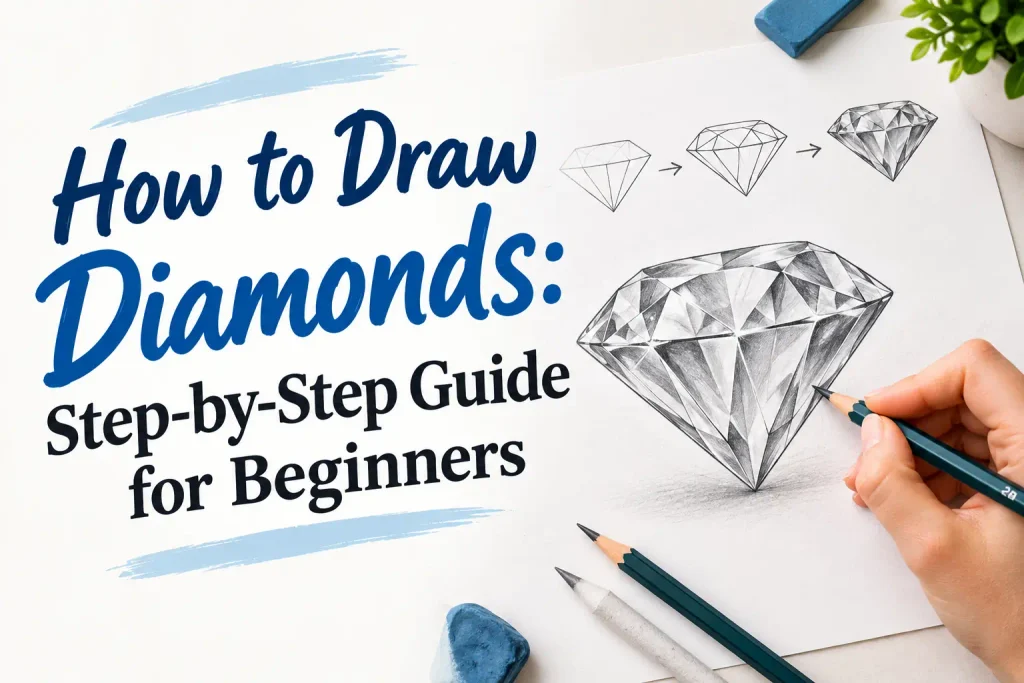
Whether you want to draw a simple diamond, a realistic gemstone, a sparkling diamond, or a collection of colorful jewels, this guide will help you understand the basic process. Start with the overall shape, add the facets, then finish with shading, highlights, and sparkling details.
Items to Buy
- Drawing Pencil
- Eraser
- Sketchbook
- Ruler
- Fine-Line Pen
- Colored Pencils
- Markers
- White Gel Pen
- Blending Pencil
- Pencil Sharpener
- Black Colored Pencil
Why Learn How to Draw Diamonds?
Diamonds are excellent drawing subjects because they help you understand how light interacts with geometric surfaces. Their sharp edges and flat facets make them useful for practicing symmetry and three-dimensional forms.
Drawing diamonds can also improve your shading skills. Each facet reflects light differently, so you can experiment with dark shadows, bright highlights, and strong contrast to make a flat drawing appear more realistic.
How to Draw Diamonds Step by Step
Step 1: Draw the Top Shape
Begin by lightly drawing a horizontal shape near the upper part of your page. A diamond is often drawn with a wide top section that represents the upper surface of the gemstone.
Create a slightly angled outline rather than making the shape perfectly flat. Keep your lines light because you may need to adjust the proportions later.
Step 2: Draw the Outer Diamond Outline
From the left and right sides of the top shape, draw angled lines downward toward a point near the bottom.
The overall outline should resemble a wide gemstone with a pointed lower section. Try to keep both sides balanced, but do not worry if the drawing is not perfectly symmetrical at first.
Step 3: Add a Center Guideline
Draw a light vertical line through the center of the diamond. This guideline will help you keep the left and right sides aligned.
You can also add a light horizontal guideline across the widest part of the gemstone. These construction lines will make it easier to place the facets accurately.
Step 4: Divide the Top into Facets
Now divide the upper section of the diamond into several geometric shapes. Draw angled lines connecting the center and outer edges.
These sections represent the top facets that catch the light. Keep the shapes relatively simple for a beginner drawing and avoid adding too many tiny sections.
Step 5: Draw the Middle Facets
Add additional angled lines between the upper section and the lower pointed portion.
These facets should follow the overall structure of the gemstone. Try to create a balanced pattern so the diamond looks solid and symmetrical.
Step 6: Create the Lower Facets
Divide the lower half of the diamond into several triangular sections that lead toward the bottom point.
These triangles help create the three-dimensional appearance of the gemstone. Keep the lines clean and make sure they connect naturally with the facets above them.
Step 7: Refine the Diamond Outline
Look over the entire shape and adjust any lines that appear uneven. Strengthen the outer edges and remove unnecessary construction marks.
At this stage, your diamond should have a clear geometric structure. Make sure the bottom point is sharp and that the widest part of the diamond remains balanced.
Step 8: Add Shading
Choose an imaginary light source before shading. Make some facets lighter and others darker depending on their direction.
Avoid shading every section the same way. Strong differences between light and dark facets will make the diamond appear more reflective and three-dimensional.
Step 9: Add Highlights and Reflections
Use an eraser, white colored pencil, or white gel pen to add bright highlights to selected facets.
Place the strongest highlights on surfaces facing the light. Leave some facets darker to create contrast and give the gemstone a sparkling appearance.
Step 10: Add Sparkles and Final Details
Finish your diamond drawing by adding small sparkle shapes around it. A simple four-point star can create the appearance of reflected light.
You can also add a soft shadow underneath the diamond if it is resting on a surface. Erase any visible guidelines and strengthen selected edges to complete the drawing.
How to Draw a Simple Diamond
A simple diamond can be created using a wide upper shape and a pointed lower section. Divide the gemstone into only a few large facets.
Use two or three shades of pencil to create depth. Even a basic diamond can look three-dimensional when one side is lighter and the opposite side is darker.
How to Draw a Realistic Diamond
For a realistic diamond, pay close attention to the direction of the facets and the way they reflect light. Use a mixture of bright highlights, medium tones, and deep shadows.
Avoid making the shading too smooth. Diamonds often have sharp changes between different facets, so clear value differences can make the drawing appear more reflective.
How to Draw a Sparkling Diamond
Start with a completed diamond drawing and add several bright highlights. Use a white gel pen to create small reflective marks along sharp edges.
Draw a few sparkle stars around the gemstone, but do not add too many. A small number of bright sparkles against a clean background can make the diamond stand out more effectively.
How to Draw a Diamond Ring
Begin by drawing the circular band using two curved oval shapes. Keep the ring slightly angled if you want to create a three-dimensional perspective.
Add the diamond setting at the top of the band. Draw the gemstone using the same basic outline and facet technique, then add small metal details around the base.
How to Draw a Cartoon Diamond
A cartoon diamond can use simpler shapes and thicker outlines. Draw a wide upper section, pointed bottom, and only a few large facets.
You can add a smiling face, expressive eyes, or decorative sparkles. Bright colors and simple shading will create a playful illustration.
How to Draw a Blue Diamond
Start with the standard diamond structure and use pale blue for the lightest facets. Add medium blue to the central sections and deep blue to shadowed areas.
Leave a few sections almost white to represent strong reflections. You can also add small hints of turquoise or violet for additional depth.
How to Draw a Pink Diamond
Use pale pink for the brightest facets and gradually add deeper pink or rose tones to the shadowed areas.
Keep some edges very light to create a polished appearance. A small amount of purple or red shading can add more depth without making the gemstone look flat.
How to Draw Diamonds with Colored Pencils
Colored pencils are useful for layering subtle tones across each facet. Begin with light pressure and gradually build stronger colors in the darker areas.
Use a white pencil or gel pen near the end to restore bright highlights. Keeping the edges between some facets sharp will help preserve the gemstone’s geometric appearance.
Easy Diamond Drawing Ideas
Once you understand the basic shape, try these creative ideas:
- Simple diamond
- Sparkling diamond
- Realistic diamond
- Blue diamond
- Pink diamond
- Purple diamond
- Diamond ring
- Diamond necklace
- Cartoon diamond
- Diamond collection
- Glowing fantasy diamond
- Treasure chest with diamonds
How to Make Your Diamond Drawing Look More Realistic
The key to a realistic diamond is contrast. Use very light areas beside darker facets to create the appearance of reflected light.
Keep the edges sharp and geometric. Unlike soft objects such as flowers or clouds, diamonds usually look better when the facet boundaries remain clear and structured.
Common Mistakes to Avoid
One common mistake is making every facet the same size and shade. Diamonds look more interesting when different surfaces reflect light in different ways.
Another mistake is using too many dark outlines. Some edges can be light or almost invisible when they catch the light, so vary the strength of your lines.
Also avoid adding every detail before checking the basic symmetry. Establish the main outline first, then build the interior facets gradually.
Tips for Better Diamond Drawings
Use a ruler while learning if you want cleaner geometric edges. Once you understand the structure, you can practice drawing diamonds freehand.
Experiment with different light directions. Move the imaginary light source and change the placement of the highlights and shadows to see how the gemstone’s appearance changes.
Practice drawing several diamonds in different sizes and angles. This will help you become more comfortable with perspective and faceted forms.
FAQs
Is drawing a diamond easy for beginners?
Yes. A diamond can be simplified into a few geometric shapes and straight lines. Beginners can start with a basic faceted diamond before adding realistic shading.
What shape should I use to draw a diamond?
Start with a wide upper section and connect the sides to a pointed lower area. You can then divide the shape into smaller geometric facets.
How do I make a diamond look shiny?
Use strong contrast between bright highlights and darker facets. A white gel pen or white colored pencil can help create sharp reflective details.
How do I draw diamond facets?
Divide the main shape into triangles and angled geometric sections. Keep the lines connected and follow the overall structure of the gemstone.
What colors can I use for diamonds?
Diamonds can be drawn as clear white gemstones or in shades of blue, pink, purple, yellow, and other colors. Use lighter shades for highlights and darker shades for shadows.
How do I make my diamond look three-dimensional?
Give different facets different values. Some sections should be light, others medium, and a few should be dark depending on the direction of the light source.
Can I draw diamonds without a ruler?
Yes. A ruler can help beginners create straight lines, but you can also draw diamonds freehand. Light construction lines make it easier to correct the shape.
What should I draw after learning how to draw diamonds?
Try drawing gemstones, rings, necklaces, crowns, treasure chests, crystals, or complete jewelry designs. These subjects will help you practice geometric forms, reflections, and decorative details.
Final Words
Learning how to draw diamonds is a great way to practice geometric shapes, symmetry, shading, and reflections. Start with a simple gemstone outline, divide it into clear facets, and gradually add darker shadows and bright highlights.
With practice, you can experiment with realistic diamonds, colorful gemstones, sparkling jewelry, and imaginative fantasy designs. Keep your construction simple at first, focus on strong contrast, and have fun exploring different ways to make your diamonds shine.