
Choosing the best paint for trim and molding can make a big difference in how polished a room looks. The right paint creates a smooth finish, resists scuffs, and stands up to regular cleaning on baseboards, window trim, door frames, and decorative molding.
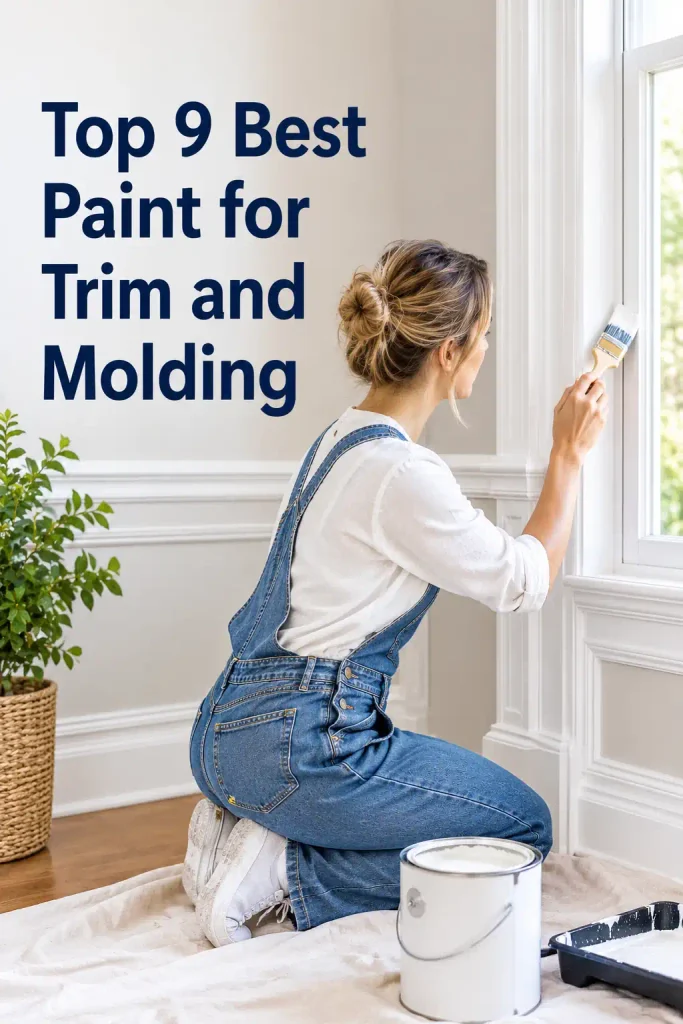
In this guide, we compare nine paint options for trim and molding, explain what each is best for, and share practical tips for getting a professional-looking result. Always check the current product label for the recommended surface, finish, and preparation requirements.
Top 9 Best Paint for Trim and Molding: Quick Comparison
| Product Name | Best For | Check Price |
|---|---|---|
| 1. Sherwin-Williams Emerald Urethane Trim Enamel | Durable finish for doors, baseboards, and molding | Check on Amazon |
| 2. Benjamin Moore ADVANCE Interior Paint | Smooth, furniture-like finish on interior wood trim | Check on Amazon |
| 3. BEHR PREMIUM Cabinet, Door & Trim Enamel | Washable finish for properly prepared trim and doors | Check on Amazon |
| 4. BEHR PREMIUM Urethane Alkyd Satin Enamel | Trim and molding needing a smooth enamel finish | Check on Amazon |
| 5. Rust-Oleum Painter’s Touch Ultra Cover | Small trim projects and decorative details where the label approves | Check on Amazon |
| 6. KILZ TRIBUTE Interior Paint | General interior repainting and compatible trim surfaces | Check on Amazon |
| 7. Glidden Premium Interior Paint | Budget-conscious projects on approved trim surfaces | Check on Amazon |
| 8. Valspar Cabinet & Furniture Paint | Small decorative trim and furniture-style projects, where suitable | Check on Amazon |
| 9. INSL-X Cabinet Coat Enamel | Selected interior trim and woodwork needing a durable enamel | Check on Amazon |
Affiliate disclosure: As an Amazon Associate I earn from qualifying purchases.
1. Sherwin-Williams Emerald Urethane Trim Enamel
Best for: Durable trim, baseboards, doors, and frequently cleaned molding
Sherwin-Williams Emerald Urethane Trim Enamel is a strong option to consider when you want a smooth, hard-wearing finish on interior woodwork. It is designed for trim, doors, and windows, and its water-based urethane-modified formula is intended to provide a durable finish while resisting yellowing compared with traditional oil-based coatings. The manufacturer also lists interior and exterior applications, subject to the specific product instructions.
Trim takes plenty of everyday wear. Baseboards get bumped by shoes and vacuum cleaners, door frames collect fingerprints, and window trim can need regular dusting or cleaning. A dedicated trim enamel is designed for these kinds of demands better than many ordinary wall paints.
The product is available in different sheens, including satin, semi-gloss, and gloss. Semi-gloss is a practical choice for many households because it gives trim a crisp appearance and is generally easy to wipe clean. Satin offers a softer look, while gloss emphasizes decorative profiles and architectural details.
Why consider it:
- Designed specifically for trim, doors, and windows.
- Durable finish for frequently used surfaces.
- Water-based formulation.
- Available in several sheen options.
- Suitable for selected interior and exterior projects according to the label.
Potential drawback: It may cost more than basic interior wall paint, and professional paint products can be less convenient to find through general online marketplaces.
Buying tip: Choose the sheen before ordering and verify the exact product’s surface recommendations. For previously painted trim, clean it thoroughly and prepare glossy or damaged areas according to the manufacturer’s directions.
2. Benjamin Moore ADVANCE Interior Paint
Best for: Smooth, refined finishes on interior wood trim
Benjamin Moore ADVANCE is a waterborne alkyd paint designed to deliver smooth flow and leveling with a hard, durable finish. It is worth considering when the appearance of the finished trim is especially important, such as on decorative molding, interior doors, and carefully detailed woodwork.
One common problem when painting trim is visible brush marks. Raised profiles, narrow edges, and decorative grooves can make an uneven finish more noticeable. A paint with good leveling characteristics can help create a more refined appearance when applied with the right brush or roller and in suitable conditions.
ADVANCE is intended for interior use in its interior formulation and is available in several sheens. Its longer recoat interval compared with some quick-drying paints means you should plan the project carefully and avoid rushing between coats. Follow the exact label for drying, recoat, and curing times.
Why consider it:
- Waterborne alkyd formula designed for smooth application.
- Cures to a hard, durable finish.
- Suitable for many approved interior wood surfaces.
- Available in satin, semi-gloss, and high-gloss finishes, depending on the product.
- Useful for detailed woodwork where finish quality matters.
Potential drawback: Recoat times can be longer than those of some water-based acrylic paints. Allow sufficient time for drying and curing before heavy use or cleaning.
Buying tip: Check whether the listing is for ADVANCE Interior Paint or a specific sheen and size. For a complete room, calculate the amount required for all trim, doors, and molding, and purchase enough paint from a consistent color batch when possible.
3. BEHR PREMIUM Cabinet, Door & Trim Enamel
Best for: Washable finishes on properly prepared trim and doors
BEHR PREMIUM Cabinet, Door & Trim Enamel is specifically marketed for surfaces such as cabinets, trim, doors, windows, and shutters. The manufacturer describes it as a urethane alkyd semi-gloss enamel intended to provide a durable, washable finish on properly prepared and primed surfaces.
This makes it a relevant option for homeowners refreshing baseboards, door casings, and other woodwork. A washable finish can be particularly useful in hallways, family rooms, and homes with children or pets, where trim may need to be wiped down more often.
The product can be applied by brush, roller, or airless spray according to the manufacturer’s directions. Proper preparation remains important: remove dust and grease, repair damaged areas, and use a suitable primer where required. Do not assume the paint can be applied directly to every old finish or substrate.
Why consider it:
- Specifically intended for doors and trim.
- Designed to provide a durable, washable finish.
- Can be applied with common painting tools or approved spray equipment.
- Useful for several interior woodwork projects.
- Available in a semi-gloss finish.
Potential drawback: The surface must be prepared correctly, and some substrates or repaired areas require separate priming. The exact product label should determine whether a particular surface is suitable.
Buying tip: Check the current label for approved surfaces, primer requirements, and the recommended number of coats. Allow the finish to cure before subjecting it to frequent wiping or abrasion.
4. BEHR PREMIUM Urethane Alkyd Satin Enamel
Best for: Trim and molding that need a smooth satin enamel finish
BEHR PREMIUM Urethane Alkyd Satin Enamel is another option to consider for trim and molding. The manufacturer lists doors, trim, molding, cabinetry, walls, railings, and other properly prepared surfaces among its intended uses. It is formulated to provide the flow and leveling associated with traditional oil-based paint while offering water-based cleanup.
A satin finish works well when you want a subtle sheen rather than the stronger reflection of semi-gloss or gloss. It can help create a softer appearance on baseboards and decorative molding while still giving the woodwork a defined finish.
This paint may be suitable for several types of properly prepared interior and exterior surfaces, depending on the exact product instructions. However, it is important to distinguish this product from BEHR’s separate Cabinet, Door & Trim enamel. Read the label and choose the specific formulation that best matches the job.
Why consider it:
- Designed for trim and molding among other approved surfaces.
- Urethane alkyd formulation.
- Satin finish for a softer sheen.
- Intended to provide good flow and leveling.
- Soap-and-water cleanup according to the manufacturer’s product information.
Potential drawback: A satin finish may not look as sharply defined as semi-gloss on traditional decorative molding. The product’s suitability depends on the substrate and preparation.
Buying tip: Compare satin and semi-gloss samples in your room’s lighting before choosing. Confirm the product name and current label rather than relying only on a marketplace title.
5. Rust-Oleum Painter’s Touch Ultra Cover
Best for: Small trim projects and decorative details where the label approves
Rust-Oleum Painter’s Touch Ultra Cover is a general-purpose paint range that may be useful for selected small decorative projects. It should not automatically be treated as the first choice for all interior baseboards or long runs of molding, but it can be worth considering for small details, craft-style woodwork, or trim components when the exact formulation is approved for the surface and intended location.
Spray versions can be helpful when a project includes narrow pieces or intricate shapes that are difficult to coat neatly with a brush. However, aerosol paint requires careful masking, ventilation, and control of overspray. For a full room of baseboards, a dedicated brush-on trim enamel is often more practical.
Before purchasing, check whether the specific version is intended for the surface you plan to paint. Product lines can include different finishes and formulations, so a general brand name alone does not confirm suitability for interior architectural trim.
Why consider it:
- Useful for certain small decorative projects.
- Spray versions can reach intricate details.
- Available in different colors and finishes, depending on the range.
- Convenient for compatible small-scale applications.
- Can be useful for touch-ups when the exact paint is appropriate.
Potential drawback: It may not be the most efficient or durable choice for extensive, high-contact interior trim. Spray application can also waste paint and create overspray.
Buying tip: For baseboards, door frames, and large molding projects, compare a dedicated trim enamel first. Use Painter’s Touch only when its current label clearly supports your intended surface and location.
6. KILZ TRIBUTE Interior Paint
Best for: General interior repainting on compatible trim surfaces
KILZ TRIBUTE Interior Paint is worth comparing when you are planning a broader interior repaint and want to use a product from the same general range across several compatible surfaces. However, a standard interior wall paint is not automatically the best finish for trim that receives frequent contact or cleaning.
Trim and molding usually benefit from a finish designed for durability and washability. Before selecting KILZ TRIBUTE for this purpose, verify that the exact product label permits application to the material and type of trim you have. If you are painting detailed woodwork, baseboards, or door casings, compare it with dedicated trim enamels.
A product suited to walls may be convenient when the trim is low-contact and the manufacturer approves the use, but it may not provide the same finish characteristics as a specialized enamel. Surface preparation and the final sheen also affect the result.
Why consider it:
- Worth comparing for general interior painting projects.
- May be useful when repainting several compatible surfaces.
- Available in a range of colors, depending on the product.
- Can suit projects where the exact formulation is approved for the trim.
- Provides another option for comparing coverage and total project cost.
Potential drawback: It is not a dedicated trim enamel. Durability and suitability for frequent handling depend on the specific product and its approved uses.
Buying tip: Verify the current technical information before using it on molding or baseboards. If your priority is a hard, washable finish, a product specifically marketed for trim, doors, and cabinetry may be a better match.
7. Glidden Premium Interior Paint
Best for: Budget-conscious projects on approved trim surfaces
Glidden Premium Interior Paint is an option to investigate when cost is an important factor in an interior painting project. It may be practical for broad repainting tasks, but before using it on molding and baseboards, confirm that the exact product is appropriate for the surface and the level of wear it will receive.
Trim can be more demanding than walls. Shoes, furniture, cleaning tools, and everyday contact can mark the finish. A dedicated trim enamel may be more suitable for areas that need frequent cleaning or a particularly smooth, durable appearance.
If you are working on a low-contact decorative molding or a larger project where the chosen Glidden formulation is approved for trim, compare the stated coverage, sheen, and preparation requirements. The least expensive paint per container may not be the lowest-cost solution if it requires more coats or does not hold up well in the intended location.
Why consider it:
- Worth comparing for budget-focused interior projects.
- Available in a variety of colors and finishes, depending on the range.
- Can be considered for approved surfaces when the product meets the project’s needs.
- Useful for comparing coverage and overall project cost.
- May be convenient for larger repainting projects.
Potential drawback: General interior paint may not provide the same hard finish as a dedicated trim enamel. Product suitability must be checked before applying it to baseboards or frequently touched molding.
Buying tip: Check the label and compare the product with a dedicated trim paint. For high-traffic areas, prioritize the manufacturer’s stated washability and durability rather than choosing by price alone.
8. Valspar Cabinet & Furniture Paint
Best for: Small decorative trim and furniture-style projects, where suitable
Valspar Cabinet & Furniture Paint is worth investigating for selected small woodwork projects, particularly when the finish needs to coordinate with painted furniture or cabinetry. It is not automatically the best product for every baseboard or molding installation, so verify the exact product’s approved uses before purchasing.
For decorative molding, painted built-ins, or trim components connected to cabinetry, using a coating designed for furniture-style surfaces may be convenient if the substrate is approved. However, long runs of baseboards and door frames often benefit from a dedicated trim enamel designed for repeated contact and cleaning.
Good preparation is essential. Remove grease and dust, repair surface defects, and follow the product’s primer recommendations. Glossy finishes and previously coated surfaces may need scuff-sanding or a bonding primer, depending on the instructions.
Why consider it:
- Worth comparing for selected decorative woodwork projects.
- Can be useful when coordinating with painted furniture or cabinetry.
- Available in different colors depending on the product range.
- May suit compatible, properly prepared surfaces.
- Useful for small projects where a furniture-style finish is desired.
Potential drawback: A cabinet or furniture coating is not necessarily intended for every type of architectural trim. Confirm suitability for the exact material and expected wear.
Buying tip: Read the current label and compare it with dedicated trim enamel before using it on baseboards or door casings. Do not assume that all products in a brand’s furniture range share the same application instructions.
9. INSL-X Cabinet Coat Enamel
Best for: Selected interior woodwork needing a durable enamel
INSL-X Cabinet Coat Enamel is a specialized coating to investigate when you want a durable finish on suitable cabinetry and related woodwork. Depending on the exact product instructions, it may be relevant for certain trim components, especially when the project includes built-ins or woodwork that needs to coordinate with painted cabinets.
Cabinet coatings are designed with smoothness and durability in mind, but that does not mean every cabinet paint is approved for every baseboard, window casing, or exterior molding. Check the current label and technical data sheet for the precise surface and location before using it.
A smooth enamel can be especially attractive on carefully detailed trim, but application technique matters. Use a compatible brush or roller, avoid heavy coats, and allow sufficient time between coats and before heavy use.
Why consider it:
- Specialized enamel option for approved cabinet and woodwork applications.
- Worth comparing for selected interior projects.
- Can be useful when coordinating cabinetry and nearby painted woodwork.
- May provide a smooth finish when properly applied.
- Offers an alternative to general-purpose wall paint.
Potential drawback: It may be unnecessary for ordinary baseboards, and the exact product’s approved uses should be confirmed before applying it to architectural trim.
Buying tip: Verify that the specific INSL-X Cabinet Coat formulation is suitable for your trim material and location. If you are painting a whole room, compare its cost and application requirements with a dedicated trim enamel.
What Is the Best Type of Paint for Trim and Molding?
The best paint depends on the material, existing finish, location, and desired appearance. In many homes, a dedicated trim enamel is a practical starting point because trim often needs a smooth, washable finish.
Water-based acrylic paint
Water-based acrylic paints are popular for many interior projects because cleanup is straightforward and drying can be relatively quick. However, not every standard acrylic wall paint is formulated for the wear that baseboards and door frames receive.
Choose a product whose label specifically supports trim use if durability is a priority.
Waterborne alkyd or urethane-modified enamel
These products aim to combine a smooth, hard finish with easier cleanup than traditional oil-based paints. Sherwin-Williams Emerald Urethane Trim Enamel, Benjamin Moore ADVANCE, and suitable BEHR urethane alkyd enamels are options to compare.
Drying and recoat times vary considerably. Follow the exact product instructions rather than assuming all enamels behave alike.
Traditional oil-based enamel
Traditional oil-based enamel can create a hard finish, but it may yellow over time, particularly on light-colored interior surfaces. It also generally requires solvent-based cleanup and careful ventilation.
Compare the advantages and disadvantages with modern waterborne alkyd and urethane-modified products before deciding.
General-purpose paint
General-purpose paints can work for certain approved surfaces and projects, but they are not automatically interchangeable with dedicated trim products. For busy hallways, door frames, and baseboards, prioritize the manufacturer’s stated durability and washability.
How to Choose the Best Paint for Trim and Molding
1. Identify the material
Determine whether the trim is solid wood, MDF, previously painted wood, laminate, or another material. Bare wood, MDF, and glossy prefinished trim may require different preparation and priming steps.
Do not assume that a product suitable for wood is also suitable for plastic or laminate. Check the label.
2. Decide between satin, semi-gloss, and gloss
Semi-gloss is a common choice for baseboards, doors, and traditional trim because it creates a crisp appearance and is generally easy to clean. Satin provides a subtler sheen, while gloss produces a brighter, more reflective finish.
Higher sheen can make dents, brush marks, and uneven surfaces more noticeable. If your molding has imperfections, prepare it carefully and test a sample before committing.
3. Consider the amount of wear
Baseboards in busy hallways and door frames around frequently used rooms need a durable finish. Decorative molding high on a wall may receive less contact.
Choose paint according to the surface’s actual use rather than choosing solely by color.
4. Check whether primer is required
Bare wood, MDF edges, repaired areas, and stained surfaces may need a suitable primer. Previously painted trim in good condition may need cleaning and scuff-sanding, depending on the new coating.
Use a stain-blocking primer where appropriate for knots or discoloration, and a bonding primer when the substrate and coating system require one.
5. Consider application and drying time
A paint that levels well can help reduce visible brush marks, but good technique is still necessary. Some enamels have longer recoat intervals and take time to reach full hardness.
Plan the project so the trim can dry undisturbed, especially around doors and areas where objects may touch the new finish.
6. Compare coverage and cost
Check the stated coverage per gallon or liter, the recommended number of coats, and the size of the area you need to paint. Also account for primer, sandpaper, brushes, rollers, tape, and drop cloths.
A higher-priced paint may be worthwhile if it gives the finish and durability you need, but the right choice is the one that fits your surface and project requirements.
7. Test the color in the room
Trim color can look different depending on natural light, wall color, flooring, and the sheen. White trim can range from warm cream to cool blue-white.
Test a small sample near the wall and floor before painting the entire room. If you are matching existing trim, compare samples in both daylight and artificial light.
How to Paint Trim and Molding Step by Step
Step 1: Protect the room
Move furniture away from the work area and cover floors with drop cloths. Use painter’s tape to protect adjacent walls and flooring if needed.
Step 2: Clean the trim
Remove dust, grease, and fingerprints using a cleaner suitable for the surface. Let the trim dry fully before sanding or painting.
Step 3: Repair damage
Fill nail holes and small dents with a suitable filler. Once dry, sand the repaired areas smooth and remove the dust. Replace damaged or loose caulk where necessary with an appropriate paintable caulk.
Step 4: Sand and prepare
Lightly sand rough areas and scuff glossy existing paint if required by the new coating. Avoid removing sound paint unnecessarily. If older paint may contain lead, follow applicable lead-safe procedures rather than dry-sanding it casually.
Step 5: Apply primer where needed
Prime bare wood, porous repairs, stained areas, or other surfaces that need priming. Use a primer compatible with both the substrate and the selected topcoat.
Allow the primer to dry for the specified time before painting.
Step 6: Choose the right brush or roller
A quality angled brush is useful for corners, narrow profiles, and detailed molding. A small, suitable roller can help cover broader flat sections, depending on the desired finish and product instructions.
Use tools that are compatible with the paint formulation.
Step 7: Apply the first coat
Apply a thin, even coat. Work carefully along edges and decorative profiles, and watch for drips at corners and joints. Avoid overloading the brush.
Follow the product’s recommended coverage and application method.
Step 8: Allow adequate drying time
Wait the full recommended interval before recoating. A surface can feel dry while the paint film is still developing strength.
Do not rush the next coat, especially with waterborne alkyd enamels that may have longer recoat times.
Step 9: Apply the second coat if needed
Apply another even coat if the product instructions or coverage require it. Check for missed spots and uneven sheen while maintaining a consistent application technique.
Step 10: Let the finish cure
Allow the paint to cure before frequent cleaning or contact. Keep furniture, rugs, and door hardware from rubbing against fresh paint until it is sufficiently hard.
Follow the manufacturer’s guidance for full cure time and cleaning.
Common Mistakes to Avoid When Painting Trim
Using ordinary wall paint without checking suitability
Trim is often exposed to more knocks and cleaning than walls. A dedicated trim enamel may be a better choice for frequently touched surfaces.
Skipping surface preparation
Dust, grease, and loose paint can prevent good adhesion. Clean the trim, repair defects, and prepare the existing finish according to the paint label.
Applying thick coats
Thick coats can leave drips, ridges, and uneven drying. Apply paint evenly and allow the required drying time between coats.
Painting over glossy surfaces without preparation
Glossy trim may need scuff-sanding or a compatible bonding primer. Follow the product instructions rather than assuming the new paint will adhere to every finish.
Choosing the wrong sheen
Glossy finishes can highlight surface defects, while lower sheens may be harder to clean depending on the product. Test the finish in your room before beginning.
Handling the trim before it cures
Fresh paint can remain vulnerable even after it feels dry. Avoid heavy cleaning, rubbing, or placing objects against the surface until the finish has cured as directed.
Ignoring ventilation and safety directions
Follow the product’s instructions for ventilation, protective equipment, and cleanup. Keep paint and tools away from children and pets during the project.
Frequently Asked Questions
What is the best paint for trim and molding?
A dedicated trim enamel is often a good starting point for interior baseboards, door frames, and decorative molding. Sherwin-Williams Emerald Urethane Trim Enamel, Benjamin Moore ADVANCE, and BEHR PREMIUM Cabinet, Door & Trim Enamel are options to compare. The best choice depends on the surface, sheen, and expected wear.
Is satin or semi-gloss better for trim?
Semi-gloss is a popular choice because it provides a defined finish and is generally easy to clean. Satin creates a softer, less reflective appearance. Choose based on your preferred style, the condition of the trim, and the paint manufacturer’s recommendations.
Do I need to prime trim before painting?
Not always. Bare wood, MDF, stains, repairs, and some glossy or unusual surfaces may need primer. Previously painted trim in sound condition may only need cleaning and light sanding if the selected paint allows it. Follow the product label.
Can I use wall paint on baseboards?
Only if the exact wall paint is approved for the surface and expected wear. Dedicated trim paints are designed for doors, molding, and other woodwork and may offer a more suitable finish for frequently cleaned areas.
What is the best paint for white trim?
The best paint depends on the desired shade of white, sheen, and surface condition. A dedicated trim enamel in satin or semi-gloss is a common option. Test the white beside your wall color and flooring before painting the entire room.
How many coats of paint does trim need?
Many projects need a primer where required and one or two finish coats, depending on the surface, color change, and product instructions. Follow the recommended number of coats and allow the proper drying time between applications.
How do I avoid brush marks on molding?
Use a good-quality angled brush, apply thin even coats, and avoid repeatedly brushing paint as it begins to set. A paint with good leveling characteristics can also help, but surface preparation and technique remain important.
Can I paint over stained wood trim?
Yes, if the surface is properly prepared and the selected coating system is suitable. Clean the trim, lightly sand where appropriate, and use a compatible stain-blocking primer when needed to prevent discoloration from bleeding through.
Is water-based trim paint durable?
Many modern water-based trim enamels are designed for durability and regular cleaning. Performance varies by formulation, preparation, and curing. Check the manufacturer’s product information and allow the finish to cure fully.
How long should trim paint dry before a second coat?
Recoat times vary by product and conditions. Follow the label for the exact paint you choose. Temperature, humidity, and airflow can affect drying, so do not assume all trim paints can be recoated after the same number of hours.
Can I paint MDF molding?
Often, yes, but MDF edges can absorb paint differently from the smooth faces. Seal or prime the edges as recommended, avoid saturating the material, and use a compatible topcoat. Check the paint and primer labels for MDF suitability.
What paint finish is easiest to clean on trim?
Semi-gloss and gloss finishes are commonly chosen for trim because they are generally easier to wipe clean than flat finishes. However, the actual washability depends on the paint formulation and how fully it has cured.
Final Words
The best paint for trim and molding should provide the appearance you want while standing up to daily use. Sherwin-Williams Emerald Urethane Trim Enamel, Benjamin Moore ADVANCE, and BEHR PREMIUM Cabinet, Door & Trim Enamel are strong options to compare for suitable projects. Other products may work for small decorative details or specific approved surfaces, but always verify the exact formulation before purchasing.
For the best result, clean and prepare the trim carefully, use primer where needed, select a suitable sheen, and apply thin, even coats. Give the paint enough time to dry and cure before cleaning or putting the area back into heavy use.